Achieve Optimal Hearing Results Through Follow-Up Rehabilitation and Hearing Training
Follow-up care is crucial for hearing success with a cochlear implant: Patients’ motivation is complemented by intensive hearing training programs that train their hearing. Two experts explain how this can be done effectively.
At a Glance
- Cochlear Implant – The Miracle of Regaining Hearing
- The Perfect Start to Hearing: A Week of Rehabilitation for Implant Activation
- The sense of hearing needs training—for both adults and children
- Fine-Tuning: Audiologists Get the Most Out of Implants and Hearing Aids
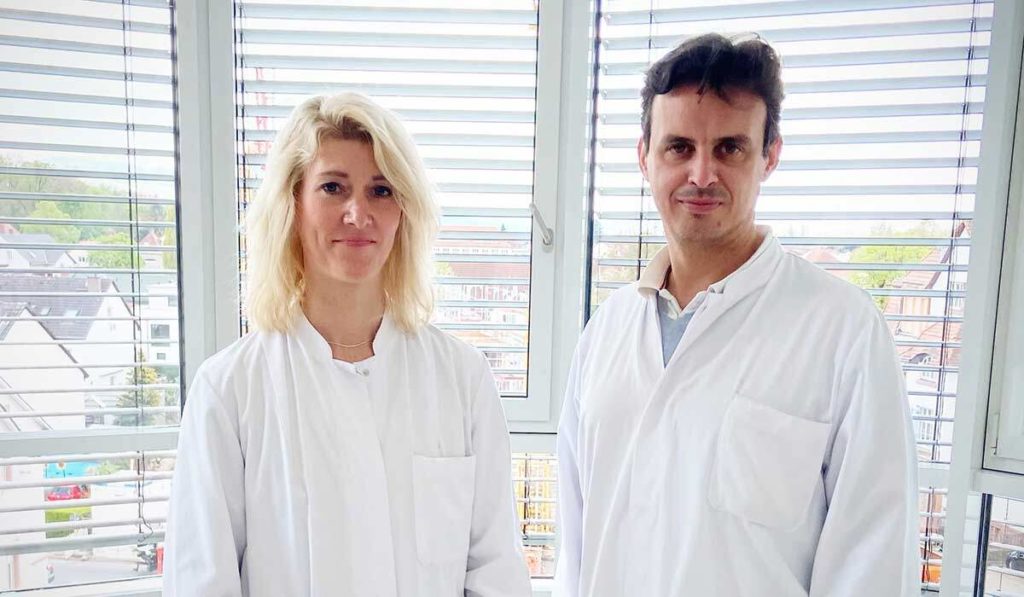
Cochlear implants (CI) enable deaf or hard-of-hearing patients whose auditory nerve is still functioning to hear again. “Hearing with cochlear implants is a miracle that still amazes me. We have 15,000 hair cells, but a CI has only 12 to 22 electrodes. Nevertheless, good hearing—and for many, good speech comprehension—is possible because the human brain is capable of amazing things. We achieve a great deal through our well-established approach, which includes surgery followed by a one-week stay at a rehabilitation clinic, featuring daily hearing training and daily optimization of the cochlear implant settings,” explains Dr. Jérôme Servais, an ENT specialist at Heilig-Geist Hospital in Bensheim. In the second part of our interview with him and audiotherapist Jana Verheyen, learn what happens after implantation—from activating the CI to hearing training that trains the ear and the proper adjustment of the systems by hearing care professionals.
At Heilig-Geist Hospital Bensheim, a center of excellence for people with hearing loss and cochlear implants, the focus is on patients, their consultations, and their follow-up care. The team, led by ENT expert Dr.Jérôme Servais, works closely with hearing care professionals—who have undergone specialized training in the unique requirements of hearing with cochlear implants (CI) and CI audio processors—to ensure ongoing patient care.
Ihr-Hörgerät.de: Your CI success program includes a week of rehabilitation—what does that mean?
Dr. Jérôme Servais:A few weeks after the implantation surgery comes the big moment: the first activation of the CI—the first time the patient hears exclusively through the device in the inner ear. Our patients can experience this during a rehabilitation session. We recommend this approach—away from the stress of everyday life at home and with full concentration on the new CI hearing experience. Because so much happens in those first few days alone. Being guided by professionals during this time is a huge help. Another benefit is the opportunity to connect and share experiences with other cochlear implant users. This marks the beginning of the hearing journey with a CI. I have to say, the CI isn’t a new ear—it’s a marvel of technology.
Audiotherapist Jana Verheyen:People who invest a lot of time in practice and listening exercises over a long period often achieve excellent results compared to their previous hearing and comprehension with hearing aids and residual hearing. Even in just one week of rehabilitation, basic hearing ability is trained and developed. I know from my own experience how exciting and exhausting this can be at the same time, because my cochlear implants have been an integral part of my life for almost two years. That is exactly what I hope for my patients as well. Ideally, the one-week rehabilitation period for the initial fitting is followed by a good year of intensive hearing training, which trains the brain and, consequently, hearing through technology.
In addition to training at home, an essential component is practicing differentiated listening and comprehension with a speech-language pathologist. At the same time, regular appointments with the CI audiologist are needed to optimize the settings. It’s worth the effort. For example, some patients are so excited to hear birds again, make video calls, or simply understand the person they’re talking to more easily. We discuss individualized hearing rehabilitation exercises with each patient to help them achieve their very personal hearing goals.
Get Involved and Practice Listening a Lot
Cochlear implant users often regain the listening skills they need to communicate more easily—and, as a result, interact more successfully—through hearing training programs designed to improve their hearing. Adults who have received a cochlear implant benefit most from personalized training sessions with speech-language pathologists or patient practice partners. CI users can find free online hearing training programs—which allow them to practice everyday language in the form of individual sentences, entire texts, or dialogues—here, for example, after a one-time registration. The difficulty level can be easily adjusted to suit individual needs. In addition, outpatient or inpatient rehabilitation is recommended.
Treat Children with Hearing Impairments Early and Train Their Hearing
The first three to five years of life are crucial for the development of the brain and hearing. Newborn screening helps detect early on if a child cannot hear; if so, the child is often quickly fitted with a hearing aid, or a cochlear implant may be considered.

Even while parents are seeking guidance, they can support their child’s language development—for example, with music specifically designed for children with hearing impairments. Music stimulates multiple areas of the brain simultaneously, particularly those that are important for language comprehension. Special exercises, such as movements that match melodies and verbal accompaniment, help children recognize facial expressions and gestures. If these auditory training exercises—which train hearing—and musical games are continued even after a cochlear implant has been fitted, this lays the foundation for hearing and language skills.
You Might Also Be Interested In

Hearing Again with Cochlear Implants
A Cochlear Implant User’s Experience: Dr. Valerie Pestinger has cochlear implants (CI) in both ears—and is the mother of a young daughter.

Talking Openly About Hearing Implants
[Hearing Implants] What You Should Know About Hearing Systems: A hearing implant often piques people’s curiosity. What exactly is that cool piece of technology on someone’s head?
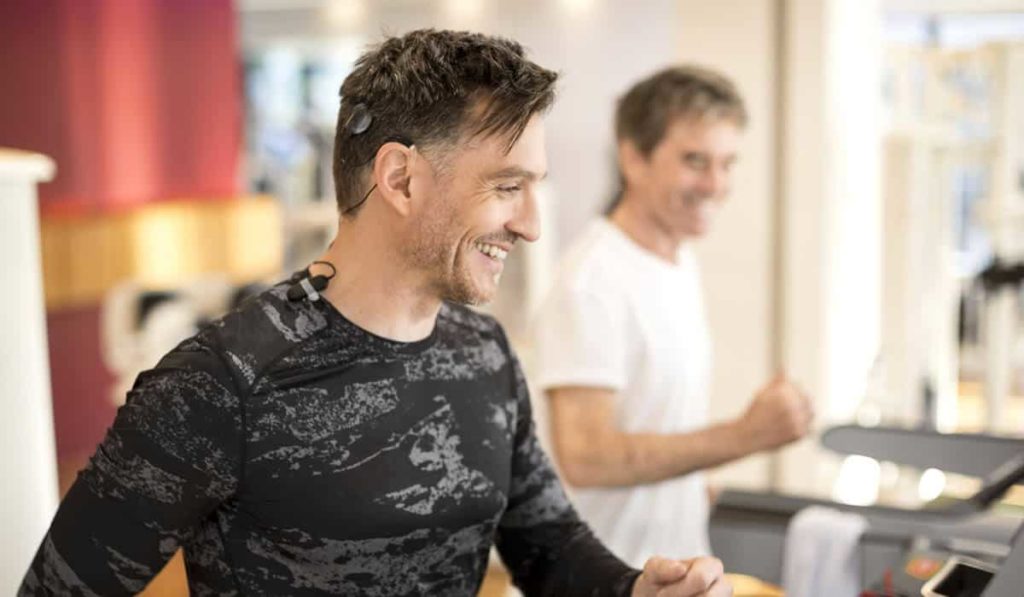
Sports with a cochlear implant—stay active and have fun!
● Cochlear Implant ● No Problem Exercising ● Tips for Exercising with a Cochlear Implant ● Enthusiastic Athletes—Even with a CI
Ihr-Hörgerät.de: Why do hearing care professionals play a crucial role in the success of cochlear implants?
Dr. Jérôme Servais: The fine-tuning of volume, high and low frequencies, and other parameters of the cochlear implant (CI) is done gradually. The brain processes the new sounds and gets used to them. Hearing with a cochlear implant—and, in many cases, a hearing aid in the other ear—should be precisely coordinated. After all, balanced binaural hearing is important for patients in their daily lives.
We cannot—and do not want to—do this alone at the clinic. After all, hearing aid users in particular already have an audiologist they trust, who regularly checks their hearing aid. If, in a bimodal fitting, the audiologist can optimize the CI settings right away while simultaneously adjusting the hearing aid accordingly, this simplifies many things.
Hearing care professionals are the most important component in ensuring ongoing care and support close to home. We have built a network of CI audiologists and welcome their support here on the platform [you can also use the “Cochlear Implants” filter search for this purpose].
For implant users, hearing care professionals also have another very important role. They support their implant clients when it’s time for a new audio processor for the CI. Technological advances regularly set new hearing standards in this area. Health insurance companiescover the cost of the upgrade if an improvement can be demonstrated—for example, if better speech comprehension is achieved. It may also be necessary due to a change in the patient’s circumstances, such as wearing glasses or growth in children.
Learn more about CI implants and our experts’ consultation approach in the first part of this interview.