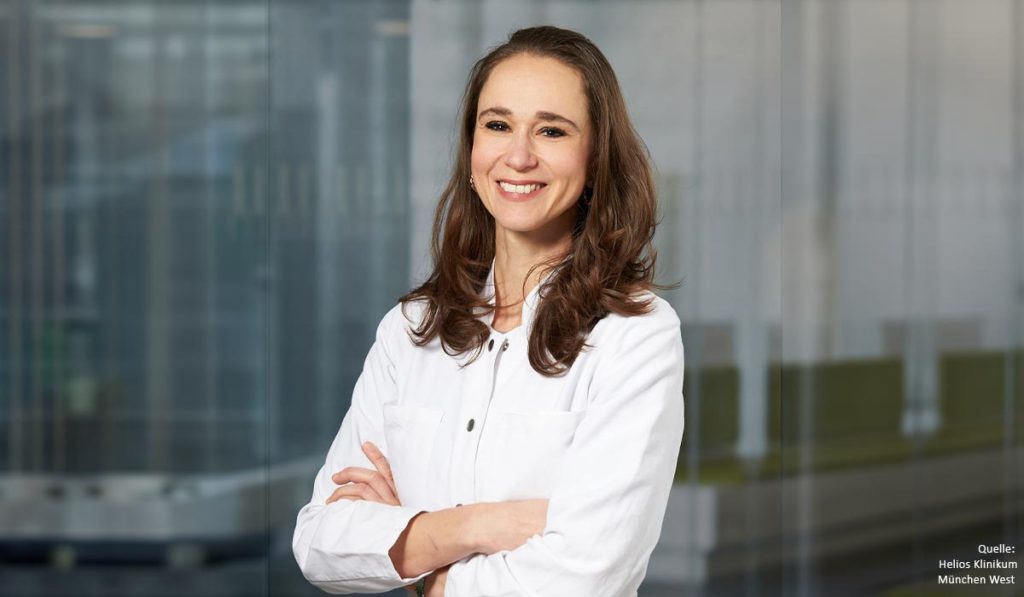
Interview with Dr. Veronika Wolter, Chief Physician at the Department of Otolaryngology and the Helios Hearing Clinic of Upper Bavaria in Munich
People with hearing loss can only participate in social life to a limited extent. This can take a toll on one’s mental well-being and dampen one’s zest for life. In this interview, Dr. Veronika Wolter explains the hearing care options available today and how cochlear implants can help those affected regain a full life.
Dr. Wolter, why did you decide to specialize in inner-ear prostheses?
Dr. Veronika Wolter: My area of expertise is otology—in other words, everything related to hearing disorders. This includes ear surgery in general and, in particular, the use of inner-ear prostheses, or cochlear implants. I myself have had a hearing impairment since I was nine years old and have worn conventional hearing aids as well as partially and fully implantable hearing aids for over 20 years. Fifteen years ago, I received a cochlear implant. I experienced firsthand the profound difference hearing restoration can make in the life of someone with severe hearing loss or deafness—someone who hears far too poorly to participate in life. Gaining a “new ear” thanks to the implant was absolutely life-changing and has fascinated me immensely, which is why I’ve made this my professional focus. Now I can bring about the same positive change in my patients’ lives.
How can hearing loss affect one’s health? What mental and physical symptoms can be associated with it?
Dr. Veronika Wolter: Untreated hearing loss can have a tremendous impact on a person’s health. For one thing, it can increase the likelihood of falling by five to six times, because spatial orientation is particularly impaired in cases of single-sided hearing loss. It can also lead to mental and cognitive impairments. If severe hearing loss—especially in older adults—is left untreated or inadequately treated, there is up to a fivefold higher risk of dementia. Even in younger people, it can have significant social consequences. Many patients are prone to depression, social isolation, or an inability to work. Those affected often do not realize how poorly they actually hear. That is why it is usually the people around them who first notice the change. Those affected feel how much effort listening takes, which can manifest as aggression. After all, it’s frustrating to have to ask someone to repeat themselves twice in a conversation with several people and still not understand what was said. This, in turn, upsets the affected individuals themselves and also has a negative impact on those around them.
How can cochlear implants help address this issue?
Dr. Veronika Wolter:Patients who receive a cochlear implant can, with appropriate follow-up treatment—such as outpatient rehabilitation and, ultimately, long-term aftercare—be helped to return to a full social life with the aid of the inner-ear prosthesis. The 100 percent speech comprehension that I myself experience with my own implants is not an illusion. Many of my patients can achieve this, but not everyone. It’s important to me to explain to them in advance exactly what their individual expectations should be regarding this treatment method. We can determine the best possible outcome for each patient upfront and, thanks to outpatient rehabilitation, provide ongoing support throughout the treatment until the goal is achieved.
How do untreated hearing loss, on the one hand, and successful treatment, on the other, affect personal and professional life?
Dr. Veronika Wolter:Once hearinglossreaches a certain level, it’s usually the people around you—whether in your personal or professional life—who first notice that something is wrong. At work, however, it often has a greater impact because meetings with multiple people become more difficult and because coworkers aren’t aware that there’s a hearing problem. In this context, hearing loss becomes noticeable more quickly. The result is often that those affected first withdraw from their professional lives and, for example, switch to working only part-time. Or they stop taking on certain meetings or tasks altogether because they are too taxing. After that, it usually begins to affect their immediate personal circle as well. For example, if I can no longer follow conversations while having coffee with more than one friend, I’ll eventually stop doing that, too. And so the circle keeps getting smaller and smaller. A critical point is reached when you can no longer communicate with loved ones even in a quiet setting. At that point, at the very latest, you should seek treatment at a clinic. We frequently observe such progression and, fortunately, can help patients find their way back to a full life by treating their hearing loss with appropriate therapy.
What kind of follow-up care is needed after a cochlear implant is inserted? Do patients have to relearn how to hear?
Dr. Veronika Wolter:It really does vary from patient to patient. Some patients have only been deaf for a short time or have had severe hearing loss for a short period. When these patients receive their cochlear implant, they consequently require very little follow-up care afterward. They may only need three or six appointments within a year. And then there are patients with a very long history of hearing loss—who may have been severely hearing-impaired since childhood or have experienced a long period of hearing loss. I have patients who have been deaf in one ear for 40 or 60 years. Hearing with a cochlear implant then naturally has to be relearned to some extent. The amount of therapy each individual needs to achieve their best possible hearing outcome must be tailored to their specific needs.
What role does technological progress play in the treatment of hearing loss?
Dr. Veronika Wolter:What technology is capable of today is fascinating. Speech processors have become almost invisible, and connectivity has advanced tremendously. They now connect to smartphones automatically. Only the hearing aid user hears the phone ring. They hear the conversation crystal clear in both ears, even with background noise. In my view, this provides better speech comprehension than if they were to make a call on their cell phone in a noisy environment under normal circumstances. When you look to the future and consider that, thanks to artificial intelligence, speech processors will also be able to recognize foreign languages and provide the hearing aid user with an almost simultaneous translation into German via the smartphone app during an ongoing conversation, it’s absolutely fascinating. I’m incredibly excited to see what the future holds.
How important is raising awareness about hearing problems in the fight against stigmatization?
Anyone who doesn’t hear well enough and would like to seek medical help to improve their hearing. Dr. Veronika Wolter urges everyone with hearing loss: “Make an appointment at a clinic or with a hearing care professional. Don’t give up. There are an incredible number of ways to treat hearing loss. Explore your options, ask questions—there are solutions.”
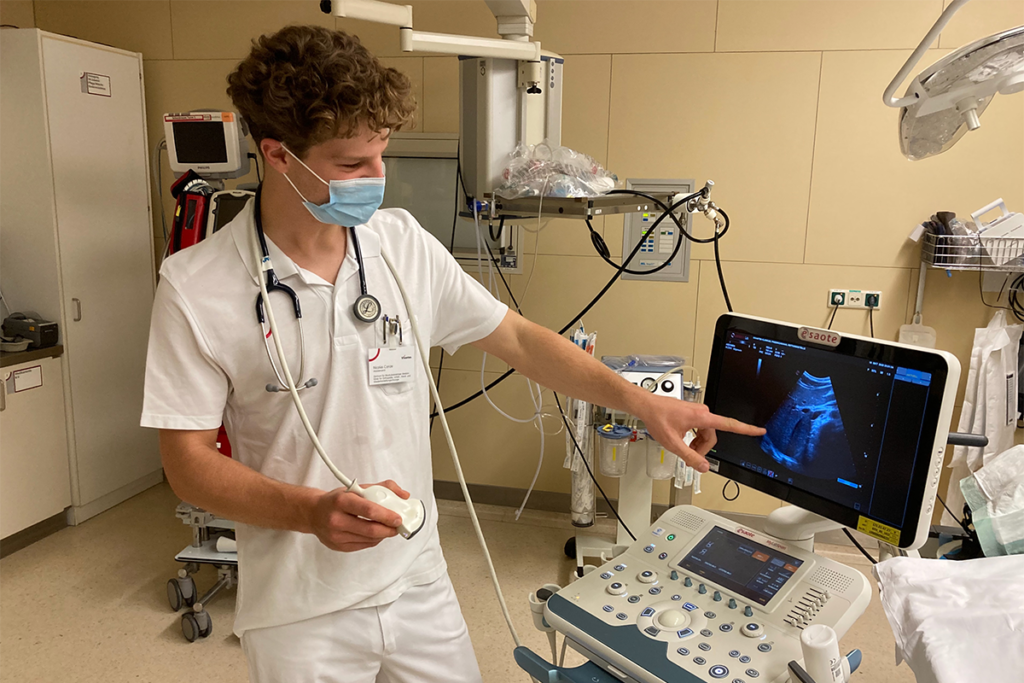
In the operating room with a hearing implant
Despite having hearing loss in one ear, Nicolas Conze is a successful resident in trauma surgery and orthopedics thanks to his cochlear implant.

I know how challenging life is with hearing loss
Dr. Veronika Wolter, a renowned expert on cochlear implants (CI), knows exactly what she’s doing—she wears hearing aids herself. Precisely because she knows what it’s like to live with hearing loss, she understands her patients very well.
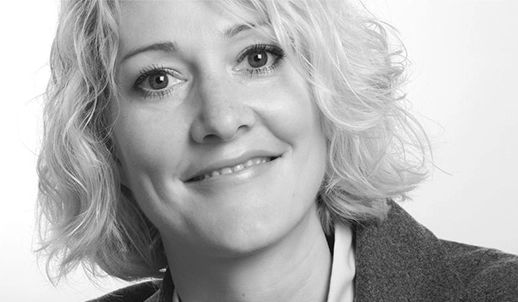
Living with Hearing Loss
Living with Hearing Loss: Jana Verheyen shares how she copes with progressive hearing loss—and what helps her. Read it now!