After all, what happens when these sounds don’t just bother them, but trigger emotions like anger or discomfort? Children who suffer from misophonia often encounter a lack of understanding—from peers, teachers, and even within their own families. In this article, we explore the causes and early signs of misophonia in children, discuss the emotional strain it causes, and offer insights into how to cope with a world that is often too loud for those affected.
What is misophonia?
Misophonia, literally “hatred of sounds,” describes a neurological reaction in which certain sounds trigger strong negative emotions such as anger, disgust, or stress. Everyday sounds such as chewing, swallowing, or typing—which others hardly notice—significantly disturb those affected and make listening unbearable.
Misophonia was first described in the late 1990s by the scientists Pavel and Jastreboff. However, due to the increasing number of people affected, it has only received greater scientific and public attention in recent years. Children and adolescents between the ages of 12 and 14 are particularly affected.
Everyday life and social relationships, in particular, are significantly impaired by misophonia. Initially, many people with the condition try to avoid triggering sounds, but without treatment, this often leads to social withdrawal. Researchers are currently working on specialized approaches to improve diagnosis, treatment, and, consequently, coping strategies.
How can you recognize misophonia in children?
The symptoms of misophonia vary widely and are not easy to recognize. It is especially important for parents and those around the child to observe the child closely. Misophonia is often mistaken for other behavioral disorders. An early diagnosis is crucial to making the child’s daily life easier through targeted interventions and empathetic support.
Typical signs of misophonia in children include:
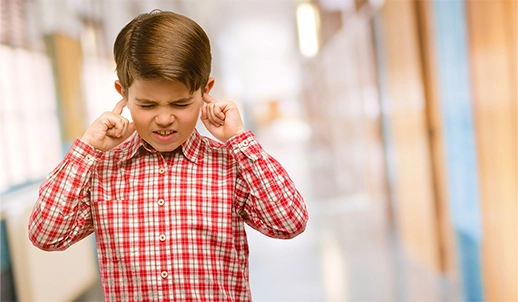
- Covering their ears, wearing headphones, or deliberately blocking the source of the noise
- Leaving rooms or avoiding situations where trigger sounds might occur
- Irritability, outbursts of anger, crying, frustration, or discomfort in response to certain sounds
- Conflicts with family members or friends, especially due to trigger sounds
- Increased heart rate, muscle tension, sweating, or trembling when confronted with triggering sounds
- Difficulty focusing in noisy environments, such as at school
- Avoiding shared meals or certain foods because of the noises they produce
The list can be expanded as needed, but it provides an initial overview to help guide you if necessary.
Causes and Effects of Misophonia in Children
The causes of misophonia remain unclear to this day, but it is believed to involve hypersensitivity in the connection between the brain’s auditory and emotional centers. Genetic factors or traumatic experiences are also thought to contribute to its development.
The fact is: Misophonia not only affects children’s social relationships but also their emotional and academic development. They often feel stressed, misunderstood, or overwhelmed, which in turn has a negative long-term impact on their well-being and quality of life.
Despite the insufficient research findings to date, are there treatment options for misophonia? The good news is: Yes, there are.
How can misophonia be treated?
A thorough medical history and subsequent diagnosis are conducted by primary care physicians or specialists, such as those in otolaryngology. Since there is no specific cure for misophonia, treatment aims to alleviate symptoms and teach strategies for coping with trigger sounds.
These include:
- Cognitive Behavioral Therapy (CBT): Children learn to better understand and regulate their reactions to triggering sounds. Restructuring thoughts and feelings helps change how they perceive these sounds.
- Mindfulness training: Methods such as meditation, breathing techniques, and progressive muscle relaxation reduce stress and help children perceive disturbing sounds as less intense.
- Psychoeducation: Educating the child and family about the causes and effects of misophonia fosters understanding and enables better cooperation.
Similarly, good results can already be achieved with tinnitus retraining therapy.
Originally developed by Dr. Pawel and Dr. Margaret Jastreboff, this therapy uses special hearing aids that continuously generate pleasant sounds. Counseling sessions are conducted alongside the therapy.
The use of tinnitus noisers also shows promise. These devices emit a gentle white noise to mask the perception of disturbing sounds. They are particularly helpful for those with concurrent hearing problems, as they push the disturbing sounds into the background. For everyday situations, headphones are also an effective option for blocking out disruptive ambient noise.
Understanding and acceptance are especially important when it comes to misophonia
The first step in dealing with misophonia is understanding the reaction to certain sounds. Children with misophonia do not feel they can control their reactions to certain sounds. It helps to reassure them that their feelings and reactions are valid, even if others perceive the sounds as insignificant. Statements like “Don’t be so dramatic” or “It can’t be that bad” should be avoided.
It also helps to identify the sounds that trigger misophonia. Tip: Keeping a diary can help document triggers and identify patterns. With these findings and information, you can better explain the situation to a specialist or counseling center, and more targeted measures can be taken to alleviate the symptoms.
When it comes to everyday school life, it’s essential that teachers are aware of this hypersensitivity. To create a quieter environment, a desk at the edge of the classroom would be ideal. Wearing hearing protection can also be easily incorporated into this setup.
You can use our convenient and free search service to find ENT doctors or hearing care professionals in your area. They will be happy to provide you with information about hearing aids that can be used to treat misophonia and offer comprehensive advice on tinnitus noisers and tinnitus retraining therapy.
See how good hearing works