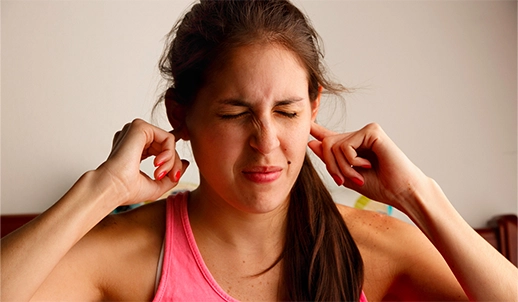
Did you know that migraines can be linked to tinnitus? A migraine attack often begins with visual disturbances. However, it can affect all five senses: in addition to vision, it can also affect hearing, smell, taste, and touch. This previously little-known connection could help people with migraines who experience tinnitus symptoms find an appropriate treatment.
What are the symptoms of migraine affecting the ears?
Migraines have various symptoms. In addition to flashes of light that sufferers see flickering across their field of vision, a migraine attack may be accompanied by ringing in the ears or even temporary hearing loss. Patients may notice, for example, that the volume fluctuates greatly and everything sounds very muffled and distant. These migraine symptoms are a type of tinnitus that resembles a brief sudden hearing loss or acoustic trauma. Typically, the condition lasts about an hour, after which hearing returns to normal and the ringing in the ears subsides. This was reported by affected individuals as part of a new study. However, a migraine-associated stroke can also occur during a migraine episode. This is a permanent neurological disorder. Patients then continue to suffer from tinnitus.
What role do symptoms play in diagnosing the type of migraine?
Symptoms play a crucial role in diagnosing the type of migraine. The personal experiences of patients during a migraine are often not immediately apparent to outsiders, which makes diagnosis more difficult. To receive appropriate care, those affected should therefore describe all the symptoms they notice to their doctor—even if there doesn’t seem to be a connection at first glance. You never know!
Be sure to see a doctor
Only a doctor can definitively diagnose these symptoms. If you suffer from migraines and experience ringing in the ears or other hearing problems, you should not wait too long—see an ENT specialist right away. In addition to various hearing therapies, hearing aids and stress management or relaxation techniques can also help reduce hearing-related stress.
Of course, this also applies if the ringing in your ears occurs without any pain in your head. In that case, your trusted ENT doctor can recommend the right treatment for tinnitus, which may include, among other things, auditory therapy, stress management or relaxation techniques, or even hearing aids.
By the way, some people are hypersensitive to perfectly normal everyday sounds. This is called hyperacusis. You can find more information on this in our article “Hyperacusis: When Everything Is Too Loud.”
See how good hearing works