Effects of Hearing Loss on Mental and Physical Health
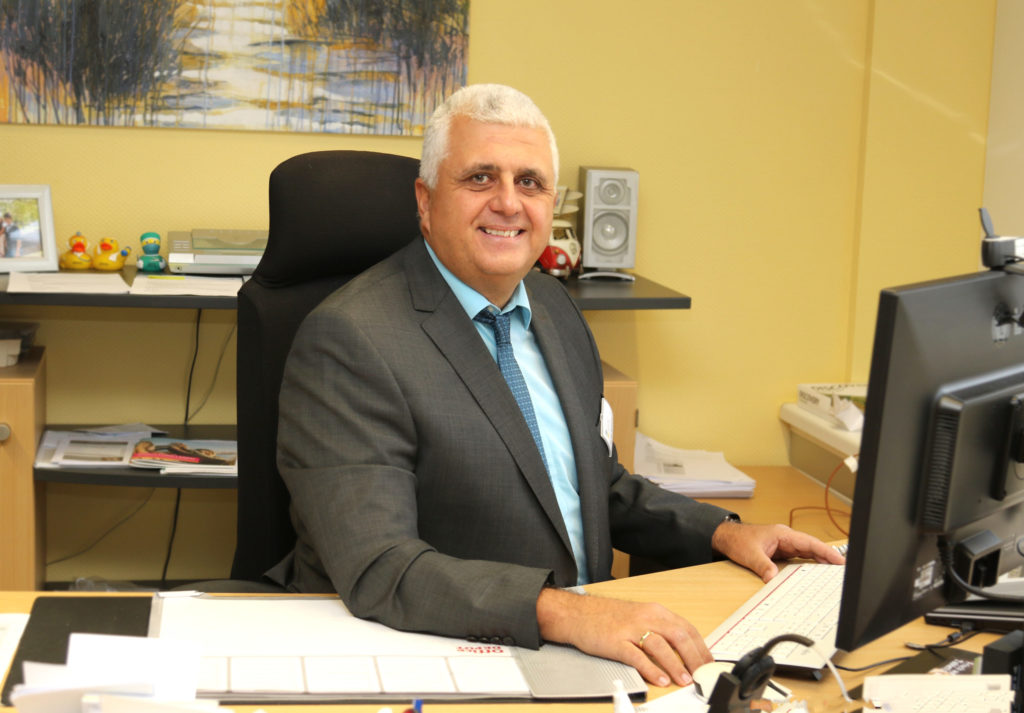
Dr. Rudolph, you served as Medical Director of the Mittelrhein-Klinik in Bad Salzig—a specialized clinic for psychosomatic rehabilitation—for 20 years. In January of this year, you started your own practice and established a private practice as a medical psychotherapist specializing in behavioral therapy in Boppard am Rhein. What are the main areas of focus in your practice?
Dr. Matthias Rudolph: My areas of expertise include ADHD in adults, psychotherapy for post-COVID syndrome, burnout, stress, and depression. In addition, I am particularly committed to helping people with chronic hearing loss and tinnitus improve their quality of life.
How can hearing loss affect mental health?
Dr. Matthias Rudolph: You’re probably familiar with the saying: “Not seeing separates us from things; not hearing separates us from people!” That’s exactly right. People are social beings; for our mental health, we depend on positive interactions with others, as well as for social integration. That’s the problem with hearing loss. It often leads to social withdrawal, which in turn frequently results in loneliness and depression.
What physical symptoms and psychological issues might be associated with this?
Dr. Matthias Rudolph: On a physical level, many patients complain of headaches, digestive problems, and sleep disturbances. On an emotional level, there are difficulties with concentration and attention, but there is also often a depressed mood; those affected feel tired and weak. Their quality of life is impaired.
So can hearing loss make the soul sick?
Dr. Matthias Rudolph: Absolutely! Through social withdrawal and the loss of social connections. This can lead to depression and anxiety disorders. I have seen people with untreated hearing loss whose depression was so severe that they wanted to end their lives.*
Treatment of Hearing Loss with Modern Hearing Aids
How can modern hearing aids help in this situation?
Dr. Matthias Rudolph: Hearing aids address the core problem, which is speech comprehension. In that sense, I consider them an absolutely essential part of treatment because they very effectively break the vicious cycle of poor hearing, hearing-related stress, and social withdrawal.
How does successful treatment affect one's personal and professional life?
Dr. Matthias Rudolph: On the one hand, through the improvement in hearing itself, which in turn promotes social integration. On the other hand, people’s mood improves, and they regain their motivation. Of course, this has an impact on their personal lives. People start spending more time with friends and acquaintances again, go out more, and visit the movies or the theater. And they can once again participate in their professional lives and feel integrated.
One of your main areas of treatment is chronic tinnitus, and you are also a member of the German Tinnitus League (DTL). What motivated you to focus on this condition in particular and to dedicate yourself to it?
Dr. Matthias Rudolph: It goes back to when I was in college. A close friend of mine at the time had very severe tinnitus combined with hearing loss. Back then, no one could tell her what it even was or what she could do about it. She was very desperate, and I couldn’t help her.
Then, on my first business trip, I met and came to appreciate Hans and Elke Knör. They are the founding members of the DTL, and I was absolutely thrilled. On the one hand, I was inspired by the possibilities of self-help for health, and on the other hand, by the range of options available for managing chronic tinnitus. Back then, I vowed to dedicate myself to helping people with tinnitus, and I’ve kept that promise to this day.

The German Tinnitus League recommends following scientific guidelines and explicitly encourages participation in a support group. Talking with others who are going through the same thing is especially helpful in the early stages of the condition. It makes you feel like you’re not alone, and the other group members understand you without needing many words.
Hearing Aid Fitting for Tinnitus
What do people with tinnitus struggle with the most?
Dr. Matthias Rudolph: My experience shows that the loss of control is particularly difficult to cope with. This is because the ringing in the ears is present 24/7, and those affected feel there’s nothing they can do about it. This feeling of powerlessness—that’s what people suffer from the most, aside from the loss of silence.
What role does a hearing aid play in managing tinnitus?
Dr. Matthias Rudolph: We know from scientific guidelines that chronic tinnitus is caused by hearing loss—often undiagnosed—in 80 to 90 percent of all cases. That is why fitting patients with tinnitus with high-quality hearing aids is the cornerstone of the entire treatment. Simply put, more sounds reach the so-called auditory cortex, so that the tinnitus almost automatically fades into the background. In addition, auditory stress—that is, the constant effort to mask or compensate for hearing loss—is reduced. This often alleviates the psychological distress caused by tinnitus.
How can you tell if a hearing aid can help alleviate the symptoms of tinnitus?
Dr. Matthias Rudolph: I never provide behavioral therapy for chronic tinnitus without first conducting a hearing test. This usually allows me to determine whether there is a hearing impairment and whether a hearing aid might be beneficial for tinnitus. In cases of chronic tinnitus, hearing aid fitting may be beneficial even if the criteria listed in the medical aids catalog have not yet been met. In such cases, it always comes down to trying the therapy.
Can you give us examples of successful patient pathways in which hearing aid fitting for tinnitus has improved patients' quality of life?
Dr. Matthias Rudolph: I can’t actually think of a single example where it wasn’t necessary. However, it’s important to make it clear before fitting a hearing aid that it’s not as simple as getting a pair of glasses. Fitting a hearing aid is a process that can take several months. Patients need to be prepared for this to prevent new bouts of depression and disappointment. It’s especially important to see a hearing care professional you trust.
Thank you very much for the interview!