No crystal ball needed—but with a new hearing test
A new hearing test can predict speech comprehension with a cochlear implant. For those considering the procedure, this provides another tool to aid in their decision-making.
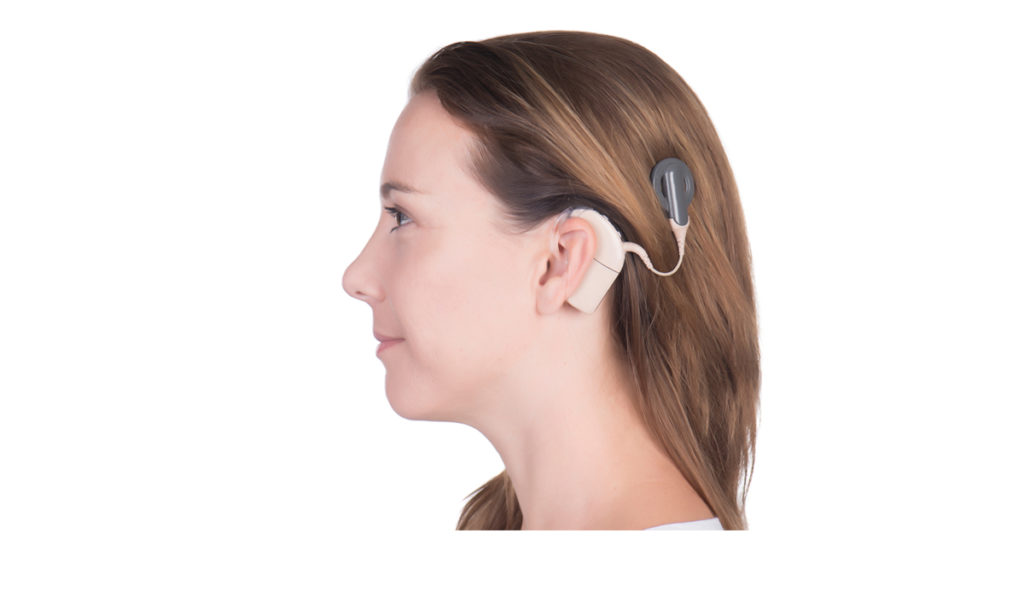
Our sense of hearing is the only sense organ that can be replaced by an implant. Just as a prosthetic leg can enable independent walking, a cochlear implant (CI) can restore hearing to people with hearing loss. But when is a cochlear implant a good option?
“People who no longer benefit sufficiently from conventional hearing aids are considered candidates for a cochlear implant,” explains Patrick D’Haese, a cochlear implant expert at MED-EL Medical Electronics. “There is no specific age limit. The only requirement is an intact auditory nerve, which is the case in most instances.” The catch is this: the sound quality with a cochlear implant can sometimes be distorted and tinny. It’s therefore not surprising that many people with severe hearing loss experience significant fears and uncertainties about undergoing such a procedure.
Cochlear Implants—Early Intervention Is Key
Some patients regain their hearing more quickly after implantation, while for others it takes longer. However, early intervention is worthwhile, as the prognosis worsens with prolonged hearing loss. Various studies show that the duration of hearing impairment or hearing loss has a major impact on how well patients with a CI can hear. “It is therefore important that those affected take immediate action when a hearing aid no longer provides sufficient benefit,” confirms D’Haese.
Finding out how well I’ll hear again after six months
A new test developed by the Max Planck Institute for Cognitive and Neural Sciences in Leipzig, the Leipzig Cochlear Implant Center, and the University of Lübeck can now predict how quickly patients will regain good hearing with a CI, even shortly after surgery. In this test, patients must distinguish rhythmic patterns in noise signals. The study found that patients who performed better on this hearing test were also better able to understand speech signals after six months—and vice versa.
Such reliable hearing tests are important for two reasons: at-risk patients can improve their prognosis through auditory training, and the implants can be better tailored to individual needs.
And: No one needs to fear surgery, as the procedure has long since become routine. Patients can usually leave the hospital after just one week. D’Haese is certain “that excellent results are achieved in terms of speech and music comprehension, with rehabilitation being a key factor in achieving the best outcomes.”
How does a cochlear implant (CI) actually work? The CI is implanted in the cochlea and takes over the function of the damaged parts of the inner ear—the cochlea. You can learn more about cochlear implants in our article “When Hearing a Whisper Becomes a Magical Moment.”