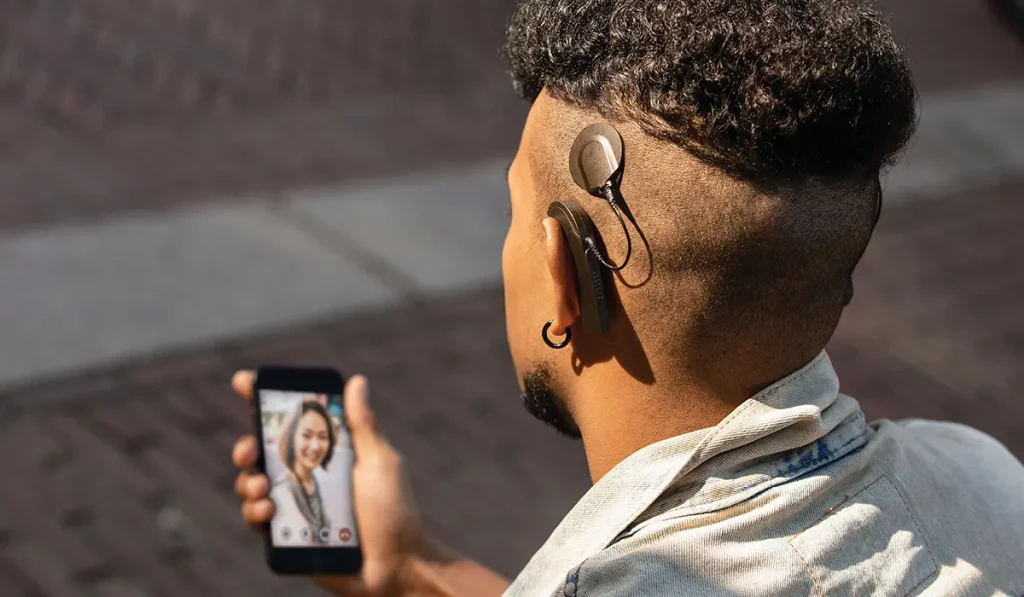
Anyone who wears a cochlear implant (CI) in one ear and a hearing aid in the other is familiar with the problem: When streaming, the audio is often out of sync, sound details are lost, and speech sounds unnatural. Many people in this situation wonder how to compensate for these differences, especially when talking on the phone or listening to music on a smartphone.
Hearing implant manufacturers are offering new technologies that seamlessly integrate both systems. We’ll explain how bimodal streaming works, why synchronization is crucial, and how modern hearing systems make everyday listening noticeably easier.
What does bimodal streaming mean?
Bimodal streaming refers to the simultaneous transmission of audio signals—for example, from a smartphone—to two different hearing devices: a cochlear implant on one side and a hearing aid on the other. The goal is to achieve a consistent, balanced sound.
Why It's Beneficial to Listen in Sync
Synchronous listening is particularly important for users with bimodal hearing solutions because only then can a cochlear implant and a hearing aid produce a harmonious and natural sound profile. When audio signals reach the cochlear implant and the hearing aid simultaneously, speech is understood more clearly and music is perceived as much more balanced. At the same time, listening effort is reduced because the brain no longer has to compensate for two signals that are out of sync. Spatial orientation also benefits: sounds can be localized more easily, which provides greater safety and comfort in everyday life. Overall, this results in a hearing experience that comes much closer to natural hearing and provides noticeable relief for many people with hearing loss.
That's why bimodal listening is often a challenge in everyday life
When using a cochlear implant and a hearing aid together, problems often arise in everyday life because the two systems process sound at different speeds. This leads to echo effects, distortion, and an unbalanced sound, especially during streaming. As a result, users experience, among other things, unnatural-sounding voices during video calls, poor music playback, and difficulty with spatial orientation. The brain must compensate for the different signals from both ears, which makes listening more tiring and increases cognitive load. Bimodal streaming can harmonize these differences, thereby enabling a more natural listening experience.
Practical Steps for Better Bimodal Hearing
People with hearing loss can take several steps themselves to ensure the most harmonious bimodal listening experience possible. In addition to the right technology, regular adjustments and conscious use of hearing aids in everyday life play an important role.
These measures help improve the interaction between the cochlear implant and the hearing aid:
- If you use the latest cochlear implants—for example, from MED-EL—you’ll benefit from the new DualSync™ technology. Here, hearing aid manufacturer Starkey and MED-EL are collaborating. The technology ensures that both hearing systems (hearing aid and CI) stream simultaneously as much as possible.
- Compatibility: Apple devices can stream seamlessly to both hearing systems: the MED-EL audio processor on one side and the Starkey hearing aid on the other. Apple recognizes both systems as a paired set. For Android devices, the connection is established via the widely used ASHA protocol.
- Fine-tuning at the hearing care professional: Regular adjustments ensure that volume and sound balance remain optimally tuned.
- Configuring hearing aids correctly: Pairing, streaming options, and volume adjustments can significantly impact the hearing experience. Consult your hearing care professional for advice.
- Daily hearing training: Wearing your hearing aids every day improves your listening habits and helps your brain balance the input from both systems.
- Using apps: Many hearing aids offer convenient apps for control and monitoring.
- Provide feedback: Your personal experiences help your hearing care professional make targeted fine-tuning adjustments.
How to Optimize the Interaction Between Your Hearing Aids
Modern cochlear implants use high-precision sound processing. In addition to connectivity, the electrode design is crucial to the hearing outcome. Studies show that longer, flexible electrode arrays enable the most complete stimulation of the cochlea possible. This not only improves speech perception but also significantly enhances the experience of music and the perception of emotions in the voice. The combination of CI technology, modern electrode design and stimulation, and optimized hearing aid transmission results in a more natural sound experience.
Why Audiologists Are Essential for Bimodal Hearing
Hearing care professionals play a key role in ensuring optimal bimodal care. They coordinate the settings for the cochlear implant and hearing aid, test their synchronization, adjust sound profiles, and provide guidance on device selection. Their experience is crucial for fine-tuning—especially when it comes to streaming.
In Germany, there are numerous specialized ENT physicians and hearing care professionals available to advise and provide technical support to users of bimodal hearing systems. You can find ENT practices and hearing aid specialist offices throughout Germany using the hearing aid specialist search or ENT doctor search on Ihr-Hoergeraet.de.
Bimodal streaming can make hearing much easier, provided that the cochlear implant and hearing aid work in perfect sync. Modern technologies ensure that both hearing systems receive audio signals at exactly the same time. Everyday situations such as talking on the phone, making video calls, or listening to music are significantly improved. Take the first step today and schedule a consultation with a hearing care professional near you.