
Two experts provide information and individualized advice to patients
Which Hearing Solution Is Right for You? The decision to get a cochlear implant—often a unilateral, bimodal solution combined with a hearing aid—is not an easy one. Dr. Jérôme Servais, Chief of ENT and Director of the Ear Clinic at Heilig-Geist Hospital in Bensheim, and his colleague provide information.
At a Glance
- Pre-consultation and follow-up care—so CI patients know exactly what to do
- What does bimodal care mean in hearing care?
- Hearing care professionals with CI expertise: a key component of good hearing
“A cochlear implant enables people to hear again and understand speech despite severe hearing loss or deafness in one ear. That’s wonderful,” says Dr. Jérôme Servais, Chief of Otolaryngology and Director of the Ear Clinic at Heilig-Geist Hospital in Bensheim.
Ihr-Hörgerät.de spoke with ENT specialist and CI expert Dr. Jérôme Servais and Jana Verheyen, head of hearing rehabilitation at Heilig-Geist Hospital in Bensheim, about hearing with a cochlear implant, bimodal hearing solutions, and their comprehensive counseling, aftercare, and support program in collaboration with hearing aid specialists experienced in cochlear implants.
Ihr-Hörgerät.de: Dr. Servais, your approach to caring for people with hearing loss involves providing patients with very comprehensive care and counseling. What does that entail?
Dr.Jérôme Servais:My team and I have a great deal of experience. We want to make this experience fully available to our hearing-impaired patients on an individualized basis—tailored to each specific case. All patients should take the step toward a cochlear implant (CI) only after being well-informed, receiving comprehensive counseling, and having the best possible rehabilitation and follow-up care plan in place.
For many patients, abimodal hearing solution—that is, a cochlear implant in one ear and a hearing aid in the better-hearing ear—yields excellent hearing outcomes. However, the coordination and fine-tuning between the cochlear implant and the hearing aid, as well as the subsequent follow-up care, must also be just right.
Local hearing care professionals play a crucial role in this regard. To ensure my patients understand the benefits of hearing with a CI and what it specifically means for them, we conduct consultations that go far beyond the medical aspects.
For example, those who could benefit from a CI are advised by my colleague Jana Verheyen, an audiotherapist and audio coach. She herself has cochlear implants in both ears and knows the possibilities and limitations—as well as the concerns about living with a CI—from her own experience.
We also have patients with ear and hearing problems for whom a CI is not the best solution.
You Might Also Be Interested In

Erfolgreiche Powerfrau trotz Hörminderung
Jana Verheyen hatte mit 20 Jahren einen Hörsturz. Seitdem hat sich ihr Gehör stark verschlechtert. Dennoch ist sie beruflich richtig durchgestartet und als Audio Coach in Hamburg erfolgreich.

Successful Fencer—With a Cochlear Implant
Despite his hearing impairment and thanks to a cochlear implant, Jonas Enzmann from Leipzig can already look back on an impressive athletic career at just 17 years old.
Ihr-Hörgerät.de: What does your pre-implantation consultation for a cochlear implant (CI) involve?
Jana Verheyen: I take the time to have a detailed preliminary discussion with people who are hard of hearing about the impact of their hearing loss on their daily lives, the realistic possibilities and limitations of hearing with a cochlear implant, and the effort required for hearing rehabilitation. I know exactly what these people are going through, because I am a cochlear implant user myself and was even a patient of Dr. Servais in the past.
In addition, I’ve been working as an audio coach and advising people with hearing loss for a long time. That’s why I can explain to potential CI recipients exactly how hearing with a CI will work later on and support them in tackling the acoustic challenges of everyday life and finding solutions.
An important factor is the patient’s willingness to truly embrace this hearing journey and actively shape the process. This includes hearing training and the patient’s commitment to putting in the necessary effort. While hearing ability and speech comprehension will improve with a CI compared to before surgery, At the same time, only predictions can be made regarding the chances of success. The duration and severity of the hearing loss are also important factors. The rule of thumb is: the sooner people with hearing loss see an ENT doctor or visit an ENT clinic, the better.
The goal is to diagnose hearing problems as early as possible and to provide medical and audiological counseling. We don’t pressure anyone—we support them in making their own decisions. Whichever path they ultimately choose is the right one for them at that moment. And as someone who’s been through this myself, I know, of course, that these aren’t easy decisions.
I support CI candidates by providing information and asking them many questions about their lives and their wishes, such as: How do you cope when you can no longer hear what’s being said in a group? What exactly do you do? And what improvements do you hope to gain from a CI? Being able to understand everyone in the family better again or traveling more carefree is certainly realistic. Enjoying music, however, is not. I want to alleviate fears while openly addressing the realistic possibilities and limitations—and I don’t aim to convince everyone to get an implant.
What does “bimodal hearing care” mean?
In hearing care, a bimodal solution refers to a cochlear implant in one ear combined with a hearing aid—ideally a well-fitted one—in the other.
Especially when one ear still hears better—that is, when it has a hearing loss that can be effectively managed with a hearing aid—a bimodal solution is the ideal way to achieve the best possible hearing outcome.
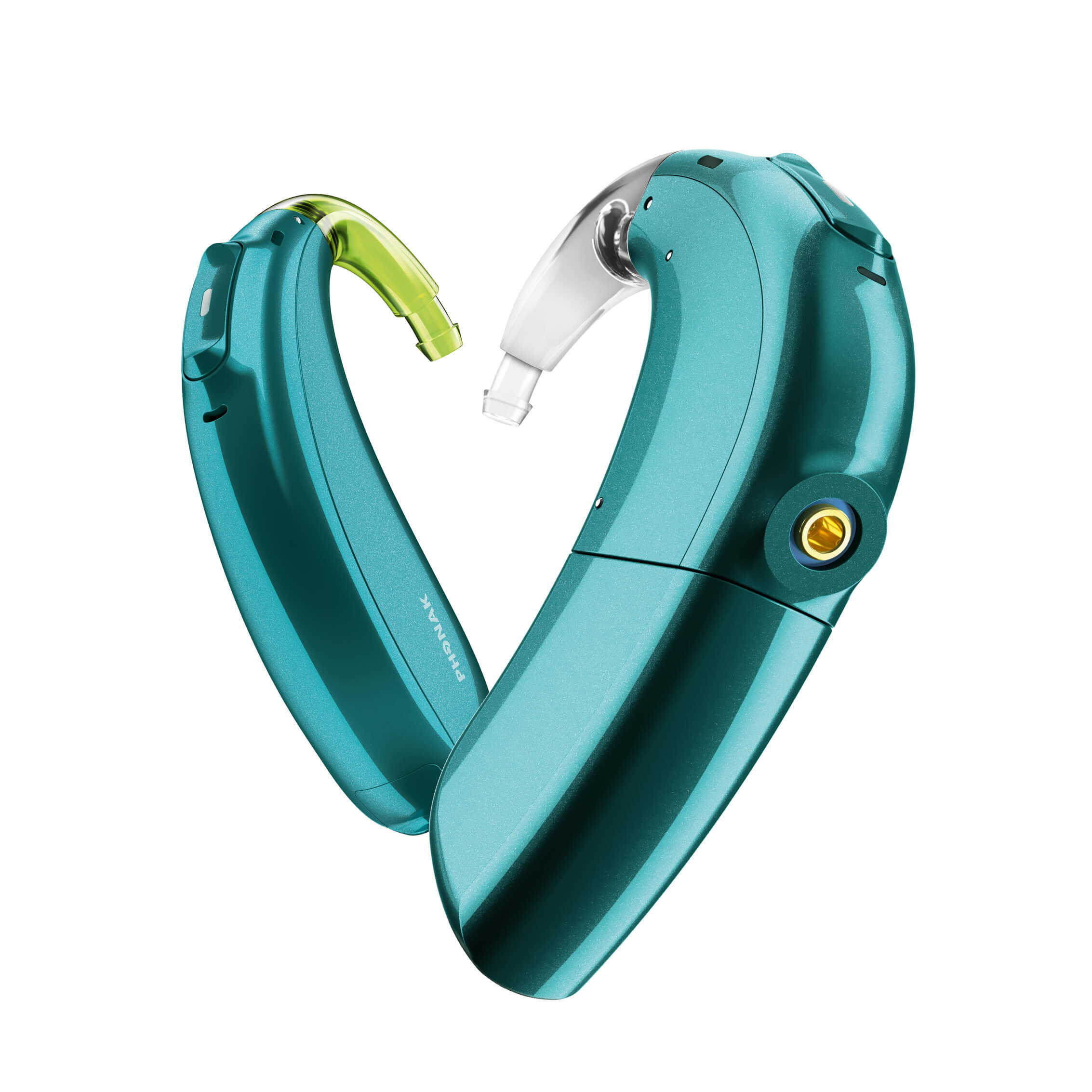
Since many people with hearing loss have hearing loss in both ears, though often to varying degrees, it is not surprising that approximately 80 percent of all CI users worldwide have a bimodal hearing solution.
These advantages also support this:
- Improved sound perception due to the complementary nature of the two systems
- Less listening effort and fatigue
- Preservation of natural hearing in one ear—with clearer speech understanding through the CI ear
A bimodal fitting—where the CI side and the hearing aid are coordinated in terms of device settings and functions, sound processing strategy, and the hearing programs used—is designed to provide the best possible hearing experience. These adjustments are made by a hearing care professional specializing in cochlear implants. Use our hearing care professional search to find experts near you. You can also use the “Cochlear Implants” filter.
The settings can also be readjusted for older implants. This means that both sides respond similarly to the current listening environment.
This ensures the best possible hearing outcome for the user, as both ears respond together and consistently to incoming sounds. Modern hearing technologies play a key role here. For example, they offer the ability to connect both sides via Bluetooth to a wide variety of devices, allowing you to stream TV, music, or audiobooks to both ears, as well as receive phone calls on both sides through your hearing systems.
Ihr-Hörgerät.de: Often, patients already have hearing aids, but these—usually in one ear—no longer work adequately. In such cases, a cochlear implant on one side may be a good option. What should be considered with this type of bimodal hearing solution?
Dr.Jérôme Servais:Hearing connects people, especially through speech. As hearing loss progresses, those affected can no longer understand everything and have to ask people to repeat themselves. Even with hearing aids, communication can be so severely impaired that people increasingly withdraw and become isolated. This process must be prevented, as it can lead to other health problems. A cochlear implant or other types of implants can offer a solution. This breaks the vicious cycle of hearing loss.
Read more about Dr. Servais’s successful approach—which involves direct post-operative rehabilitation to promote activation following implant surgery—and the subsequent steps in hearing rehabilitation in collaboration with audiologists in the second part of our interview.
Learn more about coverage for cochlear implants and a wide range of other information.