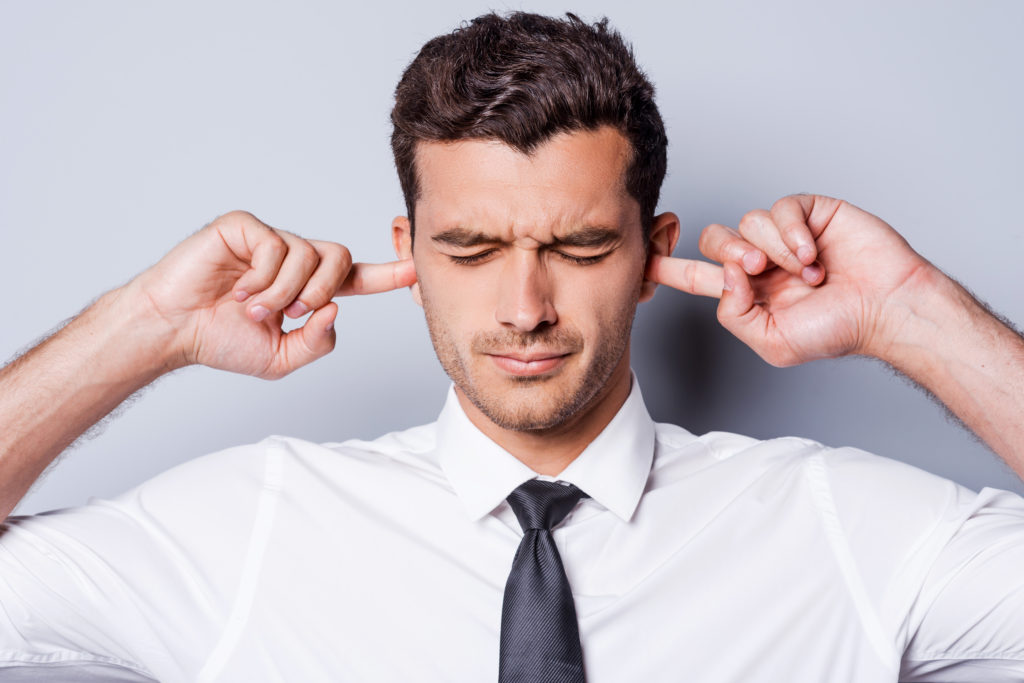
Hearing aids help with tinnitus
When the ear produces unpleasant sounds, hearing aids can often provide relief. At the Tinnitus Center at Berlin’s Charité, various experts work together in an interdisciplinary manner to help tinnitus patients through a holistic treatment program. Doctors specializing in otolaryngology, internal medicine, psychosomatics, and psychology work alongside audiologists, hearing therapists, and physical therapists. One approach involves using hearing aids for tinnitus to counteract the sounds in the ear.

What is tinnitus?
Tinnitus is the Latin term for “ringing.” However, the sound perceived in tinnitus can also be a whistling, buzzing, humming, hissing, clicking, or tapping noise. It can be heard in one or both ears.
In addition to stress and certain medications, these unpleasant ear noises can also be caused by physical factors, such as a foreign object in the ear, or viral and bacterial infections. Sudden hearing loss or age-related hearing loss can also trigger tinnitus.
In fact, tinnitus has become a widespread condition. Its causes vary widely. Through a thorough examination, a detailed interview, and subsequent specialized hearing tests, an ENT specialist determines whether the problem lies inside or outside the ear.
In any case, the earlier treatment begins, the lower the risk that the ringing in the ears will become chronic. Tinnitus does not have to be an inescapable fate.
What does tinnitus treatment involve?
Treatment options are as varied as the causes and range from personalized hearing aid fitting to psychotherapy.
Acute tinnitus, which often occurs alongside sudden hearing loss, should be treated as sudden sensorineural hearing loss. An ENT specialist often prescribes corticosteroid treatment for this condition. In addition, damage to the auditory nerve should be ruled out as a possible cause of tinnitus.
If the ringing in the ears persists for several months, it is referred to as chronic tinnitus. In many cases, hearing aids can produce good results here. This is because they allow people with hearing loss to hear sounds they might otherwise miss. This effectively masks the tinnitus sound and shifts your focus away from it. If you can hear everything that is going on around you, this can often lead to a reduction in the internal tinnitus sound.
Other treatment options include:
- Sound therapy with hearing aids: Hearing aids for tinnitus can be programmed to contrast the internal sound of the tinnitus. By increasing external noise, it becomes more difficult to perceive the internal sounds, and the brain can focus on external sounds. The positive effects of hearing aids on tinnitus are particularly pronounced in people who have hearing loss in the same frequency range as their tinnitus.
- Auditory stimulation:Acoustic stimulation can also provide short-term relief from tinnitus. A variety of sounds can be used for this purpose, including music with different filter types, amplitude-modulated sounds at various frequencies, or various types of noise stimulation.
- Meditation, relaxation exercises, and stress management:Such exercises—which are available online, for example, and can be streamed directly to your hearing aids via Bluetooth—can help alleviate tinnitus. If you do not have hearing aids with Bluetooth technology, you can also access these exercises via your smartphone or tablet.
Adequate relaxation is very important for tinnitus patients at every stage of the condition. This helps reduce excessive focus on the distressing sound. There are a number of different techniques that can help those affected learn to relax. These include, for example, autogenic training, biofeedback, and progressive muscle relaxation.
Improved Communication
Loud tinnitus can make it difficult to participate in conversations. Hearing aids for tinnitus help by amplifying external sounds above the perceived volume of the tinnitus. Improving communication with one’s surroundings can help reduce symptoms of stress and anxiety, which are often associated with hearing fatigue. For severe hearing loss, a cochlear implant is recommended. Just as a hearing aid does for tinnitus, hearing with an implant often helps mask the distressing ringing in the ears.
See how good hearing works