
How to Make Vacation a Pleasure With Hearing Aids
Traveling with a Cochlear Implant: Vacation time is the best time of the year. With these tips, you can enjoy traveling with a cochlear implant without any worries.
Traveling with a hearing implant is no problem. With these tips, you can start your vacation with complete peace of mind.
Tips for Vacationing with Hearing Aids – What Should You Keep in Mind When Traveling with Hearing Implants?
Make sure you don’t run out of power
Many audio processors for cochlear implants (CI) and other hearing aids can be powered by both disposable batteries and rechargeable batteries. When traveling with a hearing implant, we recommend packing more batteries than you actually need. That way, you’ll be prepared for any unexpected situations.
Most processor rechargeable batteries are designed to work with various power outlets around the world. This means you won’t need to bring an additional voltage converter. However, be sure to bring adapters for the different types of outlets.
If you’re not sure whether you’ll have a reliable power source at your vacation destination, bring a portable charger that can be connected to your rechargeable battery via a USB cable. You can also charge the battery in the car via a USB port or, just like a cell phone, with an adapter that plugs into the car’s cigarette lighter.
Works in a variety of environmental conditions—but protect it from moisture and dampness
Many vacationers who travel with hearing implants wonder whether environmental conditions affect the audio processor’s performance. In general, audio processors are designed to function reliably in many different environments. They are usually well protected against dust and moisture. Nevertheless, moisture generally poses the greatest challenge, as wetness—including sweat—can impair the functionality of audio processors. So don’t forget to pack your drying and storage kit, use it regularly, and follow the basic care instructions for your hearing implants.
If you sweat heavily, you should use the drying box to remove excess moisture from your audio processor after exercising.
Also, do not expose your audio processor to direct sunlight and avoid extreme temperatures whenever possible. This is because low temperatures can affect the device’s operating time. However, if the device is worn behind the ear, this only applies under extreme conditions.
Enjoy Vacation Sports and Activities—Protected from Sand
Exercising with hearing implants is no problem as long as you adequately protect your audio processor from moisture, dust, and sand. Running, dancing, yoga, or gymnastics are all possible as usual, even on the beach. Just get started. When playing beach volleyball, you can wear a sports headband or a protective cover to keep sand away from the audio processor. This also protects the audio processor during other high-intensity sports or sports with potential for contact, such as soccer or handball.
Cochlear implants and other hearing systems are generally very durable. Sports that require a helmet, such as biking or skiing, are therefore no problem at all—in fact, the helmet protects the audio processor. It’s important that the helmet fits snugly and comfortably and doesn’t put any pressure on the implant or the audio processor.
Off into the cool water: swimming, diving, and other water sports
Hearing implants are no obstacle to swimming and other water sports. While in the past the audio processor always had to be removed for these activities, there are now waterproof systems that make water sports with a CI even more enjoyable. In most cases, a silicone protective cover is placed over the audio processor, the transmitter coil cable, and the transmitter coil, completely covering them. It’s recommended to wear a swim cap over the processor to ensure it stays securely in place and doesn’t get lost. Scuba diving is also possible with cochlear implants down to a maximum depth of 40 meters (maximum pressure of 5 bar).
Who should you notify when traveling with a cochlear implant?
It’s best to ask in advance whether the hotel has rooms equipped for people who are deaf, such as those with visual fire alarms or vibrating alarm clocks. It’s recommended that you inform hotel staff or your tour guide, for example, in case you need assistance.
Checklist for Traveling with a Hearing Implant
In addition to the audio processor you wear, here are some things you shouldn’t forget to bring on vacation if you wear a hearing aid:
- Patient ID card for your hearing implant
- Remote control
- A sufficient number of spare batteries
- Spare rechargeable battery and charger
- Spare coil cable
- Audio processor tester
- Drying system
- Cleaning brush
- Telecoil, if you use one
- Contact information for the nearest hospital with an ENT department or the nearest branch of your hearing aid manufacturer
- A printed or digital copy of your audio processor settings, in case you need to consult an audiologist
- A vibrating alarm clock if you are traveling alone
- For beach and swimming vacations: A waterproof protective case for your audio processor so you can hear clearly even in the water.
- For athletes: a sports headband or protective case, and a suitable helmet—for example, for cycling
Traveling by Air with a Hearing Implant—What Should You Keep in Mind?
There’s even special hearing protection available that makes flying much more comfortable—even for people who don’t wear hearing aids. Many people with cochlear implants fly regularly without the slightest problem. To be on the safe side, however, you should check with the airline in advance to see if there are any special regulations regarding cochlear implants or batteries. For example, the Federal Aviation Administration (FAA) in the U.S. stipulates that all batteries or battery chargers containing lithium must be carried only in carry-on luggage and may not be loaded into the aircraft’s cargo hold—unless they are inside an electronic device. The reason: They pose a potential fire hazard that would be more difficult to contain in the cargo hold than in the cabin.
Pack all accessories for your implant in your carry-on luggage
That way, you’ll have everything you need right at your fingertips. And if your checked luggage is delayed or lost, you’ll still be able to hear.
Going Through the Metal Detector at the Airport with Your Audio Processor
Do you have to remove your audio processor before going through the metal detector at the airport? No—you can walk through the metal detector with your audio processor; it won’t be damaged. However, you may hear a faint noise due to electromagnetic interference. The handheld scanner also won’t damage either the implant or the processor. It’s very unlikely that an alarm will go off. Of course, the processor and implant are detectable in the body scanner. Therefore, show the staff your patient ID card and explain that it is a hearing implant so that they are aware of your situation with the implant system.
If you do remove the audio processor, remember to let the staff know that you cannot hear anything until you put it back on. Ideally, you should avoid having the audio processor go through the X-ray scanner, as there is a small chance that the microphones could be damaged in the process. Instead, you can ask for your audio processor to be checked manually. If you do go through a scanner, make sure the audio processors are placed in a container that is free of static electricity—such as a cloth bag—to prevent damage from static electricity.
Does the audio processor have to be turned off during takeoff and landing?
The safety guidelines of the European Aviation Safety Agency (EASA) and the FAA recommend that airlines allow audio processors to remain turned on during all phases of flight, including takeoff and landing. However, it’s best to check with your specific airline. If you do turn off your audio processor during the flight, let the flight crew know that you won’t be able to hear any safety announcements.
If you’re concerned about missing flight information, sign up with the airline to receive text messages about gate changes, delays, or boarding announcements. And keep an eye out for the induction loop symbol, which indicates that the area is equipped with a hearing loop. It filters out background noise, making it easier to hear in noisy environments.
Listening to Music and Movie Channels on the Plane
You can connect your audio processor to the in-flight entertainment system during the flight using an audio input cable with a jack plug. Sometimes an adapter is required.
What should you do if something goes wrong?
It’s always a good idea to bring spare parts with you. Many hearing aid providers offer vacation or loaner kits for this purpose. It’s also best to find out in advance where the nearest hospital with an ENT department or the nearest branch office is located so that you can get help quickly in an emergency. You can ask your provider for the relevant details.
And now—off on vacation! Have a safe trip with your hearing implant!
For more information on exercising with hearing aids and traveling with a cochlear implant, click hereand here.
You Might Also Be Interested In

Want to bring a beach vacation home with you?
Why We Can Hear the Sound of the Ocean in Clams | Can You Hear the Sound of Your Own Blood? | Clams Act as Resonating Chambers

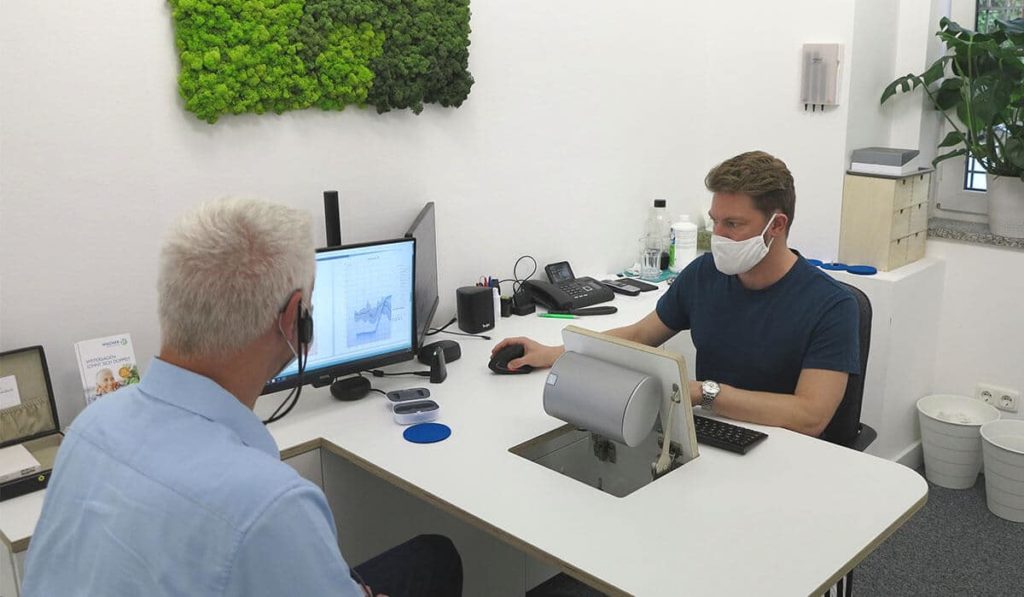
Mein neues Gadget zum Telefonieren, Konferieren, Chatten und Hören
Schlecht Hören, das tun doch nur Alte. Dachte Hans Frenken auch, bis er sich zu Hause immer öfter verhörte, häufig nachfragen musste und in Webkonferenzen Kopfschmerzen bekam. Doch dann kam er ganz einfach zu digitalen Hörgeräten.