“Pardon?” – If conversations are becoming more difficult, you find yourself turning up the TV volume higher and higher, or you’re having trouble with phone calls, you may be experiencing early-stage hearing loss. Many people in this situation then ask themselves: What exactly is the process for getting a hearing aid?
Find out how to go from your initial suspicion to finding the best hearing solution.
What is the process for getting a hearing aid?
The hearing aid fitting process describes the structured sequence of steps from the initial hearing test to long-term care with hearing aids provided by a hearing care professional. This process typically consists of three coordinated steps.
1. From Suspicion to Diagnosis
The first signs of hearing loss often come from self-tests, such as an online hearing test. Family members or friends also usually point out to those affected that they may no longer be hearing well. However, this is no substitute for a medical examination.
A definitive diagnosis is made by an ENT specialist. During the appointment, your hearing will be professionally assessed with a hearing test, and the cause of the hearing loss will be determined.
If a hearing aid is recommended, the ENT specialist will issue a prescription. This is required for statutory or private health insurance to cover the costs.
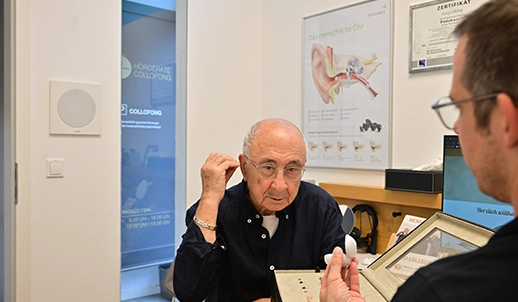
2. Consultation and real-life testing at the hearing care professional's office
With the prescription, you then go to the hearing care professional. This is where the most important part of the hearing aid fitting process begins:
- Selection of suitable hearing systems
- Custom fitting based on your hearing profile
- Comparison of several models
- An offer of at least one hearing aid with no out-of-pocket cost
During the trial period, you’ll test the hearing aids in real-life situations—at work, while shopping, or during conversations with your family. Only once you’re satisfied with the sound quality, comfort, and technology will you decide which hearing aids you’ll wear going forward.
3. Decision and Long-Term Support
After you’ve made your selection, the hearing care professional will discuss the following questions with you:
- What costs does health insurance cover?
- Is there a private copayment?
- What services are included?
Regular checkups, fine-tuning, and maintenance ensure long-term good hearing. This is because the hearing aid fitting process doesn’t end with the purchase of hearing aids; rather, it’s designed to include long-term care from the hearing care professional. Therefore, especially in the beginning, you should plan to visit your hearing care professional regularly for further fine-tuning of your hearing aids. A little patience is also required here. In addition, your ears and brain need time to gradually adjust to the new hearing aid.
Why the hearing aid fitting process is so important
A clearly structured process for hearing aid fitting provides peace of mind—medically, organizationally, and financially. The EuroTrak Hearing Study 2025 shows the positive impact of hearing aid fitting: 47 percent of people with self-reported hearing loss already use hearing aids. And the vast majority benefit noticeably from them.
For example, 97 percent of hearing aid users report that their quality of life has improved as a result of wearing hearing aids. 85 percent say their expectations have been met or exceeded. In addition, 75 percent feel safer in traffic since they started wearing hearing aids. There are also psychological benefits: People with treated hearing loss are significantly less likely to be at high risk for depression than those with untreated hearing loss.
Hearing aid care is also financially covered. As the EuroTrak Hearing Study 2025 shows, 92 percent of hearing aid users receive full or partial reimbursement from their health insurance.
However, the study also shows that 64 percent of people with untreated hearing loss are unaware that coverage is available. Out of concern about high costs, they often forgo treatment. More education is needed in this area. Statutory health insurance plans cover the costs of hearing aids.
A transparent hearing aid care pathway helps close this information gap, prevent poor decision-making, and enable people to benefit early on from the health and social advantages of modern hearing aids. According to the EuroTrak Hearing Study 2025, many people with hearing loss wait an average of three years from the initial diagnosis of hearing loss to the fitting of hearing aids.
Tips for Those Affected
- Take action early: Have your hearing tested regularly, at least every two years starting at age .
- Diagnosis by an ENT specialist:Reimbursement by your public health insurance is only possible with a doctor’s prescription.
- Try out several hearing aids:Get comprehensive advice from your audiologist and test different hearing aid models in everyday situations.
- Hearing aids with added comfort:You can pay an additional fee for specific technical features that you need in your daily life or that offer greater comfort.
- Clarify costs transparently:Actively inquire with your health insurance provider about reimbursement.
- Be patient during the adjustment period:Getting used to your hearing aids takes time—give yourself that time.
- Attend follow-up appointments:Fine-tuning by your hearing care professional significantly improves your hearing experience.
Hearing aid users are satisfied
The average daily wear time for modern hearing aids is 8.8 hours, which is a clear sign of satisfaction and effectiveness. Hearing aids should be worn all day long, not just for specific activities like talking on the phone or shopping. Only then are the brain and hearing trained, and hearing can improve again.
Today’s modern hearing aids offer:
- Automatic noise adaptation, noise reduction
- Better speech understanding in groups
- Connectivity with smartphones and TVs
- Discreet designs (so-called in-the-ear hearing aids)
- High wearer acceptance
Hearing Aid Consultation from an Expert
The hearing care professional is your primary point of contact throughout the hearing aid fitting process. They customize the hearing aids to your individual hearing profile, explain the technology in an easy-to-understand way, and continue to support you after the fitting with service, maintenance, and regular fine-tuning.
This support is especially crucial during the adjustment period: Your brain first has to get used again to sounds and subtle nuances that your hearing had previously stopped perceiving. Through targeted readjustments by your hearing care professional, your hearing gradually becomes more natural and comfortable.
This ongoing support pays off: According to the EuroTrak Hearing Study 2025, satisfaction with hearing care professionals in Germany stands at around 90 percent.

In Germany, the provision of hearing aids is clearly regulated. You can find an ENT doctor or hearing aid specialist near you using our ENT search or hearing aid specialist search.
Get your hearing checked!
Starting at age 50, hearing naturally begins to decline, and it’s recommended that you have your hearing tested regularly. As a first step, take our online hearing test from the comfort of your own home. While it doesn’t replace a hearing test at a hearing care professional’s office, it will give you an initial assessment of how well you can hear.