Early Signs of Hearing Loss
People with hearing loss often have difficulty following conversations. These include repeatedly asking, “What did you say?”, having trouble following conversations in noisy environments, and feeling that others are speaking unclearly or too softly. These challenges can often lead to misunderstandings, which can sometimes result in awkward situations. Another early sign of developing hearing loss is when people fail to hear everyday sounds. This includes, for example, the ringing of the phone or the doorbell, as well as soft background noises like birds chirping, which they used to hear without any trouble. In addition, people often have trouble pinpointing the exact source of a sound, which can make daily life even more difficult. Another early sign of hearing loss is a change in how sounds are perceived. For example, the volume on the TV or radio may be turned up progressively louder, a change that others often notice as well. Furthermore, certain sounds or frequencies may seem to “disappear,” impairing sound perception. Participating in conversations with multiple people becomes particularly taxing, as these conversations become increasingly difficult to follow.Increasing social withdrawal can also indicate the onset of hearing loss. Those affected avoid social gatherings or public events because they fear they won’t be able to understand conversations. This often leads to a feeling of isolation, as social interactions become increasingly taxing or unpleasant. Due to the uncertainty of not understanding announcements or group conversations, social participation continues to decline. Hearing loss can also be accompanied by physical symptoms. Many people affected suffer from concentration problems or feel increasingly tired after conversations, as the brain expends significantly more energy on hearing. In addition, a ringing or buzzing in the ear (tinnitus) frequently occurs, which is often associated with hearing loss. The constant effort required to follow conversations can also trigger headaches or stress, further impairing quality of life.
When is a hearing test recommended?
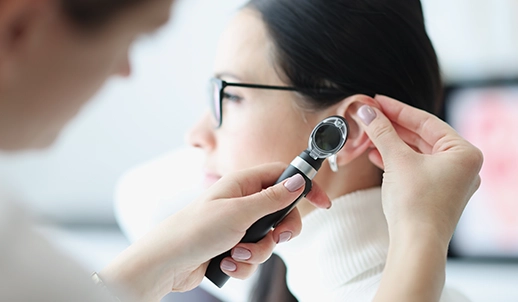
If you experience one or more of these signs, it is advisable to have a hearing test done by an ENT specialist or hearing aid specialist. People aged 50 and older, in particular, should have their hearing checked regularly, even if they have no specific symptoms. This is because a test helps detect gradual hearing loss early on and take appropriate action. By the way: Hearing tests are painless, straightforward, and provide quick insight into the state of your hearing.
Benefits of Early Diagnosis
If hearing loss is detected early, it can usually be treated with modern hearing aids that are customized to the individual’s needs. In addition, addressing hearing loss early on helps prevent secondary problems such as social isolation and cognitive decline. Because communication and social interaction become possible again, quality of life can be significantly improved.

Here's How to Maintain Your Hearing Health
- Regular checkups: Have your hearing tested by an ENT doctor or an audiologist, especially if you’ve already noticed the first signs of hearing loss.
- Use hearing protection: Don’t stay in noisy environments longer than necessary, and wear hearing protection when needed—for example, at concerts or in loud work environments. Noise levels of 85 decibels or higher can cause permanent hearing damage.
- Healthy lifestyle: A balanced diet and sufficient exercise can also have a positive effect on blood flow to the inner ear.
- Early fitting: Modern hearing aids are barely visible and feature advanced technology to compensate for hearing loss. The earlier they are fitted, the easier it is to get used to them.
Don’t neglect your hearing health. Hearing tests are simple and quick to perform—whether you see an ENT specialist or a hearing care professional. Starting around age 50, our hearing tends to decline, usually gradually. Find out here what you should know about age-related hearing loss and why the ability to concentrate can also play a role in hearing.
See how good hearing works

Facts About Tinnitus

Hearing Loss Explained Simply

Tips & Tricks for Living with Hearing Loss — Episode 1: Talking Openly About Hearing Loss

Tips & Tricks for People with Hearing Loss — Episode 2: All the Things a T-Coil Can Do

How much do modern hearing aids cost?

How is a hearing test conducted?

Teaser Video Series: Tips & Tricks for People with Hearing Loss

Tips & Tricks for People with Hearing Loss — Episode 3: Improving Room Acoustics

Tips & Tricks for People with Hearing Loss — Episode 4: Saying What You Need

Tips & Tricks for People with Hearing Loss — Episode 5: Subtitles for All Movies

How often do you take a hearing test?

What are the benefits of hearing aids?

A Flight Through the Ear: Hearing Explained Simply