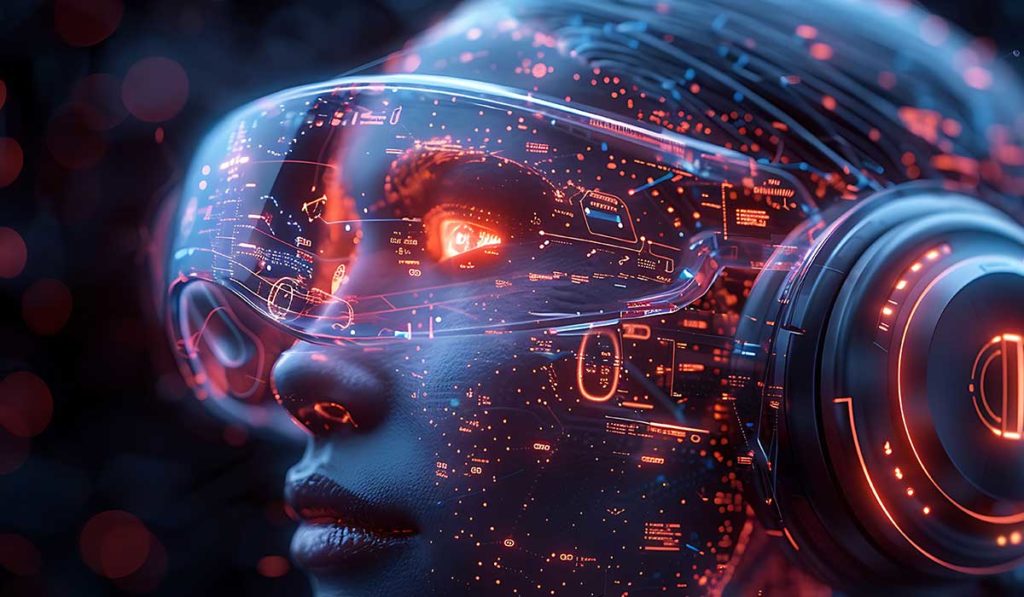
Technology and research are advancing rapidly and are also transforming the way we hear. While modern hearing aids have long been connected to digital devices and applications—for example, in smart homes—the combination of augmented reality (AR) and virtual reality (VR) is opening up new possibilities. They create digital sound spaces that lay the foundation for even more personalized fitting and consultation. This brings technology to life and makes the consultation more vivid.
AR and VR in Hearing Research: Realistic Soundscapes for Better Fitting
In traditional hearing diagnostics, hearing tests are usually conducted under idealized conditions—such as in soundproof rooms and with clearly defined signals. While this provides precise measurement results, it only partially reflects how people actually hear in everyday life. This is exactly where modern AR and VR technologies come into play: they create realistic soundscapes in which hearing can be experienced just as it is in real life.
Current research projects, such as the BEARS program at Cambridge University Hospital in collaboration with Imperial College London, use virtual reality to simulate realistic everyday situations for hearing training. These include, for example, conversations in noisy environments such as classrooms or public spaces. Through these exercises, users train their ears to pinpoint sound sources and better distinguish speech from background noise.
International research groups, such as those affiliated with the European Acoustics Society (Euracoustics), are also developing immersive VR and AR listening environments for research and audiological practice. These simulations make it possible to test hearing aids or cochlear implants under conditions that closely resemble everyday life, such as in the presence of background noise or in multi-person situations. In these digital sound spaces, people respond more naturally to speech, sounds, and directional sources, so that the results more realistically reflect the actual hearing experience in everyday life.

Hearing Test in a Real-World Setting: How Well Do You Really Hear?
How well can you understand speech when there’s a lot of noise around you—for example, at a train station, in a stadium, or during a conference call? Try it out for yourself: With our listening scenarios, we’ll put your hearing to the test.
Better Understanding Through Immersive Experiences
Using VR glasses or so-called “auditory AR” headsets, hearing care professionals can immerse their clients in virtual listening situations, such as a restaurant or a city park. This allows clients to experience firsthand how different programs or microphone settings affect speech understanding and spatial hearing.
What does this mean in practice?
These developments lay the foundation for a new generation of smart hearing aids that are personalized, adaptive, and tailored to real-life listening situations.
This opens up new possibilities for hearing care professionals in counseling and fitting:
- Personalized Simulation: Virtual sound environments make hearing aid fitting more realistic. Clients can directly experience how their hearing system sounds in various everyday situations, whether in traffic, a restaurant, or their living room.
- Targeted training: VR-based hearing training supports directional hearing and speech comprehension in complex environments. This actively trains and improves hearing.
- Better counseling: Visualizing acoustic scenes makes the technology tangible. This builds trust and promotes understanding of how modern hearing aids work.
- AI integration: Adaptive hearing systems recognize situations, remember individual preferences, and automatically adjust to the respective environment.
AR and VR are revolutionizing the field of hearing care. They bridge the gap between research and practice with the goal of improving hearing. This leads to hearing solutions that make speech clearer and help people participate more actively in life again. You can learn more about this in our article “The Virtual Reality Revolution.”



