The Hear the World Foundation Improves the Quality of Life for Children Worldwide
The earlier hearing loss is detected and treated in a person, the greater the positive impact on that person’s life. That is why the Hear the World Foundation supports aid projects worldwide that benefit children with hearing loss, to enable them to develop appropriately for their age.
At a Glance
- Hear the World Foundation Aid Projects
- Extremely important: Early detection and hearing care for children
- A holistic approach to sustainable hearing care
- Enabling a lifetime of hearing
Joelle Pianzola, director of the Hear the World Foundation, told us in an interview how hearing aid projects work around the world.
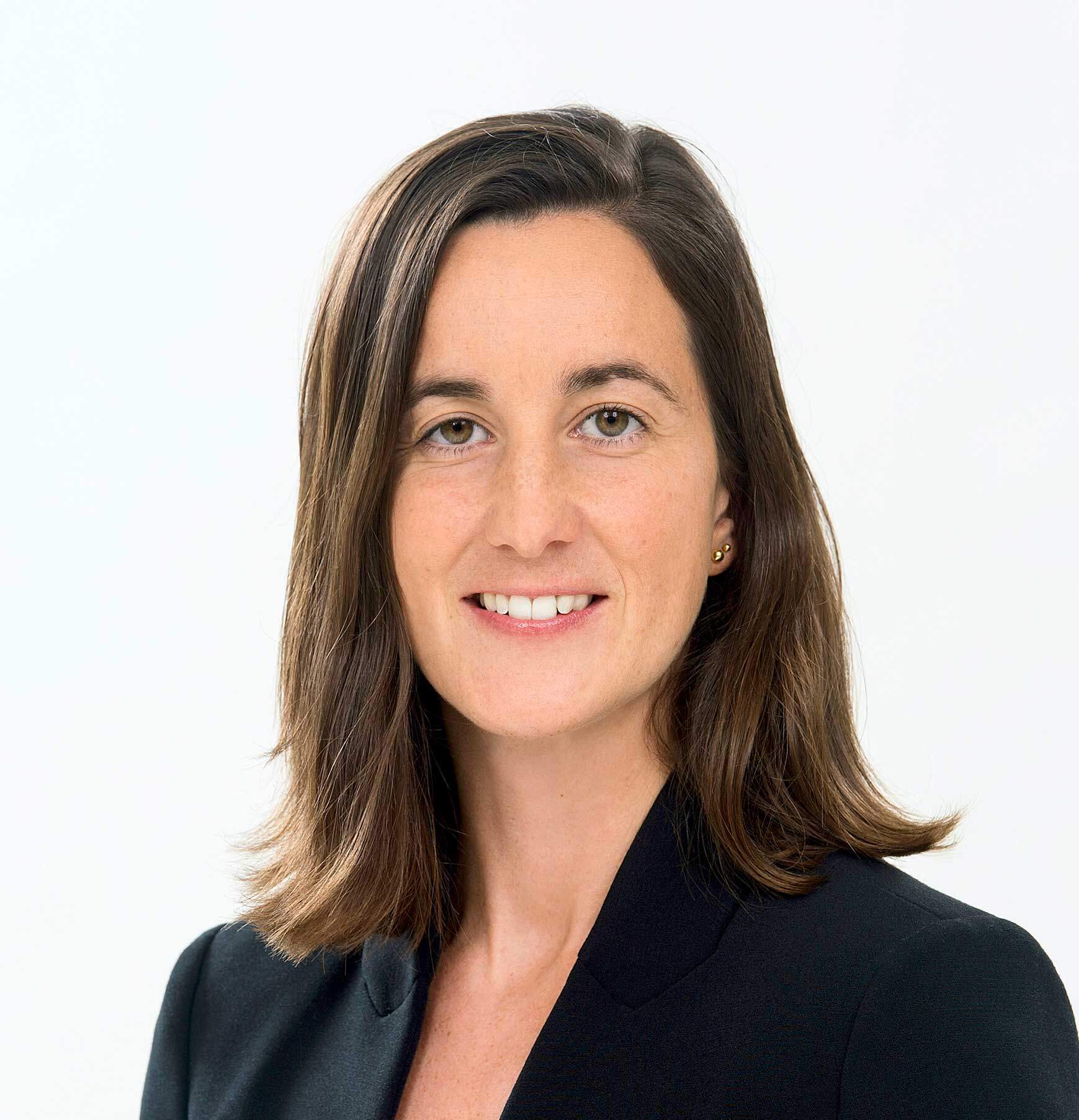
Ms. Pianzola, through the Hear the World Foundation, you support children with hearing loss in low- to middle-income countries in their age-appropriate development. What do your aid projects look like?
As a nonprofit foundation, we not only provide financial support to our project partners—for example, in India, Vietnam, or Mexico—but also assist them with knowledge and expertise in implementing their aid projects. To this end, we can draw on a broad international network of volunteers who are employees of the Sonova Group. Most of these volunteers are active in the countries where the respective Group companies are located—the same countries where they work.
Our goal is to achieve a sustainable social impact through our activities. This means that we facilitate the implementation of projects that establish and ensure high-quality, long-term hearing care locally, and whose impact is verifiable.
The charitable projects we support are based on a holistic approach. They consist of the core components of the “Hearing Health Value Chain.” Every single step is essential to improving the quality of life for children with hearing loss. Through this approach, we open up a world for them in which they can communicate better and be socially integrated. To this end, we work closely with local teams and provide them with guidance on technical expertise, device use, and process-oriented work.
As you just mentioned, you rely on programs based on a holistic approach that consists of the core components of the Hearing Health Value Chain. Could you explain this approach in more detail?
With the “Hearing Health Value Chain,” we aim to implement a holistic approach to high-quality and sustainable hearing care. This is the goal we pursue in our projects. We support activities related to the prevention and identification of hearing loss, accurate diagnosis and treatment, and effective, long-term follow-up care. This also includes the training and continuing education of professionals, as well as the necessary infrastructure with appropriate diagnostic equipment.
Who is the focus of her work, and what aspects does she consider essential?
The clear focus of our work is on children. The earlier hearing loss is detected and treated in a person, the greater the positive impact on their life. In addition, the training and continuing education of local experts are of crucial importance. That is why we ensure that our efforts not only provide temporary relief but also have a lasting impact. Our partners in each country should be empowered to continue the project work independently. Prevention efforts take place primarily in schools and within families themselves. There, we educate people about the causes of hearing loss and how it can be prevented. Parents play a vital role in their children’s hearing success. Once hearing loss has been identified and treated, it is important to ensure that the affected child wears their hearing aid regularly. Guardians must work closely with their child to promote the child’s communication skills, which were often underdeveloped before the child began using a hearing aid. Accompanying the child to speech therapy is also very important. Parents bear a very great responsibility. We try to help them by providing them with the most important information.
In the 2021/2022 fiscal year, you supported 16 aid projects in 13 countries with hearing technology, financial resources, and technical expertise—despite the COVID-19 crisis. To what extent did the pandemic impact your aid projects?
The pandemic had a serious impact on our projects. Many preschools and schools had to close. These are exactly the places where we normally conduct hearing screenings. In addition, many families were no longer able to travel to the treatment centers. Healthcare workers were also absent for longer periods due to illness.
In which countries were the aid projects particularly hard hit by the pandemic? And how did you handle that?
Unfortunately, low- and middle-income countries in particular are being hit even harder by the COVID-19 pandemic than wealthier countries. Despite the difficult circumstances, our partners are doing everything they can to keep the projects moving forward. Our project partner in Peru, for example, has developed survey-based hearing screenings. Parents are asked to closely observe and record their children’s behavior in order to identify potential hearing loss. This remote approach has been very successful and is therefore now being offered as a standardized service.
You Might Also Be Interested In
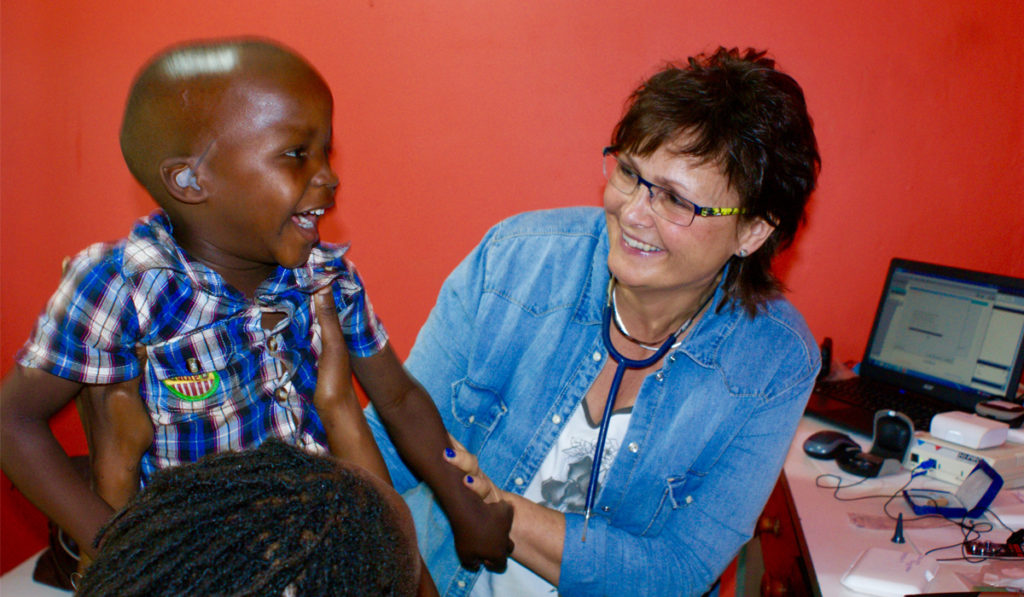
Starthilfe ins Leben
„Wenn Kinder zum ersten Mal ihre eigene Stimme hören, ist das Gänsehautfeeling pur“ – diese Momente sind der Antrieb für das Engagement von Heike Nörenberg in Uganda.

Skateboarding macht Kinder mit Hörminderung stark
Der „Vater der deutschen Skateboard-Szene“ schafft mit einem Skatepark für Kinder mit Hör-, Seh- und geistiger Behinderung in Namibia Raum für Inklusion.
World Children's Day: Hearing Aids for the World
According to the WHO, 32 million children worldwide are affected by hearing loss. In Africa and Syria, these children are provided with hearing aids from Germany.
Over the past two years, you have placed greater emphasis on the exchange of experiences among the project partners and have benefited greatly from each other’s approaches to solving problems. What did that look like in practice?
Our program managers on the foundation team work closely with project partners in Asia, Latin America, Africa, Europe, and the Middle East. Their role is to ensure that our financial and technological support reaches the field. To this end, we organize regular training sessions on various audiological topics with the help of our extensive volunteer program, which includes experts. These sessions are then held according to the needs of our partners.
It is also very important to us to promote exchange between the various project teams in different countries. Despite existing regional differences, our partners often face similar challenges and are well-positioned to support one another. Soon, there will also be an online partner platform that enables and systematically promotes the exchange of documents, presentations, and other information. There is also close collaboration in the area of communication so that we can better share experiences and results with one another.
Can best practices for Germany be derived from this to further improve hearing health?
For people affected by hearing loss, long-term care is essential. After all, only this continuity helps ensure lifelong hearing. Ensuring this long-term care in the best possible way is a major challenge in our projects and, of course, an important issue in Germany and around the world. The support and guidance provided by a hearing care professional always plays a crucial role in this regard.
Ms. Pianzola, thank you very much for the interesting conversation.
Through the “Hearing Without Borders” project, hearing care professionals are helping people with hearing loss in Ukraine. You can learn more about this in our article “Hearing Aid Care Without Borders.”