Why Making Music Can Help Alleviate Hearing Loss and How to Enjoy Music Despite Wearing a Hearing Aid
Making music can help with hearing loss. That’s because playing an instrument enhances auditory perception. And: even with a hearing aid, it’s possible to enjoy music and play an instrument.
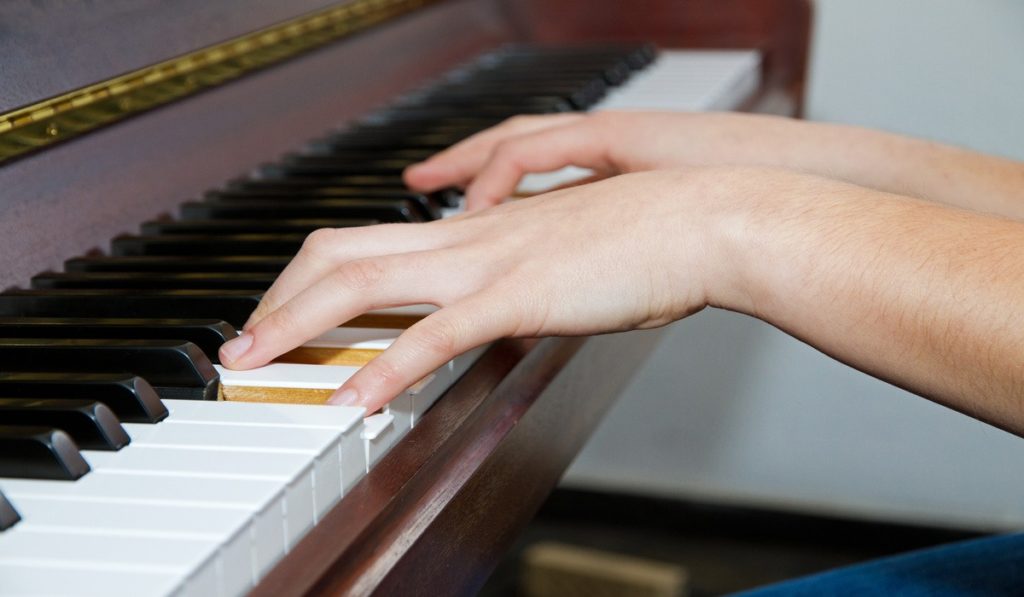
“I believe that music itself is healing,” the American singer, pianist, and songwriter Billy Joel once said. And indeed, music has many positive effects on our health and memory. As a U.S. study confirms, music can help combat hearing loss. This is because playing an instrument and musical training can improve hearing ability. It has been shown that people with hearing loss who play an instrument perceive sounds better and are better able to remember them than non-musicians.
Can Enjoying Music Improve Hearing?
Listening is an active skill. It requires a certain degree of concentration, attention, interest in sounds, and focus.
If you practice concentrating on sounds, you can improve your hearing. Music is particularly effective for this. Listening exercises can help you identify where sounds come from and how they are produced. This has a positive effect on your hearing.
Listening to music isn’t just fun—it can also have a positive impact on your health and well-being. Among other things, music can improve your mood, reduce stress, alleviate anxiety, boost athletic performance, improve memory and hearing, relieve pain, and provide comfort.
How can you improve and train your hearing?
You can train your hearing regularly, much like musicians do unconsciously. If you’re musical or have a good understanding of music, these simple everyday exercises can help you.
- Listening to Music
When listening to music, imagine how it’s being played and try to distinguish which chords or notes come from which instruments, such as the piano, violin, or bass.
- Active listening
Try to distinguish between different sounds in your surroundings. Close your eyes to do this. Can you tell the difference between high and low pitches? Listen to all the sounds you perceive and identify them—for example, birdsong, footsteps, or the noise of machines or cars.
- Locating Sounds
Place a speaker or radio in one part of the room and play music at a volume that’s comfortable for you. Then set up another speaker, radio, or other sound source in a different spot in the same room. Adjust the volume so that the sounds from both speakers together create a noisy environment. Finally, ask someone to read sentences aloud while you move around the room. With your eyes closed, try to repeat each sentence and also identify where the person is located.
- Listening for Sounds
Turn on the radio in a room and listen to it while you walk through your house or apartment. Try to identify specific words or instruments. Practicing sound localization and identification trains the brain’s ability to locate and understand sounds.
- Use rhythm as a guide
You can also train your sense of rhythm. One simple way is, for example, to listen to a song and then try to tap along to the beat of the drums.
- Sing the notes you play
To do this, you’ll need an instrument that’s properly tuned. As you play a standard major scale (C, D, E, F, G, A, B, C), try to sing each note of the scale as accurately as possible. Play one note at a time and adjust your voice to match the pitch.
- Listen to different genres of music
There is a wide variety of musical styles around the world. While modern Western music is characterized by an eight-note scale, Asian music is often based on a five-note scale. Listen to the different sounds.
- Just start making music again—or take music lessons
It’s never too late to start making music or, for example, to brush up on the piano skills you learned as a child. Take the plunge and sign up for music lessons. Or sing in a choir or as a soloist. This awakens a zest for life and improves your listening skills.
Whether you sing, play an instrument, or simply listen—music is an activity that greatly stimulates the body and mind, is fun, and promotes brain development. Listening to music and using it as a training tool helps you get more out of your hearing aids, improve your hearing, and train your speech comprehension in noisy environments.
Can you listen to music with hearing aids?
Some people who wear hearing aids avoid listening to music because it doesn’t sound right. It doesn’t have to be that way, because hearing aids can be adjusted for music enjoyment. Talk to your hearing care professional about your music preferences.
Human speech ranges from 30 decibels to 85 decibels, which is a dynamic range of about 50 decibels. Music, however, has a dynamic range of more than 100 decibels, with the lower frequencies being the most important. Hearing aids optimized for music must therefore be able to adapt to audio signals with a wide dynamic range without distortion and to a broad frequency range. There are various options available for music lovers who wear hearing aids. Almost every hearing aid with multiple programs can be configured with a music setting or programmed by a hearing care professional. Many hearing aid manufacturers also offer accessories that enhance the audio playback quality from external devices. One of the most important technologies for this is Bluetooth, which wirelessly transmits music directly to the hearing aid’s processor—without distortion or background noise.
Enjoying Music with a Hearing Implant
The ability to enjoy music usually does not come naturally after implantation, but requires targeted hearing and music training. However, many examples show that even musicians with cochlear implants can once again play in an orchestra. Numerous rehabilitation resources for patients and specialists help train musical perception.
A good tip for cochlear implant users, for example, is to start training with familiar songs and melodies to get accustomed to the new way of hearing. For children, children’s songs and simple melodies are recommended.
You Might Also Be Interested In
Die Wirkung von Musiktherapie
Musik bewegt, ruft Emotionen hervor und drückt manche Befindlichkeiten aus, bei denen Worte nicht mehr weiterhelfen. Dass die heilende Kraft der Musik jedoch als eigenständige Behandlungsmethode angeboten wird, ist vielen unbekannt. Die sogenannte Musiktherapie wird einzeln oder in der Gruppe empfohlen und hilft Betroffenen, sich auszudrücken und die Wahrnehmungsfähigkeit zu fördern.

Musik fördert die Konzentration
Diverse Musikstreaming-Dienste wimmeln nur so von sogenannten „Study-Playlists“ – doch was ist da wirklich dran?

Talking Openly About Hearing Implants
[Hearing Implants] What You Should Know About Hearing Systems: A hearing implant often piques people’s curiosity. What exactly is that cool piece of technology on someone’s head?