
What is noise in the workplace?
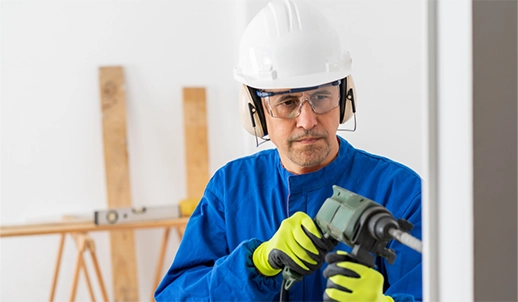
Noise in the workplace refers to all sound events that are perceived as disruptive, stressful, or potentially harmful to hearing. Noise is defined as audible sound that, when of sufficient intensity and duration, can damage hearing and simultaneously trigger psychological and physical reactions. A key factor is not only the volume but also the length of time the ear is exposed to the noise.

Physical reactions:
- Elevated levels of stress hormones such as adrenaline and cortisol
- Elevated blood pressure and heart rate
- Increased breathing rate and muscle tension
- Constriction of blood vessels
- Reduced gastrointestinal motility
- Hearing problems, tinnitus, hearing loss
- Sleep disturbances
Psychological reactions:
- Internal tension and nervousness
- Increased irritability, even aggression
- Difficulty concentrating
- Anger, anxiety, and resignation
- Depression, anxiety disorders, risk of burnout
Decreased performance:
- Reduced concentration and cognitive processes
- Increased frequency of errors
- Loss of motivation
- Impaired speech comprehension and communication
- Increased risk of accidents
Long-term consequences:
- Cardiovascular diseases
- Digestive system disorders
- Irreversible noise-induced hearing loss
Level and Duration
Whether noise affects your hearing depends on two factors: volume and the length of time you are exposed to the noise. Many people are aware that prolonged exposure to high noise levels can lead to noise-induced hearing loss. However, even very brief, extremely loud noise events can cause damage. A daily noise exposure level of 80 dB over an eight-hour period is considered an important benchmark. However, it is not uncommon for workers to be exposed to levels as high as 85 dB and even 135 dB.
Legal Requirements for Noise Protection in the Workplace
Protection against noise is clearly regulated under occupational safety and health laws. The basis for this is the Occupational Safety and Health Regulation on Noise and Vibration, which applies to nearly all work areas. It requires employers to assess noise exposure in the workplace and implement appropriate protective measures. If a daily noise exposure level of 80 dB(A) is reached or exceeded, employees must be informed and instructed. In addition, appropriate hearing protection must be provided. At or above 85 dB(A), the use of hearing protection is mandatory, and occupational health screening is required. Areas with high noise levels should be clearly marked and organizationally separated from other work areas.
The goal of all these measures is to reduce noise at the source as much as possible and to protect your hearing in the long term. For you as an employee, this means greater safety, less stress, and an important step toward preserving your hearing.

Where it gets especially loud—and why it's important to protect your hearing
Noise in the workplace has long since ceased to be limited to traditional industrial jobs. In many occupations, a high level of background noise is an integral part of everyday work. It often results from a combination of technology, people, and interior design.
- Restaurants and Hotels
:
In kitchens, loud kitchen appliances, clattering dishes, exhaust systems, and voices all come together. In dining areas, music, the conversations of many guests, and hard surfaces that reflect sound are added to the mix. Measurements show that noise levels during a shift frequently exceed 85 dB(A). - Trades and Construction
Machinery such as grinders, saws, or presses generate consistently high sound levels. Added to this are impulse noises, such as those caused by hammering or punching. It is precisely these short, very loud noises that pose an increased risk to hearing. - Daycare Centers and Preschools
Noise from children arises from playing, moving around, and the voices of many children at the same time. Studies show that average noise levels in group rooms often range from 70 to over 80 dB(A). This prolonged exposure affects not only well-being but also causes auditory strain. - Events and the Entertainment Industry
Employees at concerts, in clubs, or at events are often exposed to very loud music for extended periods. Measurements regularly show sound levels significantly above the recommended limits, which increases the risk of noise-induced hearing loss. In Switzerland, the V-NISSG regulates protection against harmful noise at concerts. Concerts with amplified sound must be reported and are limited to a maximum of 100 dB(A). If noise levels exceed 93 dB(A), organizers must warn the audience and provide hearing protection free of charge. Organizers and policymakers in Germany are urged to follow this good example and strengthen legal requirements for hearing protection at events.
In all these professions, noise is often considered part of the job. For your hearing, however, this poses a constant challenge. This makes it all the more important to take protective measures early on and to take any changes in hearing seriously.
Five Tips for Actively Protecting Your Hearing in Your Daily Work Life
Noise cannot be completely avoided in many professions. This makes it all the more important to consciously reduce the strain on your hearing and protect it early on. By taking the following steps, you can do a lot to help preserve your hearing in the long term.
- Consistently use
appropriate hearing protection
If you wear hearing protection regularly on the job, it makes sense to have it custom-fitted by a hearing care professional. Well-fitted hearing protection significantly reduces the strain on your ears and is more comfortable to wear than conventional hearing protection. It’s important that the level of noise reduction and comfort are suited to your specific job so that speech remains understandable and you’re more likely to wear the protection regularly. - Plan
targeted breaks from noise
Even short periods of quiet relieve strain on your hearing. Times with lower background noise help your hearing recover and reduce long-term strain. - Increase
the distance from the noise source
. Every additional meter can noticeably lower the sound level. If possible, it’s worth separating high-noise activities spatially or reorganizing them differently. - Pay
attention to your body’s warning signs
A feeling of pressure in the ear, ringing in the ears, or rapid fatigue while listening should be taken seriously. These can be signs of hearing strain and should be investigated. - Have
your hearing checked regularly
Early changes often go unnoticed. Regular hearing tests help detect the onset of hearing loss in a timely manner and take targeted action to address it.
Use our free hearing aid specialist and ENT doctor search to quickly find qualified professionals in your area. Your hearing aid specialist will advise you on hearing protection and help you maintain your hearing health over the long term. Regular hearing tests help detect changes early on. Starting at age 50, it’s recommended to have your hearing checked every two years.
If hearing loss is diagnosed, statutory health insurance in Germany covers the costs of basic hearing aid care. Together with your hearing care professional, you can try out different hearing systems and find the solution that best fits your everyday life. Do something good for yourself and your hearing, especially during your free time. Outside of your daily work routine, it’s worth making a conscious effort to give your ears a rest.
See how good hearing works

Hearing Loss Explained Simply

Tips & Tricks for Living with Hearing Loss — Episode 1: Talking Openly About Hearing Loss

Tips & Tricks for People with Hearing Loss — Episode 2: All the Things a T-Coil Can Do

Teaser Video Series: Tips & Tricks for People with Hearing Loss

Tips & Tricks for People with Hearing Loss — Episode 3: Improving Room Acoustics

Tips & Tricks for People with Hearing Loss — Episode 4: Saying What You Need

Tips & Tricks for People with Hearing Loss — Episode 5: Subtitles for All Movies

How can you learn to listen properly?

Hearing Protection for Musicians



