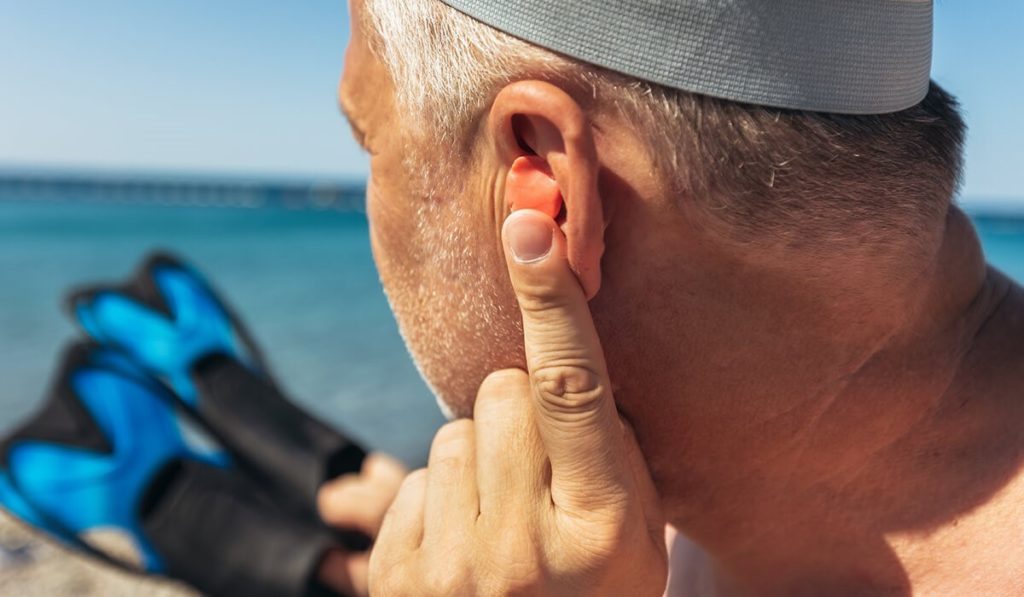
Protection from Water and Noise in Water Sports
Boating, jet skiing, surfing, swimming, scuba diving, snorkeling, sailing, and rowing all have one thing in common: they take place in or on the water. However, recreational activities on vacation and water sports pose serious risks to our hearing. The main causes are usually prolonged exposure to noise and excessive moisture. We’ll explain how you can prevent hearing problems caused by water sports and stay safe all summer long.
What types of conditions can occur when participating in water sports?
In addition to noise-induced hearing loss, there are two common conditions: swimmer’s ear (otitis externa) and surfer’s ear (exostosis). Both of these conditions can be caused by water sports. However, even “regular” swimming and splashing around in a lake can be a trigger. Nevertheless, there are significant differences between the two.
What are the symptoms of swimmer's ear?
The German term “Schwimmer-Ohr” (swimmer’s ear) already suggests that swimmers are more frequently affected by this condition. It occurs when excessive moisture or water in the ear canal leads to an infection of the outer ear canal, which in turn is caused by fungi or bacteria. This outer ear infection is often referred to as “swimming pool otitis” or “swimmer’s otitis” and can develop within just a few hours. In some cases, however, symptoms do not appear until several days later. So if, within the aforementioned timeframe after bathing, swimming, or diving, you experience any of the following symptoms—redness and swelling of the external auditory canal, itching, ear pain, fluid discharge, temporary hearing loss, and fever—you likely have swimmer’s ear.
What are the symptoms of surfer’s ear?
As the name suggests, surfers are the most common people affected by this condition. But divers and other water sports enthusiasts are also at high risk. If the external auditory canal is frequently and repeatedly exposed to cold wind and water without protection, it can lead to exostosis. This combination of irritants stimulates the growth of bony structures. This gradually narrows the ear canal and, in the worst case, can result in hearing impairment or even hearing loss. Exostosis usually manifests as recurring ear infections because water cannot drain as easily from a narrowed ear canal. Other symptoms include reduced hearing, ringing in the ear, a feeling of pressure or even blockage in the ear, and an increased susceptibility to water entering the ear canal.
What are the symptoms of noise-induced hearing loss?
It’s not just the water itself that can be dangerous to your ears; the noise that comes with it can also have serious consequences during the summer months. A noise level of 80 decibels or higher is already considered noise pollution and can cause hearing damage if exposed to it over a long period of time without adequate protection. This can happen very quickly: 80 decibels, for example, is equivalent to the sound of a boat’s engine. Another example—and a very popular vacation activity—is jet-skiing, which can reach 105 decibels at full throttle. Exposure to loud noises like these puts many people at risk of noise-induced hearing loss—also known as noise trauma—especially during the summer months. Symptoms such as difficulty localizing sounds, tinnitus, sensitivity to normal or even quiet sounds, and ultimately hearing loss can indicate this condition.
What should you do if you get sick?
If you suspect you have it, you should first see an ENT specialist. They can treat swimmer’s ear with medication. For surfer’s ear, you should seek a diagnosis from a specialist as soon as possible, since the excess bone growths can usually only be removed through surgery. If you have hearing problems or noise-induced hearing loss, you should also consult an audiologist to have your hearing checked and receive timely treatment. You can use our search service to find a suitable audiologist or ENT specialist near you.
What precautions should be taken to prevent this condition?
To avoid noise-induced hearing loss in the summer, it’s usually enough to avoid exposing yourself to loud noises for too long. If this isn’t possible for certain reasons, it’s recommended that you wear hearing protection or noise-canceling earplugs. Choosing the right protection depends on the environment and the type of noise. Here you can learn more about which option is best for you.
When it comes to surfer’s ear, prevention is key! Athletes should therefore schedule regular checkups with an ENT specialist. While participating in sports, a beanie can help protect the ears from the cold for longer. Special earplugs also prevent cold water from entering the ears, though it’s important to consider individual needs here as well. For a perfect fit, custom-made earplugs from a hearing care professional are recommended. Divers should take special care to choose earplugs that can adapt to water pressure. Additionally, earplugs are categorized as either water-repellent or water-blocking. The difference is that water-repellent earplugs simply repel water while swimming or diving. Water-repellent earplugs therefore do not provide complete protection against moisture penetration, unlike water-blocking earplugs. However, the latter have the disadvantage that sound is also blocked from entering the ear, which can reduce hearing performance. Furthermore, it may be worth using appropriate ear drops during prolonged exposure to chlorinated or saltwater to prevent the risk of infection caused by damaged, cracked skin. After surfing or swimming, keep your ears and ear canals warm. After cleaning them properly, a hat that covers your ears is a good way to do this.
Finally, it’s important to know that swimmer’s ear can also be effectively prevented by taking the right precautions. The steps to follow are similar to those for surfer’s ear:
- Avoid excessive moisture
- Use earplugs and waterproof hearing protection
- Remove water from the ear
- Practice proper ear hygiene
- Avoid irritants and foreign objects in the ear canal
- Dry your ears properly after swimming
- Use ear drops if you have dry, flaky skin
For people with water-resistant or waterproof hearing aids, it is recommended to take additional preventive measures, as moisture can become trapped in the ear canal, thereby preventing proper ventilation. In addition, the hearing aid should be cleaned according to the manufacturer’s instructions. This is especially important after swimming or diving to ensure that any residual water is removed from the device. Furthermore, a clean device reduces the risk of infection. The ears themselves should also be properly dried and cleaned. Only then will nothing stand in the way of safe swimming fun!