Don't forget hearing protection for children
During Carnival season—and at a whole host of other events—children's sensitive ears should be given special protection.
At a Glance
- Children’s ears are especially sensitive
- Loud noises at Carnival and other events can be harmful
- Special hearing protection safeguards children’s ears
- Tips for buying hearing protection
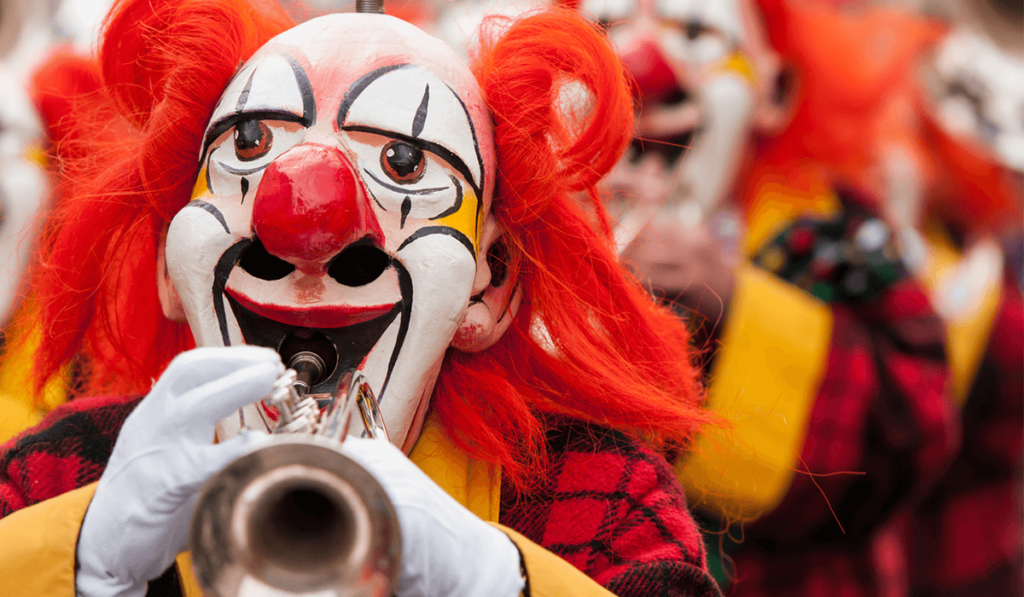
Over the next few days, the cries of “Helau” and “Alaaf” will once again ring out throughout all the Carnival, Faschings, and Fastnachts strongholds. Not only are these festive celebrations quite lively, but whistles, confetti guns, toy guns, and candy cannons can also be quite loud.
Children and teenagers, in particular, have very sensitive hearing. Anyone celebrating boisterously with children should therefore make sure that they do not handle loud carnival items—such as toy guns or firecrackers—without supervision.
This is because toy guns reach a sound level of about 142 decibels, confetti guns about 141 decibels, and a balloon popping right next to the ear—at about 134 decibels—can already cause acoustic trauma from impulse noise. In addition, children themselves are unable to assess the volume and the associated danger to their hearing.
That’s why parents have a particularly important role to play here. They should make sure their children wear special hearing protection to shield their ears from the loud carnival noise. For kids, earmuffs—so-called “Mickey Mouse ears”—are especially well-suited for protecting their hearing during Carnival. They’re easy to put on and take off.
Why does children's hearing need special protection?
Hearing develops organically even during pregnancy, so that it is fully functional in a healthy newborn. Nevertheless, children’s hearing still differs fundamentally from that of adults.
This is because a child’s hearing develops only through “auditory stimuli” from the environment—especially during the first three years of life. During this time, the brain works very intensively to refine, sharpen, and meaningfully interpret auditory information.
Over the next few years, hearing continues to develop, albeit at a much slower pace, until it is fully developed by about five or six years of age. But even then, there are still differences between children’s and adults’ hearing:
- Younger children, in particular, are unable to pinpoint the exact location of sound sources. As a result, sounds coming from the side or from behind may go unnoticed or be misinterpreted.
- Children have great difficulty distinguishing between sounds and pinpointing where a sound is coming from.
- It is not until the age of seven or eight that children can use their auditory perceptions to recognize dangers, for example.
Good hearing plays a crucial role in a child’s overall development. For example, if congenital hearing loss is not detected and treated early, the child’s hearing cannot continue to develop because the necessary auditory stimuli are missing. The child falls behind in his or her development.
What Puts Hearing at Risk?
Many children suffer their first, mild hearing damage as early as childhood. And it’s not just loud noises during Carnival that are to blame; there are also a number of other events where children’s hearing can certainly be damaged if they don’t wear hearing protection:
- Concerts: It’s not just rock concerts that are very loud and can quickly reach 100 decibels—classical music can also damage children’s hearing.
- Parades and loud festival tents: Brass bands or loud music in festival tents are also harmful to hearing.
- Loud home renovations: Whether it’s a drill, circular saw, or sander—these DIY projects can easily reach 100 dB and therefore pose a major risk to children’s hearing.
- Major sporting events: During the recent Super Bowl, the background noise level at times reached 130 dB, which is equivalent to the volume of a jet plane taking off. Similar noise levels are also not uncommon in soccer stadiums or at handball games, making them far too loud for children’s ears.
- Fireworks: Firecrackers and rockets can reach up to 150 dB and can easily cause acoustic trauma.
In addition, listening to music or radio plays is often harmful to your hearing because the volume is simply too high.
Hearing Protection for Healthy Hearing
Children generally cannot judge for themselves what is too loud for them. They need hearing protection. Simple earplugs that protect hearing are available at pharmacies. Custom-fitted hearing protection, which guards against hearing damage such as tinnitus or acoustic trauma, is available from a hearing care professional.
Thanks to special filtered hearing protection, you can still hear music clearly and carry on a conversation while protecting your hearing from noise. And if you ever want to give your ears a break, you can use the hearing protection to get a good night’s sleep and block out street noise and other distracting sounds.
You Might Also Be Interested In

Ear Protection Against the Cold
Wearing ear protection is a good idea to prevent pressure sores on the ears. That is why preventing infections is so important in the winter.
Feiern ohne Reue im Fanblock
Die Champions League 2019/2020 verspricht dank hochkarätiger Besetzung wieder spannungsgeladene Matches – testen Sie Ihr Gehör vorab mit unserem englischen Stadion-Hörtest.

Die Narren sind los!
Fastnachts-Hits, knallende Korken oder Kamelle-Kanonen – in der fünften Jahreszeit bekommen wir so einiges auf die Ohren. Mit einem entsprechenden Gehörschutz lässt sich diese Narrenzeit schadenfrei überstehen.
Is there special hearing protection for babies?
There is special hearing protection available for both babies and children. Since babies’ ears are particularly sensitive and small, it’s not that easy to find hearing protection that fits properly. Parents often use earmuffs that look like baby headphones as ear protection for their babies. However, these can slip off relatively easily.
Elastic straps on the ear protection are therefore a better option. However, you should never let your children out of your sight—because the straps must not slip onto their neck, mouth, or nose while they’re sleeping. Earplugs are also only suitable for babies to a limited extent because they are very small, and care must be taken to ensure that no pressure builds up. That’s why there are special adhesive earplugs or very soft silicone earplugs that don’t sit too deep in the ear canal.
What kind of hearing protection is suitable for children?
Custom-fitted hearing protection is highly recommended for children, especially if they play musical instruments themselves. Custom hearing protection is particularly important when playing very loud instruments such as drums or the trumpet.
Custom-fit earplugs consist of an earmold that is precisely shaped to fit the wearer’s ear. If children already have a hearing problem, parents should check with their health insurance provider to see if the costs can be covered (in part).
Special Hearing Protection for Your Child
These days, hearing protection for kids comes in all colors, with patterns, or featuring fun prints. Eintracht Frankfurt even offers hearing protection in its fan shop that lets kids enjoy the stadium atmosphere. The black hearing protection features not only the Eintracht logo but also the Eintracht lettering on the ear cups.
By the way, there are also earplugs designed to relieve pressure and keep water out. This is especially important for children, since the pressure in their ears during takeoff and landing can often be very painful because they haven’t yet learned how to equalize the pressure.
Custom earplugs reduce the pressure before it reaches the small eardrum. Other children can quickly develop middle ear infections if, for example, they go swimming frequently while on vacation. That’s why special earplugs that protect hearing are also a good idea in this case.
What should you look for when buying hearing protection for your child?
- Lightweight models are better than heavy ones
- To ensure your child actually wears the hearing protection, it should be visually appealing—for example, in your child’s favorite color
- Don’t buy standard adult hearing protection—it will wobble and won’t fit properly on small children
- Read the product’s customer reviews in the store thoroughly
- Consider the value for the price
Find out here how much hearing influences early childhood language development.