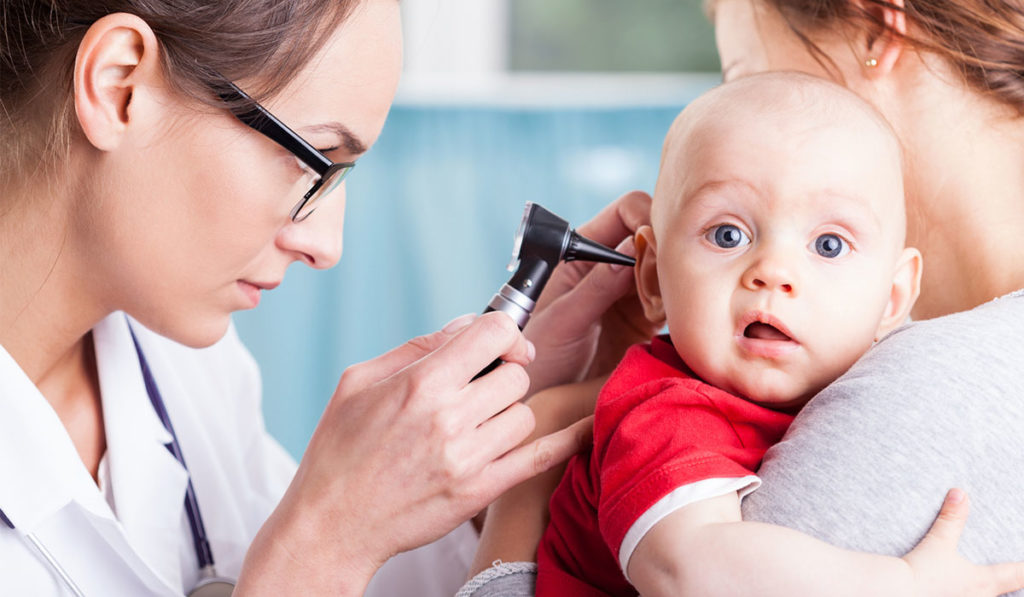
Newborn Hearing Screening Celebrates Its 10th Anniversary
For the past ten years, mandatory hearing screening for newborns has ensured improved care in cases of hearing loss. To mark this anniversary, learn here how newborn hearing screening works.
Two to three out of every 1,000 newborns are born with a hearing impairment that requires treatment. Undiagnosed hearing loss jeopardizes age-appropriate hearing and speech development. Making friends, learning languages, and succeeding in school—all of this and more depends on our sense of hearing. To detect and treat hearing impairments early, hearing screening for all newborns has been mandatory in Germany since January 1, 2009.
Primary Screening in the First Days of Life
The primary screening is performed between the 3rd and 10th day of life. It usually takes place at the maternity hospital but can also be conducted by a pediatrician or an ENT specialist. Two testing methods with automated evaluation are available for this primary hearing screening: a measurement of Transiently Evoked Otoacoustic Emissions (TEOAE) or Auditory Brainstem Response (AABR).
The TEOAE test assesses the function of the outer hair cells in the inner ear. This method provides initial findings but is susceptible to interference caused, for example, by earwax in the ear canal. The AABR is less prone to such interference but is somewhat more complex. It examines the entire inner ear, the auditory nerves, and the brainstem. This allows for the detection of specific forms of hearing loss that do not primarily affect the hair cells.
Further tests follow
If hearing loss is detected during these tests, further measurements are conducted. These are also stipulated in the pediatric guidelines. In practice, a two-step approach has proven effective for children with abnormal hearing screening results. Within 14 days, a repeat AABR test is conducted, and a TEOAE measurement may also be performed. If these tests also show abnormalities, a pediatric audiological evaluation by a specialist is conducted by the end of the third month of life at the latest. If a hearing impairment is detected, appropriate measures must be taken.
In the event of hearing loss, hearing aids should be fitted by the time the child is six months old at the latest. At the same time, it is recommended to begin early auditory intervention. Thanks to such early intervention, affected children can develop language skills naturally.
You can find more information about newborn hearing screening here.