From Check-in to Landing
Whether you're heading to Mallorca, South Africa, or the Maldives: If you plan to board a plane with your hearing aids, you should prepare well for the trip. But what about security checks, pressure equalization, and other considerations?
First things first: Hearing aids can safely remain turned on throughout the entire flight. This ensures that wearers don’t miss any in-flight announcements or important instructions from the crew.
What challenges arise when flying with hearing aids?
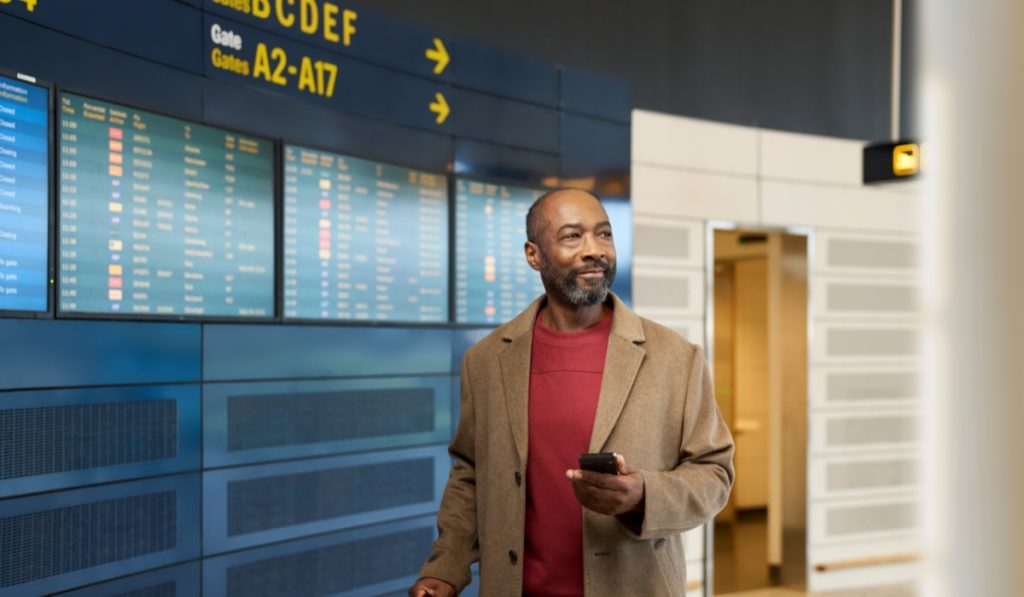
Even checking in at the airport is a headache. That's because every passenger who wants to go through security must remove all metal objects.

Otherwise, the metal detector will sound an alarm. But don't worry: Your hearing aids won't be detected by the security detectors and won't be damaged, so you can safely leave them in your ears. Still, it's a good idea to let the security staff know that you're wearing hearing aids.
After boarding, you’ll take to the skies, where the next challenge awaits: equalizing pressure during ascent and descent. Here, too, the all-clear has been given. You can leave your hearing aids turned on.
If the opposite is true and you notice that your hearing aids are interfering with the equalization of air pressure in your ears, take them out until the plane has reached its cruising altitude.
Why is pressure equalization so important?
Cabin pressure changes significantly during takeoff and landing. This can cause some people to experience a sensation of pressure in their ears. The reason is simple: sometimes the body is not immediately able to equalize the pressure between the middle ear and the external auditory canal.
During pressure equalization, the pressure in the middle ear is adjusted to match the external air pressure in order to relieve pressure on the eardrum. This occurs via the Eustachian tube, which connects the middle ear to the nasopharynx. When this passage opens—for example, when swallowing or yawning—air can enter or exit, allowing the pressure levels to equalize.
How can I prepare for a flight?
To help you prepare for flying with hearing aids, the following checklist will help you remember all the important precautions.
A few weeks before the trip begins:
- Hearing Aid Checkup at a Specialty Store
- Write down the contact information for your doctor or hearing care professional and keep it with your travel documents
- If your hearing aids are controlled via a smartphone app, you should find out about possible roaming charges while abroad
A few days before the trip begins:
- Check the hearing aid batteries
- Order and pack spare batteries, or—if you have rechargeable hearing aids—bring the charging station (remember to bring an adapter for the outlets if needed)
- Bring cleaning supplies and a storage case
What tips can I use when flying?
To make flying as comfortable as possible—whether you wear hearing aids or not—there are a few effective steps you can take with minimal effort.
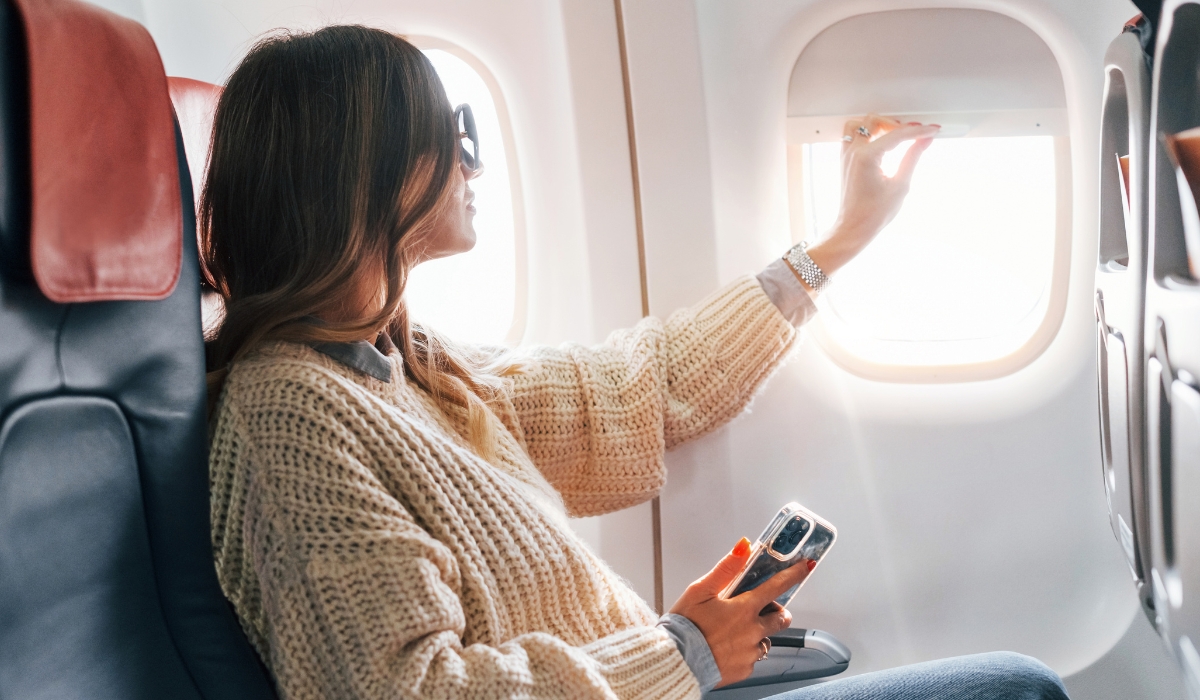
These include chewing gum or sucking on a piece of candy to equalize pressure during takeoff and landing. It can also help to briefly hold your breath and then exhale gently.
With these hearing aids, you can also connect to the in-flight entertainment system via Bluetooth on many airlines. In addition, it’s not uncommon to have the option of using inductive loop systems, which transmit sound directly to the hearing aids without background noise. The new Bluetooth Auracast broadcasting technology will also be available in public areas such as airports in the future. Hearing aid users will then be able to connect directly to an Auracast network on-site—similar to a Wi-Fi connection—to receive audio information clearly and directly through their hearing aids. This requires Auracast-enabled devices as well as the installation of corresponding transmitters in the respective environment.
Tip: Before your vacation, get personalized advice from your hearing care professional. They’ll be happy to provide you with plenty of additional tips and tricks to ensure you arrive at your destination relaxed, even while traveling by plane with your hearing aids. You can easily find a hearing care professional near you using our convenient search service.



