
Bone Conduction Devices for Children
Running around, playing, and hearing better at the same time: Bone-conduction hearing aids for children—such as those worn as headbands—are not only practical but often the only way to provide hearing assistance.
A ball bounces off the wall and is caught by the player who kicked it shortly afterward. A few seconds later, he passes the ball to his playmate. The two children, playing carefree, are wearing a cap and a headband, respectively, to match the jerseys of their athletic heroes. However, these are not ordinary headwear, but hearing aids.
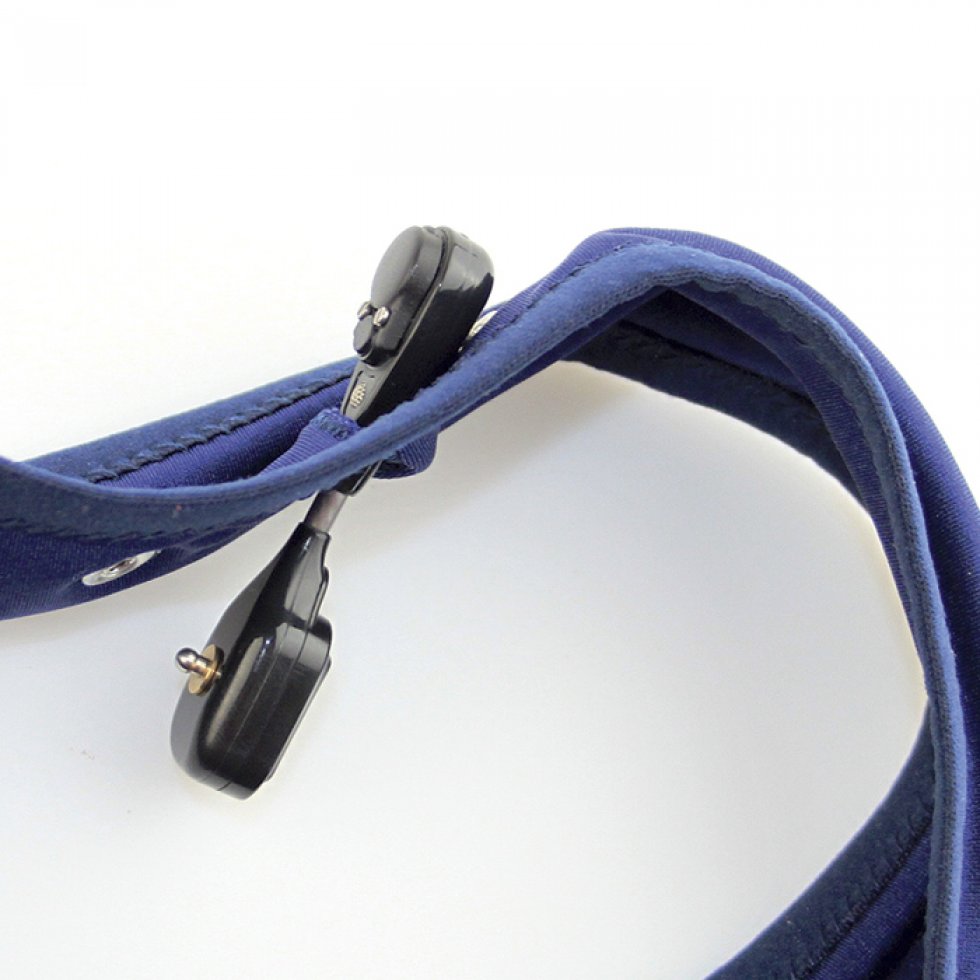
These discreet hearing aids are bone-conduction hearing systems. This special type of hearing aid offers many advantages to children with hearing loss. They’re barely noticeable, comfortable to wear, and can be positioned exactly where needed. Plus, others hardly notice them at all.
Hearing aids produce vibrations instead of sound
With bone-conduction devices, sound is transmitted directly to the inner ear through the skull. They are worn behind the ear and produce vibrations instead of sound. This bypasses the outer and middle ear. For children with external malformations, such as those affecting the outer ear, bone-conduction devices are often the only way to provide hearing assistance. In adulthood, these devices can also be implanted. However, during the critical phase of auditory pathway maturation in children, implantation should be avoided at all costs due to the skull’s still very thin bone structure.
Bone-conduction devices are therefore not only sometimes the only option for people with hearing loss who suffer from conductive hearing loss, but they are also discreet. As mentioned at the beginning, bone-conduction devices are available not only as headbands but also as caps, hats, and eyeglasses, and can be customized to fit each individual.
Good Hearing Shapes Early Childhood Language Development
Regular hearing tests in early childhood are of great importance. Unfortunately, hearing impairment is not uncommon among children. Hearing loss can be caused by conditions such as middle ear infections or other infections. Unrestricted hearing not only brings joy to life but is also crucial for early childhood development.
In addition to bone-conduction devices, there are also other hearing aids designed specifically for children; you can learn more about them in our article “Modern Hearing Aids for Children.”