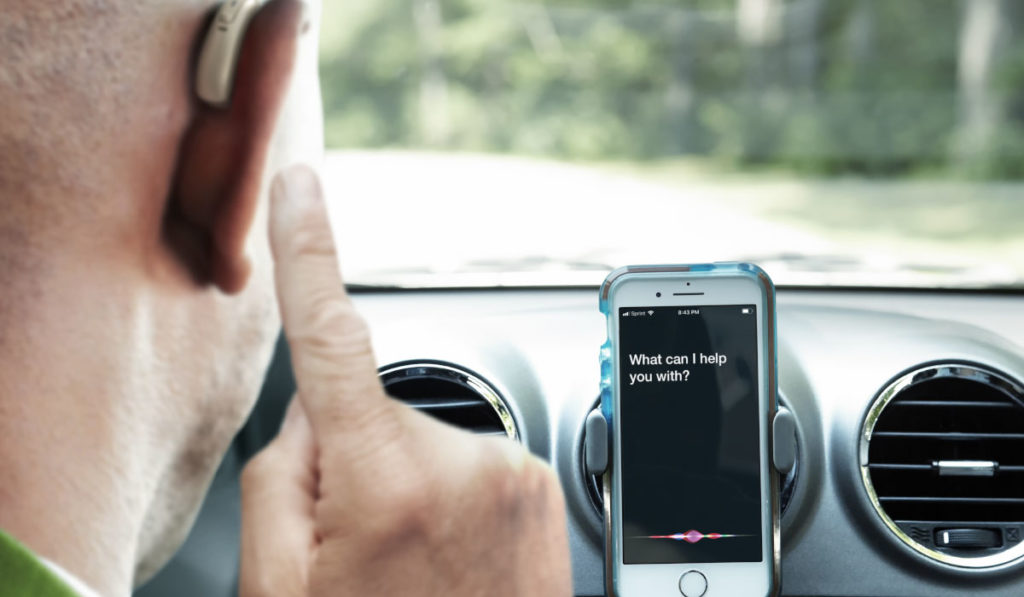
Basically, yes—as long as certain requirements are met!
Hearing aids generally do not prevent you from driving. However, before you get behind the wheel with a hearing aid, there are a few questions to consider: from choosing the right driver’s license to special requirements for the deaf or transporting passengers. You’ll also learn how to easily pass the driving test with the right support.
Whether it’s car horns, police sirens, or the sound of your own car’s engine—many warning signals on the road are acoustic. People with hearing loss can easily miss them, and that poses a significant risk. But of course, having a driver’s license improves your quality of life, and hearing problems don’t necessarily have to be an obstacle to driving.
If you would like to apply for a driver’s license despite having hearing loss, you should first determine whether you are eligible for a standard driver’s license or if you need a special permit. Anyone with mild to moderate hearing loss who wears hearing aids while driving that enable them to perceive sounds may apply for a standard driver’s license. If a preliminary medical examination confirms that this requirement is met, there is nothing standing in the way of obtaining the license.
Mobile with Sharp Senses
In cases of severe hearing loss, the applicant must not have any other serious impairments, such as vision or balance problems, in order to obtain a driver’s license. Specifically, this is determined by an evaluation from an ear, nose, and throat (ENT) specialist, which certifies that the sense of balance is intact. Feel free to use our ENT search tool for this purpose.
Another key factor is whether the person with hearing loss wishes to obtain a driver’s license for a car or motorcycle (Class 1) or for a truck or bus (Class 2). Provided the person is generally deemed fit to drive, there are no requirements or restrictions on driver’s licenses for cars and motorcycles for people with hearing loss who wear hearing aids while driving. Anyone with hearing loss who also needs a driver’s license for trucks and passenger transport must meet the following requirements: Before a driver’s license is issued, a medical fitness examination by a specialist must be conducted, and further checkups must be completed regularly thereafter. In addition, candidates must have demonstrated their ability to drive safely on public roads with three years of practical experience operating a Class B vehicle.
How to Find the Right Driving School
- When it comes to obtaining a driver’s license, problems often arise even before the first drive. This is because the shortage of trained driving instructors and suitable teaching materials makes the written exam extremely difficult for deaf and hard-of-hearing individuals. Therefore, it is advisable to inquire at driving schools about trained staff and appropriate teaching materials.
- Good support for the exam: Test-takers can use a sign language interpreter to help them understand the exam questions. For deaf students, the practical driving test takes place in a suitable vehicle that meets the specifications listed on the fitness certificate issued by the local medical board.
Special Permit for the Deaf
Deaf people, on the other hand, may only drive a car if they are granted a special driver’s license following an evaluation by a medical committee. This license certifies that the deaf person is capable of operating a vehicle adapted to their specific needs. The renewal of such a driver’s license is approved by a physician who conducts the appropriate fitness-for-driving examination. The validity period of the special driver’s license corresponds to that of a standard driver’s license. The Traffic Regulations stipulate a validity period of ten years up to age 50, five years from ages 51 to 70, three years from ages 71 to 80, and two years from age 81 onward.
Do I Have to Give Up My Driver's License If I Have Hearing Loss?
Hearing often deteriorates with age. But what does a decline in hearing over the years mean for a driver’s license? A look at Appendix 4 of the Driver’s License Regulation (FeV) provides the answer: The annex contains a list of medical conditions and disabilities and their effects on a person’s ability to drive. Point 2 clearly states that driving is generally possible even in cases of severe hearing loss and even bilateral deafness.
Staying Mobile Despite Hearing Loss
In general, then, driving is possible even for people who are deaf or hard of hearing, but it requires appropriate support from a driving school as well as from an ear, nose, and throat (ENT) doctor. It is also very important that people with hearing impairments always wear their hearing aids while driving to protect themselves and others. According to the State Traffic Regulations, anyone who uses a hearing aid is actually required to wear it while driving. Corresponding codes are noted on the driver’s license. Violating this requirement results in substantial fines or even the loss of one’s driver’s license.
Would you like to know which hearing aids are right for you when driving? Consult a hearing care professional near you. Not sure if you need a medical evaluation to get your driver’s license? Start by checking with an ENT doctor. That way, you’ll find out what specific requirements you need to meet to stay mobile despite your hearing loss.



