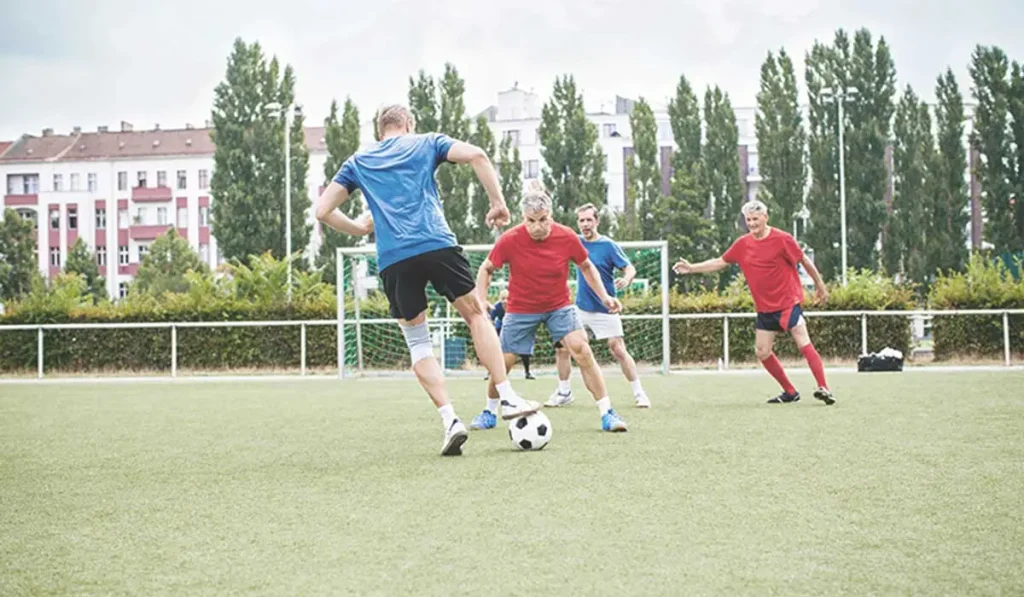
Physical activity and sports contribute to personal development. Playing soccer with hearing aids is the perfect hobby for this: The sport offers fun, a sense of community, and physical activity—even for people with cochlear implants or hearing aids.
Hearing Aids for Sports
Modern hearing aids are technically advanced and durable enough to withstand everyday athletic activities. People who play soccer with hearing aids benefit especially from custom-fitted solutions: A silicone ear mold remains flexible and reliably absorbs impacts—such as from the ball or physical contact during play. For even greater security, special models are available: Your hearing care professional can custom-fit and secure them so that the devices stay firmly in place even during intense games.

Soccer with Hearing Aids: Tips for Practice and Games
- Secure yourhearing aids: Use retention clips or properly fitting earpieces to ensure a stable fit, even during quick and vigorous head movements.
- Protect the technology: Simple protective cases or headbands help shield against the weather and sweat.
- Use the right sound programs: Activate sports or wind protection modes to minimize background noise on the soccer field.
- Clean the devices after the game: If you regularly play soccer while wearing hearing aids, you should clean them thoroughly after practice or a game and store them in a dry case.
Simon Ollert: From Player to Coach
Simon Ollert, who has been nearly deaf since birth, has shown that, despite his hearing loss, it’s possible to play soccer at the highest level while wearing hearing aids. Modern hearing aids have played a key role in helping him do this. They’ve given him the ability to better hear instructions and orient himself during the game. Ollert himself is convinced that his disability has shaped him and made him stronger: he is certain that without this challenge, he would not have become the person he is today.
He no longer plays professionally, but now shapes the sport from a different perspective: as a coach at the DFB training center, he passes on his knowledge to young players. He also organizes his own soccer camps for children with hearing impairments, where he demonstrates just how naturally soccer works with hearing aids—from training to game play. He has also founded the youth development center “Talententwicklung Oberland (TEO)”—a platform that supports young talents individually and paves the way for them into competitive sports.
His positive outlook on life and his commitment to greater inclusion in sports make him an important figure. Ollert demonstrates how sports can serve as a bridge to social inclusion and that a disability is not an obstacle but can instead unleash new strengths. His journey makes it clear: playing soccer with hearing aids is possible.
Soccer with Cochlear Implants
Even with cochlear implants, soccer is an exciting and easily manageable hobby. However, it’s important to keep the specific requirements of the implants in mind. The external audio processor attaches magnetically to the head, ensuring a secure fit in everyday life. During sports, however, impacts or blows—such as from the ball or physical contact—can cause the processor to come loose or become damaged. Therefore, it’s advisable to wear a padded headband or a sports cap while playing, which provide additional support and protection.
In addition, heading the ball should be avoided whenever possible, as this poses a risk of direct impact on the implant. Many people with cochlear implants report that they manage very well during practice and games when they keep this in mind. It is also recommended to inform teammates and coaches so that everyone on the team can be considerate.
Regular checkups and adjustments by your hearing care professional ensure that the implants are optimally calibrated and reliably support your hearing even during high levels of physical activity.
Find out here what you should generally keep in mind when playing sports with cochlear implants.
At the hearing care professional’s office, you’ll not only receive a free consultation, but they’ll also tailor your hearing system precisely to your athletic needs—from a secure fit and optimal sound quality to weather-resistant materials. This way, nothing stands in the way of your active lifestyle with a hearing aid.
Looking for a hearing care professional near you? Then use our hearing care professional search tool.



