Take off safely and enjoy great sound: Here's how to make your flight to your vacation destination a success
For many people, the vacation begins right at the airport, when they board a plane for their well-deserved break. To help you enjoy your trip worry-free while wearing hearing aids, we’ve put together the most important tips for flying with hearing aids.
Everyone wants to start their vacation feeling relaxed. But people who wear hearing aids often have questions leading up to a flight: Can I wear my hearing aids on the plane or during security screening? What can I do to relieve uncomfortable ear pressure during takeoff? And can I make the most of the in-flight entertainment system while wearing my hearing aids?
This article answers common questions about traveling with hearing aids: security checks, changes in air pressure, aircraft noise, communication on board, and more. Let’s get the most important point out of the way first: wearing hearing aids on a plane is not a problem. You can generally keep them in your ears and do not need to remove them either during the security check or while the plane is in flight.
At the airport and at the security checkpoint
Many airports and even some airplanes offer inductive hearing systems using so-called T-coils, which allow announcements to be transmitted directly to your hearing aid. Check in advance to see if this option is available. Many airlines also support audio streaming directly to your hearing aid via an app.
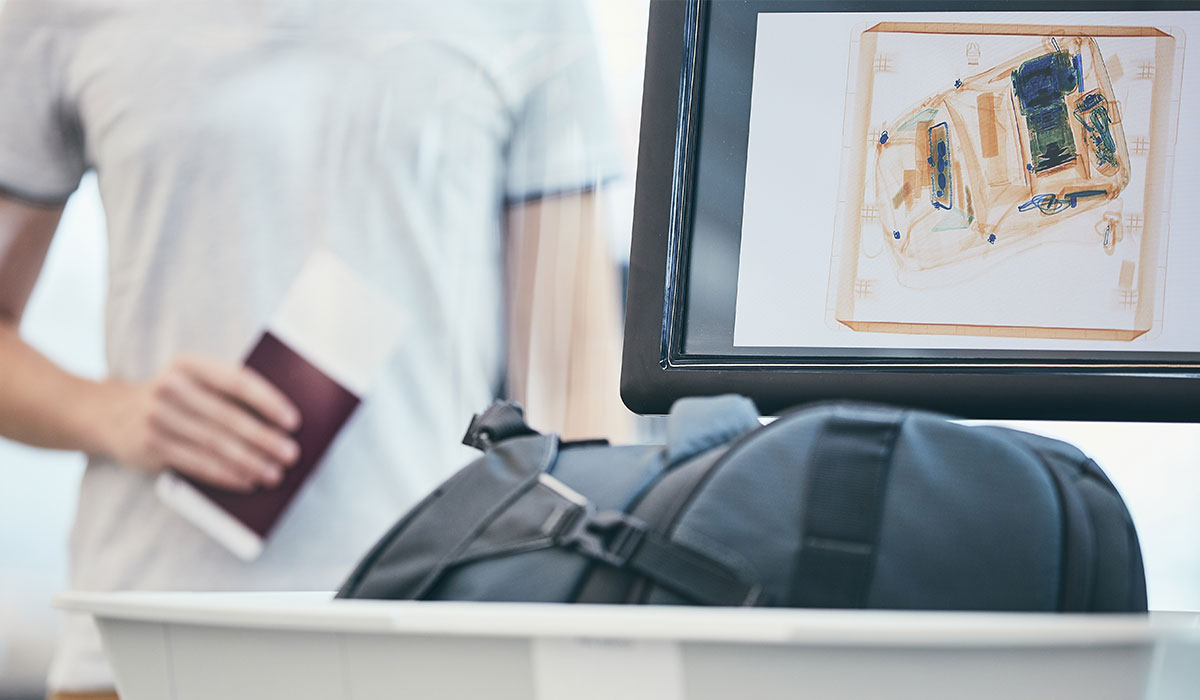
Hearing aids can be worn through the security checkpoint without any problems.
- It is not necessary to remove hearing aids before security screening—neither at the body scanner nor at the carry-on baggage scanner. This is because they generally do not set off an alarm, and the metal detector does not detect them.
- Conversely, the scanners and detectors at the airport pose no risk to hearing aids and will not cause any damage.
- If you want to be on the safe side, you can inform the security personnel about your hearing aids to avoid misunderstandings and facilitate mutual understanding.
Packing Tip: Pack spare batteries or a charger in your carry-on luggage so you can charge your devices if needed.
During the flight
Flying with hearing aids in your ears? No problem! You may keep your hearing aids in your ears and turned on throughout the entire flight. They do not interfere with the aircraft’s electronics in any way. For people with hearing loss, being able to be reached at all times is also an important safety consideration. Your hearing aids should therefore definitely remain turned on during the flight so that you can hear announcements and instructions from the crew.
- Airplane Mode: If your hearing aids transmit radio signals, you’ll need to set them to airplane mode—just like all modern high-tech devices these days. But be careful: Keep in mind that you won’t be able to connect to your smartphone while in airplane mode. This means you won’t be able to stream music to your hearing aid.
- Airplane noise: Turbines and other ambient noises on the plane can be loud and distracting. Modern hearing aids feature flight or comfort programs that filter out or reduce background noise. Before using your hearing aids on a plane, you should talk to your hearing care professional about these special programs and activate them before takeoff.
- Smart Seat Choice: On longer flights, it’s recommended to choose a seat in a quieter area of the plane to minimize background noise.
Pressure in your ears? Here's what helps!
During takeoff and landing, changes in cabin pressure can cause a sensation of pressure in your ears. The following can help with pressure equalization:
- Yawning
- Swallowing
- Chew gum or suck on candy
- The “Valsalva maneuver”: Pinch your nose shut and gently push air into your nose—but only after consulting your doctor!
- The Otovent medical balloon system can be helpful, especially for children or people who are highly sensitive to pressure, when used as directed by a doctor.
Colds or a stuffy nose can make it difficult to equalize pressure. In such cases, special care should be taken to avoid earaches.
Hearing aids on airplanes do not significantly affect ear pressure equalization during takeoff and landing, but they may make it slightly more difficult for some people. If the sensation of pressure is too uncomfortable for hearing aid users, they can briefly remove their hearing aids or ear molds during takeoff and landing. Don’t forget to put them back in so you can hear everything clearly again afterward!
Did you land safely? Then dive right into your vacation adventure! To find out what you should keep in mind to ensure your hearing aids survive the trip in good condition and that you can enjoy your vacation with all your senses—including your sense of hearing—read our article “Traveling with Hearing Aids.”



