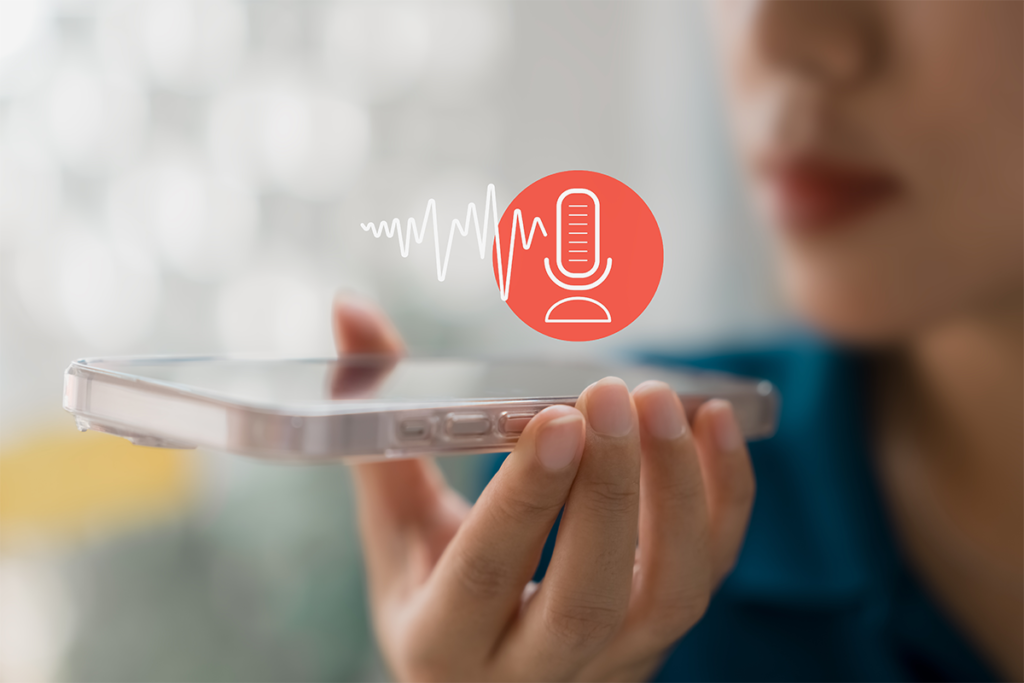
Don't leave people with hearing loss out!
Voice messages are convenient and popular. But they often make it very difficult for people with hearing impairments to understand what’s being said. Keep this in mind before you send voice messages.
Just quickly say something and send it as a voice message. It’s much easier and faster than typing. But what if the person you’re talking to can’t understand the voice message at all—or can’t understand it correctly? It’s often difficult—or even impossible—not only for people with hearing loss but for others as well to listen to and “decipher” such audio messages. It doesn’t have to be that way. Instead of just clicking “Record” and “Send,” you can also tailor your messages for people who have trouble hearing. Keep people with hearing impairments in mind and prevent comprehension issues and misunderstandings.
Communicating Digitally
People with hearing loss are often relieved when they don’t have to talk on the phone but can instead receive a text message, thanks to today’s many communication options. Or when they can send and receive videos, photos, and emails. Text-based and visual communication is a major advantage for people with hearing loss.
Hearing problems? Here’s how to recognize the early signs of hearing loss
You may find that you no longer understand voice messages very well. If so, be sure to watch for these signs of declining hearing:
- You can’t hear—or can barely hear—natural sounds like birds chirping or leaves rustling.
- The newspaper no longer rustles when you turn the pages.
- You can’t hear the hum of the refrigerator or the ticking of the alarm clock.
- You don’t hear the doorbell.
- Suddenly, everyone else seems to be mumbling.
- You have a harder time hearing high-pitched voices (women and children).
- Your hearing is poor, and you can no longer follow conversations in groups or when there’s background noise, such as in restaurants.
- You keep turning up the volume on the TV or music.
- You often feel exhausted and tired in the evenings.
If these statements apply to you—either completely or in part—then it’s definitely time for a hearing test with an ENT doctor or hearing aid specialist.
Early and regular hearing tests are crucial for hearing health. Age-related hearing loss usually begins gradually around the age of 50. Most people don’t notice it at first. The earlier early-stage hearing loss is detected and treated with hearing aids, the better the results. Those affected can continue to participate fully in daily life and their professional lives without impairment, preserve their hearing, and thereby improve their quality of life. However, the longer hearing loss goes untreated, the more difficult it is to get used to hearing aids and to relearn how to hear.
Also keep in mind: People with hearing loss often get tired more quickly because listening requires much more energy and concentration.
The Pitfalls of Voice Messages
Voice messages present several challenges for people with hearing loss:
Voice messages consist solely of an audio signal. This means that people with hearing loss miss out on the visual cues provided by a face-to-face conversation or video call. No gestures or facial expressions, no lips to read, and perhaps no other visible clues as to where the other person is.
To save bandwidth, voice messages are usually automatically compressed by messaging apps. This comes at the expense of sound quality. Unlike professionally produced radio shows or podcasts, voice messages are of mediocre quality. They’re simply recorded quickly into smartphone microphones. Often, distracting background noise can also be heard.
Another major obstacle for people with hearing loss is that voice messages don’t give them a chance to ask for clarification or ask follow-up questions.
To be able to understand voice messages at all, people with hearing loss often have to first activate Bluetooth on their hearing aids, which can be a hassle, especially when they’re on the go.
Staying Connected with Your Smartphone: How to Communicate Effectively with People Who Are Hard of Hearing
When communicating with people who are hard of hearing, it’s best to avoid using voice messages. If you do want to convey something verbally, focus on the essentials and structure your voice message. This is because voice messages in particular are often too rambling and therefore confusing.
Avoid background noise and noisy recording environments.
A good option is the “speech-to-text” feature offered directly by some messaging apps. This feature uses machine learning to convert speech into text. Before sending it as a text message, be sure to read through the message and correct any errors.
People with hearing impairments can also use this feature to generate text from voice messages. There are various transcription apps for smartphones that create a transcript of what’s been said. To do this, you can, for example, select the voice message and choose the installed app via “Share.” Live transcription works similarly for phone calls.
With voice messages, however, there’s no way to correct mistakes or ask for clarification. This means misunderstandings and gaps in information can still occur. People with hearing loss should therefore not hesitate to point out in voice messages just how significant the hearing barriers are for them. To do this, you can simply include the hearing aid emojiin your reply.
Don't get used to hearing loss. Don't just put up with poor hearing. Get your hearing checked regularly! And if necessary, get hearing aids as soon as possible.

When was the last time you had a hearing test?
When it comes to regular hearing tests, people over 50 still have some catching up to do. Learn more!
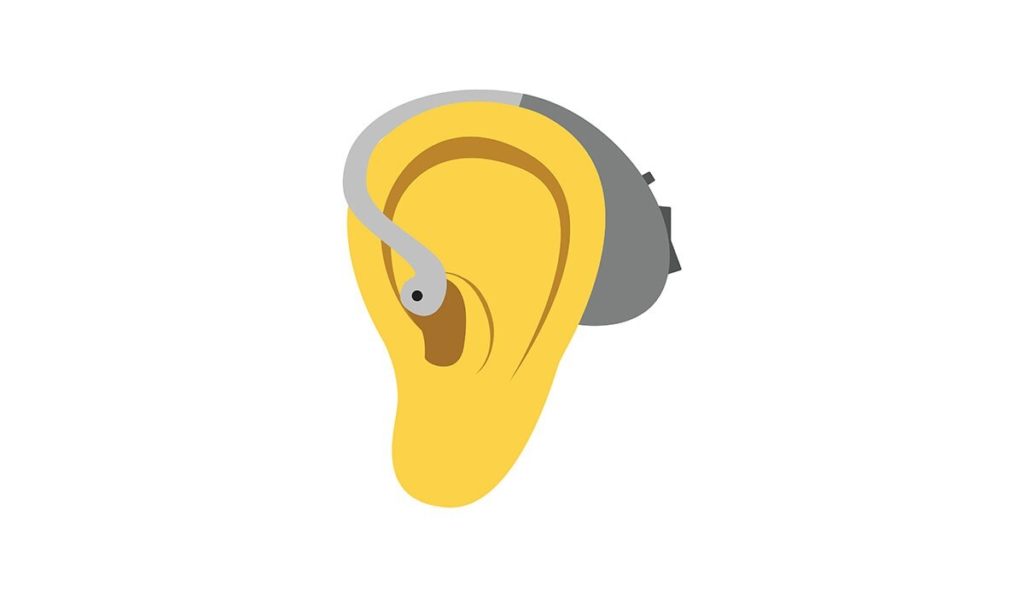
Kennen Sie schon das Emoji „Ohr mit Hörgerät“?
Wer digital kommuniziert, nutzt die Bildsprache der Emojis, um Emotionen zu teilen und seine Nachrichten zu visualisieren. Auch für Menschen mit Beeinträchtigungen gibt es dabei immer mehr Ausdrucksmöglichkeiten über spezielle Emojis, wie für Menschen mit Schwerhörigkeit das Emoji „Ohr mit Hörgerät“.

Multitalent Ohr – ein faszinierendes Organ
Ohren wachsen ein Leben lang. Das ist aber längst nicht das einzige Phänomen dieses außergewöhnlichen Organs. Sie sind wahre Multitalente und können deutlich mehr als nur Schallwellen aufzunehmen.



