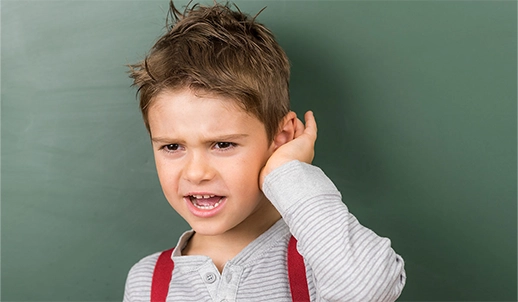
Middle ear infections in children are among the most common reasons young patients are brought to the doctor. Almost every child has one at least once; some have them much more often. For parents, a middle ear infection is often associated with anxiety, sleepless nights, and many questions.
This makes it all the more important to recognize the typical signs, assess the symptoms correctly, and know when medical attention is needed.
Why are children so prone to middle ear infections?
Middle ear infections in children often develop after a simple cold or infection. This is due, in part, to children’s anatomy: their Eustachian tube is still short and runs horizontally, allowing pathogens to easily travel from the nasopharynx into the middle ear.
At the same time, the immune system is not yet fully developed. Especially during the cold season, when colds are more common, the risk of middle ear infections in children is particularly high.
How can parents tell if their child has an ear infection?
Since toddlers and babies cannot yet describe their pain in detail, parents need to watch for typical signs. A middle ear infection in children often manifests itself through:
- Frequent crying or screaming (especially when lying down)
- Rubbing or pulling at the ear
- Fever, loss of appetite, restlessness
- sudden relief from pain accompanied by a purulent discharge from the ear
Older children often describe the symptoms themselves: a sharp pain, a feeling of pressure, or muffled hearing are typical signs of an ear infection.
More on this topic: Recognizing and Preventing Infections

What really helps with an ear infection, and when are antibiotics necessary?
Most cases of middle ear infections in children clear up on their own within a few days. Fever-reducing and pain-relieving medications such as acetaminophen or ibuprofen help alleviate symptoms. Decongestant nasal sprays or inhalations can also help reduce pressure in the middle ear.
Antibiotics are necessary only under certain circumstances, such as in children under six months of age, in cases of heavy discharge, or if the condition does not improve despite treatment. In these cases, you should definitely consult a pediatrician or an ENT specialist.

Be sure to seek medical attention if:
- Fever over 38.5 °C
- purulent or bloody discharge from the ear
- Pain that lasts longer than two days or gets worse
- Ear pain in babies under six months of age
- Frequent recurrences of middle ear infections (more than three per half-year)
What can parents do to prevent this?
Although it is not always possible to prevent middle ear infections in children, there are steps you can take to reduce the risk:
- Breastfeeding offers protection: Breast milk strengthens the immune system and protects against respiratory infections.
- Smoke-free environment: Secondhand smoke is a clear risk factor for frequent middle ear infections.
- Get vaccinated: Vaccinations against pneumococcus and Haemophilus influenzae type b (Hib) reduce the risk of bacterial ear infections.
- Keep the nose clear: During colds, inhalations (e.g., using a children’s nebulizer) or isotonic nasal rinses help reduce pressure on the middle ear.
Health insurance companies generally cover the cost of inhalers if a doctor's prescription is provided.
Tip for Parents: How to Help Children with Earaches Sleep Better
- Elevate the upper body slightly, for example, by placing a pillow under the mattress
- Use chamomile steam or an onion pouch
- Place a hot water bottle or a warm cherry pit pillow next to the ear
- Reading aloud, cuddling, and closeness often work better than any medicine
Although middle ear infections in children are unpleasant, they are usually easy to treat. Find out here which home remedies can help with earaches.
See how good hearing works

Hearing Loss Explained Simply

How often do you take a hearing test?



