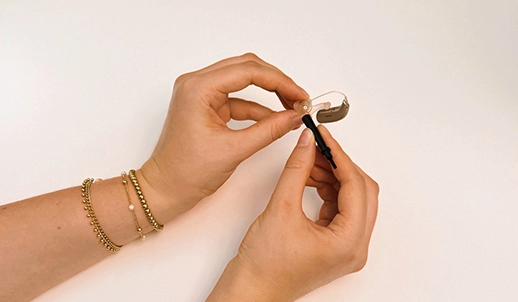

Is it the hearing aid or my hearing?
If your hearing suddenly changes while wearing a hearing aid, there may be various reasons for this. Hearing aids consist of several small components that pick up sound, process it, and transmit it to your ear. If this process is disrupted at any point, your hearing experience can change within a short time. For example, a dead battery cuts off the power supply, a clogged wax filter dampens the sound, and moisture can impair the hearing aid’s performance. An accidentally changed program or a volume setting that’s too low can also cause your hearing aids to suddenly sound quieter or unusual.
If, despite these checks, your hearing aids remain unusually quiet or muffled, the cause may also lie within the ear itself. Hearing ability changes for various reasons. Consider an earwax plug, which can block the ear canal, or a cold, which can cause pressure changes in the middle ear that muffle hearing. Gradual age-related hearing loss can also mean that your current hearing aid settings are no longer sufficient.
A quick check can help you assess the situation:
- Compare both hearing aids with each other and check whether the problem occurs on only one side.
- Check the rechargeable battery or regular battery and replace the wax filter.
- Check the ear tips or earpieces, as well as the microphone inlets, for dirt.
- If you’re using custom ear molds, check for condensation or kinks in the sound tube.
- Check the program, volume, and that your hearing aids are seated correctly.
- If you suspect moisture, dry the hearing aids overnight in a suitable drying box.
- If the problem persists, make an appointment with your hearing care professional and bring both hearing aids, the charger, and any accessories with you.

These symptoms should be evaluated by a doctor
Technical troubleshooting should not delay a medical evaluation. Have sudden hearing loss in one ear examined on the same day. This also applies to hearing loss accompanied by dizziness, ear pain with a fever, blood or discharge from the ear, a head injury, one-sided facial weakness, or a change in hearing after starting a new medication, etc. In addition, there are other symptoms for which you should definitely see an ENT specialist immediately.

What is earwax?
Cerumen is the medical term for earwax. It protects the ear canal, keeps the skin supple, and traps dust. If too much of it builds up, it can block the ear canal or parts of the hearing aids, thereby altering hearing.
| Problem | What You Can Check Yourself |
|---|---|
| The hearing aids remain silent | If one of your hearing aids suddenly stops working, first check the power source. For battery-powered devices, a new battery may help; for rechargeable devices, check to see if the battery is fully charged. If the hearing aid still isn’t working, a clogged wax filter or a clogged earpiece may be blocking the sound. |
| The hearing aids are whistling | Whistling often occurs when amplified sound escapes from the ear canal and is picked up again by the microphone. Therefore, start by reinserting your hearing aids and checking to see if the ear tips or earpieces are seated properly. If the whistling persists, earwax in the ear canal or a poor fit may be the cause. |
| The sound is muffled or too quiet | A partially clogged wax filter can particularly dampen the high frequencies that are important for speech understanding. Therefore, start by replacing the filter and checking the microphone inlets for debris. If both hearing aids still sound noticeably muffled afterward, you should also have your hearing checked. |
| The sound is distorted or scratchy | Distortion is mainly caused by faulty sound transducers, but it can also be a problem with the amplifier. Therefore, first check the power supply and let your hearing aids dry out. If the distortion occurs after a fall or persists, you should have your hearing aid specialist check the hearing aids. |
| The battery life is unusually short | Intensive streaming can significantly shorten battery life. Dirty charging contacts or an aging battery cell can also cause your hearing aids to need recharging sooner. With zinc-air batteries, you should also wait one to two minutes after removing the protective film before inserting the battery. |
| The streaming connection is interrupted | If you're having connection problems, restarting your hearing aids and Bluetooth often helps. If the connection remains unstable, you can unpair the devices and set them up again. Outdated software on your smartphone, app, or hearing aids can also cause connection drops. |
How can hearing aid malfunctions be prevented?
If you want to avoid hearing aid malfunctions, make sure to care forand maintain your hearing aids regularly as part of your daily routine. By keeping preventive measures in mind, you’ll protect sensitive components and help prevent breakdowns in your daily life.
Follow these five simple routines:
- Wipe your hearing aids dry every day. After removing them, clean the housing and earpieces with a dry, soft cloth. Alcohol, disinfectant sprays, or wet wipes should not come into contact with the electronics.
- Protect your hearing aids from moisture. For battery-powered devices, open the battery compartment overnight, and use a drying box or a desiccant pouch in very humid conditions. You should remove your hearing aids before showering, bathing, or swimming.
- Replace the wax filter regularly. As a general guideline, replace it every two to four weeks. If you experience heavy wax buildup, a shorter replacement interval may be advisable.
- Check the ear tips and speakers. The microphone openings should be carefully cleaned about once a week using the brush provided. Ear tips can harden over time and seal less effectively, so they should be checked regularly and replaced about once a month.
- Schedule regular checkups with your hearing care professional for professional cleaning and functional testing. An annual hearing test also helps detect changes in your hearing early on.
When should you see a hearing care professional or an ENT specialist?
If a problem persists despite replacing the battery, cleaning the device, changing the filter, or drying it, your hearing care professional is the right person to contact. Even if your hearing aids appear to be working properly but you continue to have difficulty hearing, you should have your hearing checked.
An evaluation by an ENT specialist is particularly important if your hearing changes suddenly. This includes sudden unilateral hearing loss, hearing loss accompanied by dizziness, ear pain with a fever, blood or discharge from the ear, or symptoms following a head injury. A rapid deterioration over the course of a few days should also be examined immediately.
Find Support Near You
If you experience technical issues, have questions about adjustments, or need a functional test, a hearing care professional will assist you. Use our hearing care professional finder to locate a specialist near you. For a medical evaluation of hearing changes, you can use our ENT doctor finder.
If you’d like to get an initial idea of your hearing ability, you can also take our online hearing test. Of course, this is no substitute for a professional hearing test performed by an ENT doctor or hearing care professional.
See how good hearing works

How much do modern hearing aids cost?

How is a hearing test conducted?

How do I insert a CIC (Complete-In-Canal) hearing aid?

How do you put in an in-the-ear (ITE) hearing aid?

How do you fit a behind-the-ear (BTE) hearing aid with an ear mold?

How do you put on a behind-the-ear (BTE) hearing aid?