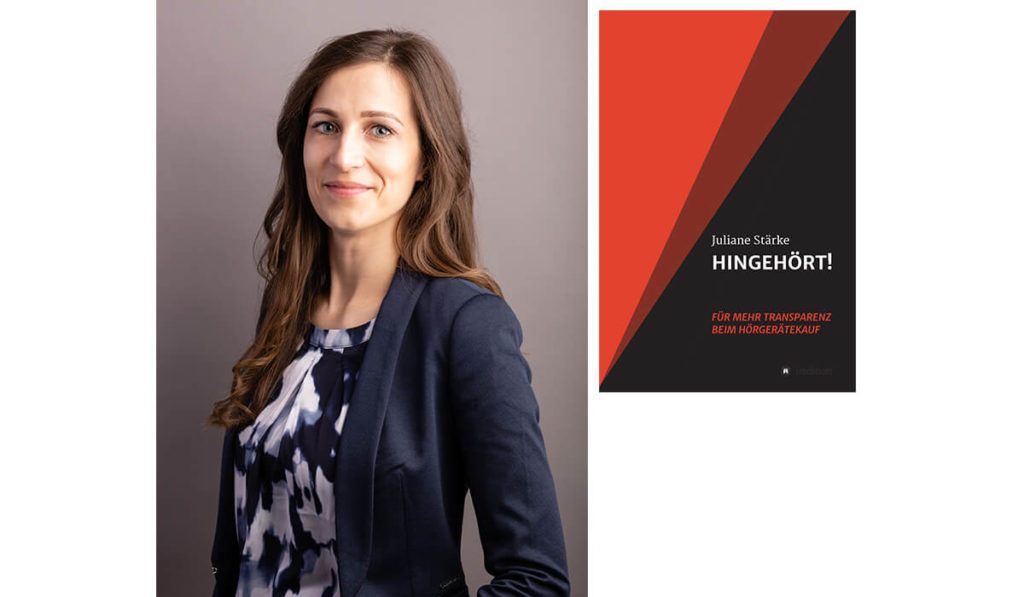
“Every day in my hearing aid practice, I encounter patients who are uncertain and not well-informed. That’s exactly why I wrote *Hingehört!*, the guide for people with hearing loss,” says Juliane Stärke, who has been working as a hearing aid specialist in Berlin for 15 years. “The book is an independent guide that draws on my professional expertise. My goal is to prevent people from putting off buying a hearing aid because they have completely false ideas about the performance and comfort of modern hearing aids.” The book helps readers learn about the world of hearing aids and thus make better decisions about their own care.

About the Person
Juliane Stärke: A Master Audiologist Driven by Passion
Juliane Stärke has been working as an audiologist for 15 years. In 2011, she became one of the youngest candidates ever to earn the master’s title in audiology. She has also earned additional certifications, such as in pediatric audiology. She helps people on their journey to better hearing with both compassion and expertise, and strives to provide optimal care for every patient. Today, she manages a hearing aid store for a chain in Berlin, while also supporting other specialty stores, and enjoys passing on her extensive knowledge to trainees and colleagues.
What does the reader learn from “Hingehört!”?
The Guide for People with Hearing Loss provides independent and transparent information about the first steps toward getting a hearing aid, technical details, and the process of customizing a hearing aid. It answers many important questions about hearing aids: What can hearing aids do these days, and what do they look like? How do I find the right hearing aid for me, and what factors really matter? What can I expect during a visit to the hearing care professional? What can I do if I’m not satisfied with my hearing aid?
“Unfortunately, hearing aids are still stigmatized, especially among older people; those affected don’t know what to expect when their hearing begins to decline or what is possible with proper hearing aid care,” the author explains. In her guide for people with hearing loss, she therefore explains the entire process of getting hearing aids when hearing begins to decline. The focus is on conveying information in a simple, understandable way. Juliane Stärke focuses particularly on two points: the different styles of hearing aids and their technical features. For example, she explains very clearly what wind noise reduction is and how it benefits hearing aid users. The author’s goal is to provide a realistic description of the individual functions. Finally, the book also covers the price range of hearing aids and offers important tips on available subsidies and how to apply for them.
Three Questions for Author Juliane Stärke
What do you hope for your patients?
Older people often view their declining hearing and a hearing aid as a definitive sign of old age. By contrast, the generation of people under 50 today takes a much more relaxed view of the issue. After all, headphones are completely normal for them, and as a result, acceptance of hearing aids is much higher. The smart additional features—which are essentially the “gimmicks” of modern hearing systems—are also highly valued. This is a solution-oriented way to deal with hearing loss. That’s what I hope for the older generation as well.
What role do hearing care professionals play?
Selecting and custom-fitting hearing aids are essential for preserving hearing ability. That’s why hearing care professionals must continue to provide top-notch service in the future. This depends on high-quality professional training and a sufficient number of young people choosing this exciting career.
What technical developments would you like to see?
Thanks in particular to Bluetooth connectivity, today’s hearing aids offer entirely new technical possibilities. Patients appreciate the wireless connection to the TV, hands-free phone calls, and simultaneous speech translation made possible by linking hearing aids to smartphones. In the future, it would be great if these features were also technically feasible for in-ear hearing aids.
I have a hearing aid and I'm not satisfied with it. What can I do?
Readers who are already in the process of getting fitted or who already own hearing aids will also find a wealth of information in the book. “Hingehört!” offers them practical tips to help them check whether they’ve already taken all the necessary steps to get the most out of their hearing aids and their own ears. “Often, the problem isn’t choosing the right hearing aid, but rather getting it properly fitted and adjusted,” reports Juliane Stärke.
That’s why the book also answers the question of what to do if you’re dissatisfied with your hearing aid. Sometimes it’s also a good idea to get a second opinion from a hearing care professional. Hearing training, done regularly over a period of time, can also help. In the book’s concluding chapter, readers will find an exercise program designed to improve hearing in noisy environments.
In addition to people who want to address their hearing loss and once again fully participate in the world of sound, many family members also use this approximately 200-page guidebook in paperback format. “Children buy the book for their parents, or spouses use it to learn more,” says Juliane Stärke. Hearing consultants—who often come from other fields and work alongside hearing care professionals—also enjoy using this comprehensive, easy-to-understand reference guide.
Here you can find a hearing care professional near you.