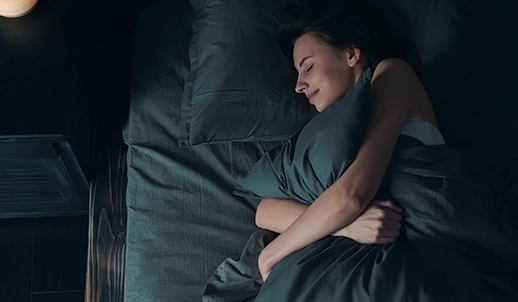
Waking up refreshed and full of energy: That’s the superpower of a good night’s sleep. Many people realize every day—and especially when they don’t get enough of it—just how important good sleep really is. What many people don’t know is that when you sleep poorly, you’re depriving not only your body and brain but also your hearing of the most important phase of recovery. That’s because while we sleep, our hearing works at full speed to recover. The inner ear regenerates, neural processes are recalibrated, and the vestibular system regains its balance. Rest and good sleep are therefore essential for maintaining and preserving our hearing.
Our hearing recovers while we sleep
The inner ear is a highly sensitive system that is exposed to enormous stress on a daily basis from noise, prolonged exposure to sound, and digital stimuli. This leads to so-called oxidative stress processes that can damage cells. Good sleep helps our body regenerate, process stimuli, and thus relieve the auditory center.
This is because while we sleep, the body’s own repair mechanisms kick in:
- Reduction of oxidative stress in the inner ear: Free radicals caused by noise and prolonged exposure are reduced.
- Regeneration of neural auditory processing in the brain: Synaptic connections in the auditory center are stabilized and readjusted.
- Stabilization of the balance system: The vestibular system, closely linked to the inner ear, recovers and maintains balance.
- Cellular metabolism and repair processes: Damaged cells are repaired, and metabolic processes return to normal.
These processes are particularly important because hair cells in the inner ear have limited regenerative capacity. Prevention and protection are therefore crucial. Thus, sleep is only a passive state at first glance. Upon closer inspection, good sleep is an important phase of active regeneration for the entire body—including our hearing.
Noise Stress in Everyday Life and Its Consequences
Whether commuting to work by train, listening to music through headphones, making video calls, working in manufacturing facilities, or navigating city traffic: Our modern daily lives constantly strain our hearing. This constant strain often prevents our ears from having enough time to recover. This can have long-term consequences:
- Fatigue due to increased auditory strain
- Reduced ability to concentrate
- increased sensitivity to noise
- in the worst case, noise-induced hearing loss
Why Good Hearing Is a Factor in Longevity
Hearing health is a key component of modern longevity strategies. That’s because good sleep acts as a protective shield for our hearing and directly contributes to our long-term health:
- Protection of auditory cells: Less stress means less wear and tear on the sensitive auditory cells.
- Cognitive health: Reducing the strain on auditory processing helps prevent mental fatigue
- Stable balance: A well-rested vestibular system reduces the risk of falls.
- Autonomy in daily life: Good hearing supports social participation and quality of life.
Modern lifestyles interfere with good sleep
Many of our daily habits actually interfere with this nighttime regeneration and, over the long term, increase the strain on our hearing:
- Constant exposure to sound until just before falling asleep: The auditory center remains active well into the night.
- Intensive use of headphones: Direct sound exposure stresses the inner ear.
- Noisy environments: High levels of noise exposure in daily life without intentional periods of rest prevent recovery phases.
The result: The ear remains in active mode and does not enter the necessary rest phase in time, even though it urgently needs to regenerate.
Five Tips for a Good Night's Sleep
Even small changes can actively relieve the auditory center, help it relax, and thus significantly improve recovery:
- A quiet, dark bedroom: The less light and noise, the fewer stimuli for the brain and ears.
- Silence, nature sounds, or “white noise”: Gentle, monotonous sounds help relax the auditory center before sleep. Just pause for a moment, reduce the noise level, and consciously take in the silence or sounds.
- Evening routine without headphones: Consciously avoid acoustic stimuli well before bedtime and wind down.
- Wear earplugs: People who are sensitive to noise benefit when not every little sound reaches their ears.
- Wear hearing aids regularly: Hearing aid users should consistently wear their hearing aids when they’re not sleeping. Good hearing care can reduce overall stress and listening strain, thereby indirectly improving sleep quality.
These measures not only promote better sleep but also support long-term hearing health.

Better Sleep Thanks to Hearing Aids
The results of the EuroTrak Germany Hearing Study 2025 suggest that wearing hearing aids while awake improves the sleep quality of people with hearing loss. About half (56 percent) of hearing aid users report being satisfied with their sleep quality. In comparison, only one-third (31 percent) of people with hearing loss who do not use hearing aids are satisfied with their sleep.
Your Partner for Long-Term Hearing Health
Early prevention and counseling help prevent long-term consequences for hearing. Hearing care professionals play an important role in this regard when it comes to holistic hearing health. They can
- analyze individual hearing risks
- educate people about hearing recovery, noise exposure, and hearing hygiene
- recommend suitable hearing solutions and protection strategies
- draw attention to warning signs early on
This makes them key partners in promoting quality of life and prevention.
Use our search tool to find hearing care professionals near you throughout Germany: https://www.ihr-hoergeraet.de/akustiker-suche/.
The quality of our sleep affects how resilient our hearing remains. People who sleep better hear better and stay productive longer. Especially in a noisy world, conscious rest becomes a crucial factor for healthy hearing.
Take time to rest—your hearing will thank you for it. Take a closer look at your evening routine and create specific moments of calm for your hearing. If you’re unsure how much strain your hearing is under, talk to a hearing care professional: Have your hearing professionally tested and get advice on options tailored to your needs.
See how good hearing works

Hearing Loss Explained Simply

Tips & Tricks for Living with Hearing Loss — Episode 1: Talking Openly About Hearing Loss

Tips & Tricks for People with Hearing Loss — Episode 2: All the Things a T-Coil Can Do

Teaser Video Series: Tips & Tricks for People with Hearing Loss

Tips & Tricks for People with Hearing Loss — Episode 3: Improving Room Acoustics

Tips & Tricks for People with Hearing Loss — Episode 4: Saying What You Need

Tips & Tricks for People with Hearing Loss — Episode 5: Subtitles for All Movies

How can you learn to listen properly?

Hearing Protection for Musicians