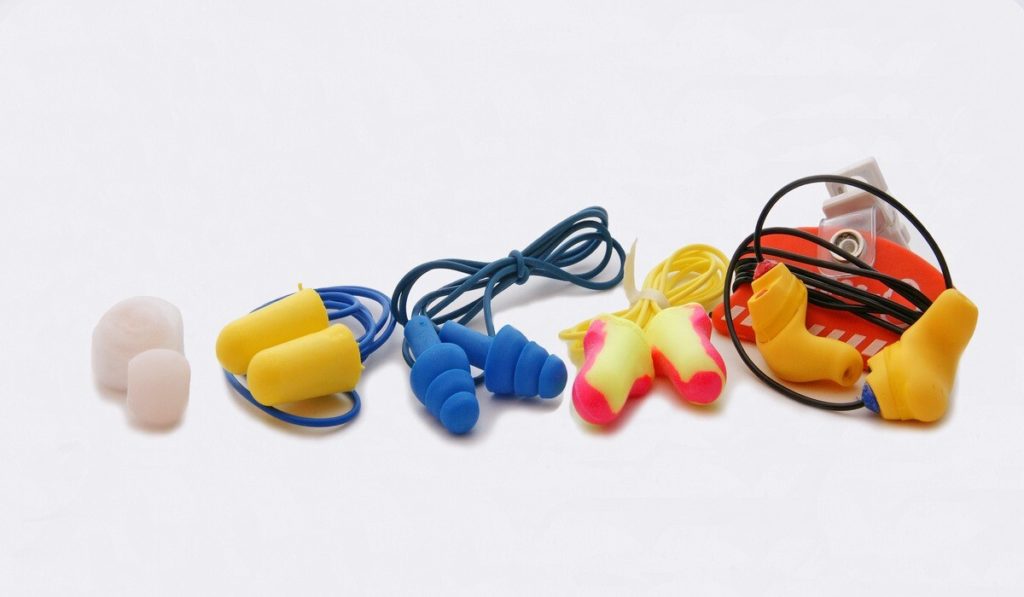
You're spoiled for choice: wax, foam, silicone, or custom-made?
Noise puts a tremendous strain on our hearing. We can't simply cover our ears. With the right earplugs, you can protect your ears and prevent hearing loss.
Whether at work or in our free time, our ears are often exposed to high levels of noise in our daily lives. The point at which our hearing perceives sounds from the outside world as a nuisance varies greatly from person to person. However, there are officially recognized noise levels at which noise can cause physical damage. The right earplugs can help protect your ears.
When is it too loud for our ears?
Prolonged exposure to noise levels above 85 decibels (dB) is problematic; this is about as loud as a major thoroughfare or a saxophone performance.
At 90 dB and above—a volume reached, for example, at a chamber concert or in an orchestra pit—noise protection measures, such as earplugs, are required in the workplace. A wood router, for example, reaches 95 decibels, while a chainsaw can reach as high as 110 dB. A chainsaw or a jackhammer, at 120 decibels, exceeds the pain threshold for our ears just as much as thunder during a storm or a vuvuzela blown by soccer fans. Car races, fighter jets, or a gunshot are even louder, at 140 dB.
Consequences of Excessive Noise Exposure
The consequences of excessive noise exposure range from difficulty concentrating and increased stress to tinnitus. If our hearing is exposed to high noise levels over the long term or to a single, intense sound, we may even be at risk of noise-induced hearing loss and other health problems, such as cardiovascular disease.
To prevent this from happening, you can protect your ears with the perfect earplugs.
What types of earplugs are available?
Earplugs are available for as little as a few euros. Depending on the intended use, there are various models to choose from—for sleeping, for musicians, or for attending a concert. Depending on the design, different levels of noise reduction are achieved. This is indicated by the noise reduction rating (SNR), which refers to the average noise reduction provided by the earplugs. The louder the environment and the better you want to protect your ears, the higher the attenuation rating of the ideal earplugs should be. Most earplugs have an SNR between 20 and 30 decibels.
In addition to noise cancellation, the comfort of the perfect earplugs also plays an important role, especially when worn for extended periods. The best thing to do is simply try out the different products. A quick rule of thumb: The higher the noise reduction, the less comfortable they are during long-term use. Comfort is also influenced by the size of the earplugs. To ensure the perfect earplugs fit in your ear canal, you can choose from a variety of sizes.
Earplugs are usually made of wax, foam, or silicone:
- Wax earplugs: Wax earplugs are a type of “over-the-ear” earplug and are single-use. Because they conform very well to the ear, they do not cause a feeling of pressure. They also help prevent infections.
- Foam earplugs: Foam earplugs are probably the best-known “in-ear” earplugs. You roll them up with your fingers and can then insert them into the ear canal. The foam then expands again and forms an airtight seal.
- Silicone earplugs:These soft silicone earplugs are easy to insert and can be reused multiple times. They exert minimal pressure on the skin of the ear canal.
Custom Hearing Protection
Custom hearing protection—which fits inside the ear and is molded to its shape—is safer than simple earplugs, especially when you’re on the move. This ensures more reliable noise protection. The material used can also be customized to the wearer’s individual needs. Depending on the intended use, different filters with varying attenuation levels can be used. You can get custom hearing protection from a hearing care professional near you. Just stop by and ask for advice!
To learn what you should keep in mind when using hearing protection, read our article “Noise Prevention Is Important—and Not Expensive.”
You Might Also Be Interested In

Ear Protection Against the Cold
Wearing ear protection is a good idea to prevent pressure sores on the ears. That is why preventing infections is so important in the winter.
The loudest sound ever recorded
The Loudest Sound in the World: From the Krakatoa Eruption to “Pistol Ear” — & When Does Noise Start to Damage Your Hearing? Find out now!

Protect Your Ears—But Do It Right!
Do you know the best way to protect your ears and when to do so? Learn everything you need to know about hearing protection in everyday life and at work here.