
Relaxation and Safety in Harmony
“Walking meditation is a wonderful practice.” — Thich Nhat Hanh, *Being Peace*
Silent Walking refers to a mindful, meditative way of walking that excludes all distractions, such as music, podcasts, or conversations. Attention is focused entirely on one’s own body, the surroundings, and the present moment. Although the trend gained new popularity in 2023 through TikTok, the practice dates back much further. Its roots lie in the Zen tradition and in Buddhist forms of walking meditation, which have promoted inner peace and mindfulness for centuries.
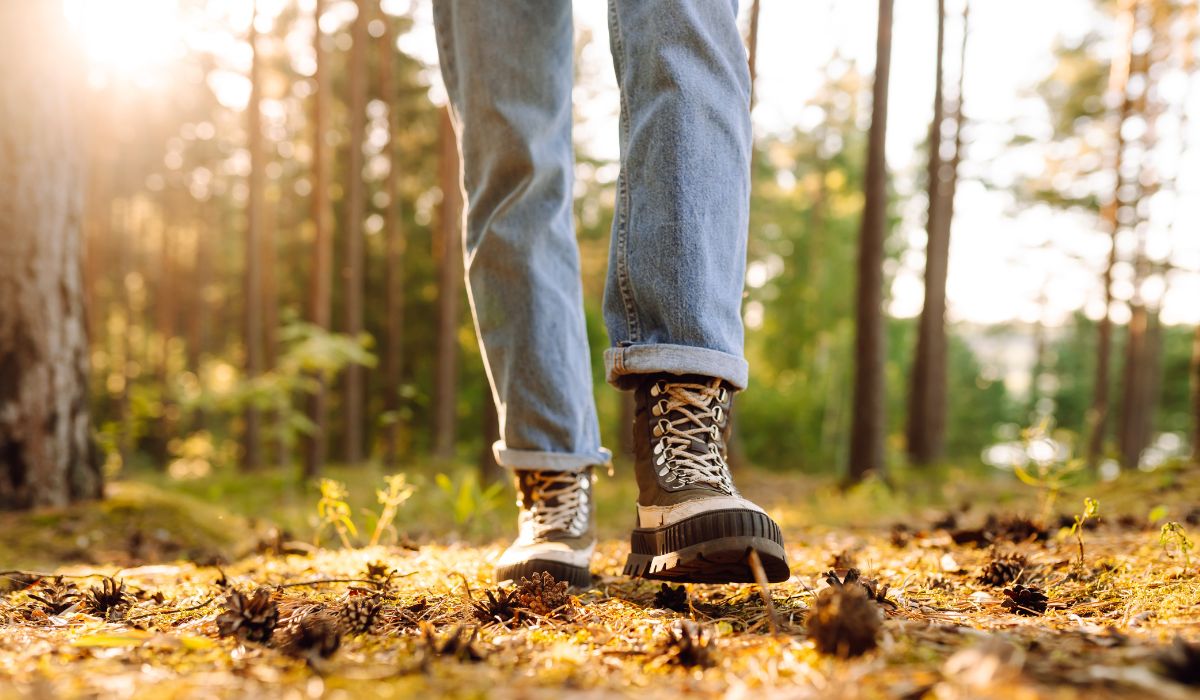
Research shows that silent walking is a true all-around workout for the brain. You can take a silent walk anywhere, as long as you leave your cell phone in your pocket. However, it’s particularly effective in places that exude tranquility, such as a park or a forest. Studies show that simply spending time in nature boosts our well-being and supports mental performance. On average, adults spend up to 90 percent of their day indoors. People who regularly spend time outdoors not only strengthen their heart and circulatory system but also improve their concentration, mood, and well-being.
Particularly fascinating: A study by the Max Planck Institute, along with other studies, shows that silence can act as a catalyst for the formation of new nerve cells. [1] Silent Walking thus combines the positive effects of exercise with the neurological benefits of silence. This transforms what may seem like a passing trend into a scientifically grounded practice that strengthens both body and mind.
What is Silent Walking?
Silent walking has become a widely recognized trend in recent years. More and more people are discovering how beneficial it is to avoid external stimuli while walking and to consciously appreciate the silence. Doing without music, podcasts, or conversations directs one’s attention inward and clears the mind. The idea has spread rapidly, particularly through social media platforms like TikTok, spurred by short clips from social media stars like Mady Maio that have reached millions.
Benefits of Silent Walking:
- Activates the parasympathetic nervous system and reduces internal tension.
- Promotes presence in the moment, without distractions from technology.
- Helps organize thoughts and overcome creative blocks.
- Supports self-reflection and inner stability.
- Has positive effects on rest and sleep.
- Can alleviate anxiety and depressive moods.
- Strengthens the connection to your body and your surroundings.
Even though its modern popularity may seem new, the tradition dates back a long way. In Buddhist forms of walking meditation—such as in Zen, where it is known as “Kinhin”—every step has been taken mindfully for centuries. Silent Walking builds directly on this tradition and makes the experience accessible for everyday life. The appeal lies in its simplicity: walking, breathing, feeling, and experiencing one’s surroundings more intensely.
A Centuries-Old Tradition Rediscovered
Kinhin, the Zen walking meditation, is a strictly structured practice performed between zazen sitting sessions. The breath is accompanied by slow, steady steps. As you inhale, the body begins to move; as you exhale, there is a brief pause before taking the next step. The hands rest folded in front of the body, the gaze is lowered, and attention is focused entirely on the breath, movement, and the present moment.
Silent Walking builds on this tradition without being bound by rigid forms. While Kinhin is usually practiced in a monastic setting, Silent Walking can be practiced anywhere. Both forms share the same goal: to experience walking not merely as a means of transportation, but as a mindful practice that fosters mindfulness and inner focus.
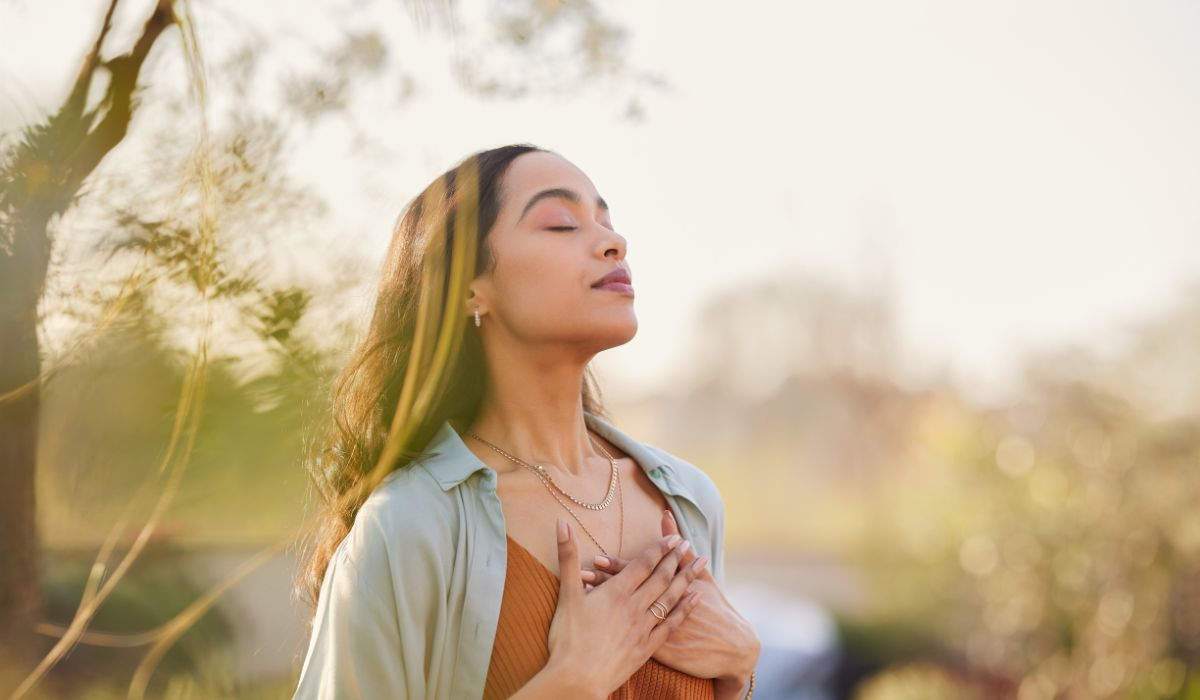
How does Silent Walking work?
So Silent Walking works anywhere: in the park, through the city, on a quiet sidewalk. All you need is a safe, familiar route, comfortable shoes, and a few minutes of uninterrupted time. The goal isn’t speed or distance, but presence. Feel free to use the following guide as inspiration:
- Arriving
Pause briefly. Take three calm breaths. Relax your shoulders, jaw, and hands. Let your gaze soften. - Set your intention
Formulate a simple sentence in your mind: “I will walk quietly and mindfully.” - Start Walking
Begin at a natural, fairly leisurely pace. Put your cell phone on silent or airplane mode; take off your headphones. Keep your ears and eyes open to your surroundings. - Find Your Posture
Keep your head upright, your neck long, and your chest open. Focus your gaze a few meters ahead. Let your arms hang loosely or rest gently at your sides. - Synchronize your breath (optional)
Observe your breath. If it feels comfortable: for example, inhale for 3–4 steps, exhale for 3–4 steps. - Open your senses
Notice sounds, the air on your skin, smells, light, and shadows. Briefly name them (“bird,” “wind,” “warm”) and keep walking. - Feel your steps
Roll each foot from heel to toe. Notice pressure points, the texture of the ground, and your rhythm. Allow a micro-pause at the end of each exhale. - Dealing with Thoughts
If thoughts arise: briefly acknowledge “thinking,” then gently return your attention to your breath, your feet, or the sounds around you. - Regulate your pace
If your mind is racing: slow down a bit. If you feel tired: increase your pace slightly or shift your focus to sounds. - Pausing & Winding DownToward the end, slow down, come to a stop, and take three breaths. Name a sensation (“calmer,” “clearer,” “more alert”). Stretch briefly or do some light stretching.
Can I practice Silent Walking if I have hearing loss and don't wear hearing aids yet?
For people with untreated hearing loss, silent walking is a bit different, as they may not be able to hear all auditory cues and sounds.
In practical terms, this means:
- Route selection: Choose safe and well-lit paths, such as parks and promenades.
- Visibility: Bright or reflective clothing, as well as small LED reflectors, increase safety, especially at dusk or in the dark.
- Stay Alert: Instead of relying on auditory cues, scan your surroundings more frequently, glance over your shoulder, and pay attention to vibrations on the ground.
- Walk withothers: Silent walking with people you know can provide additional safety without disturbing the silence.
If your hearing has already begun to decline and you notice this in various everyday situations, you should make an appointment with an ENT doctor or hearing aid specialist for a hearing test. After the hearing test, you’ll know for sure whether you actually have hearing loss that requires hearing aids or whether there’s another medical cause.
Conclusion: Mindful Listening During Silent Walking
Silent Walking allows you to consciously train your sense of hearing and pay attention to all the subtle sounds in nature—for example, in the forest. When not every sound is automatically present, your attention shifts: the sounds you do perceive come more sharply into focus and take on new meaning. Silent Walking thus invites you to appreciate the sense of hearing itself—not merely as a means of orientation, but as a mindful practice.
If you’re looking for an ENT doctor or an audiologist near you, our free search service is here to help: With just a few clicks, you can quickly find an audiologist or ENT doctor in your area who can test your hearing and, if necessary, offer suitable solutions. In this way, Silent Walking becomes not only a practice of mindfulness but also an incentive to consciously keep an eye on your own hearing health.