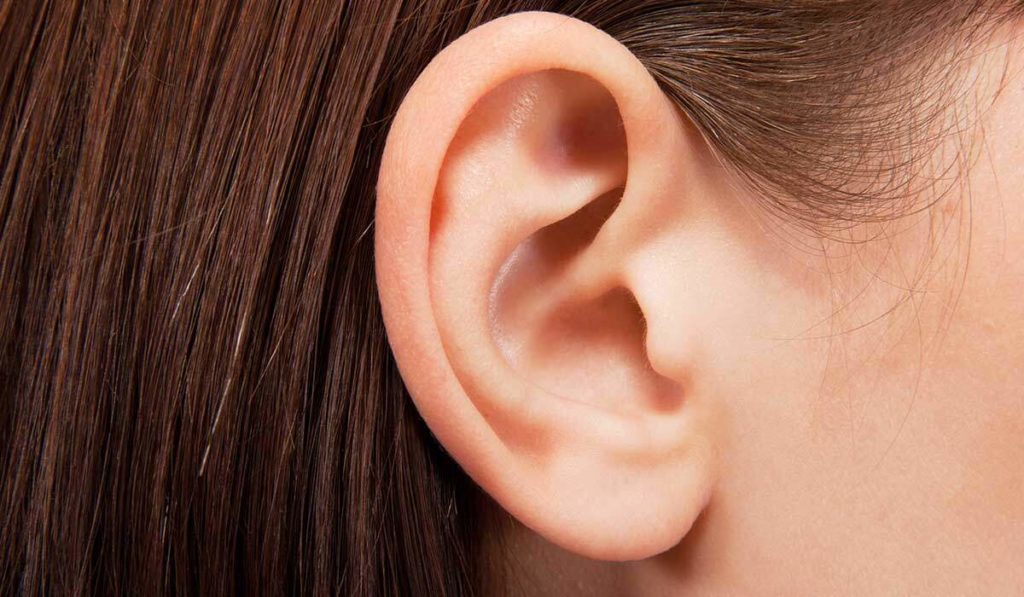
Our Ears—A Unique Anatomical Marvel
Not only are fingerprints suitable for uniquely identifying individuals, but so are earprints and ear images. This is because, due to its anatomy, the ear is unique to every person.
The anatomy of the ear varies from person to person. Ear prints are therefore—just like fingerprints—unique. Scientists at the University of Southampton have developed an algorithm that can recognize the shape of the ear. This makes it possible to identify an ear with 99.6 percent accuracy.
The ear is fully formed at birth
An earprint is ideally suited for identifying and distinguishing between people. It’s no wonder that earprints have long been established in forensic science alongside fingerprints and dental records. “When we’re born, the ear is already fully formed,” explains Mark Nixon, head of research at the University of Southampton. “Although the lobes flatten out a little over time, overall it remains the same.”
The World’s Most Accurate Method for Identifying Individuals
The innovative method developed by the University of Southampton is based on image beam transformation. It is recognized worldwide as the most accurate method for identifying individuals. The procedure is non-invasive; beams scan every part of the ear. The results are then processed by a computer to generate a unique ear ID.
Methods for the Unique Identification of Individuals
- Fingerprints: The most well-known method of identification is the individual fingerprint. This method is based on the biological irregularities of the human papillary ridges on the palms of the hands. It is considered the oldest of all biometric methods and was first used in 1858.
- Iris recognition: In this method, images of the iris are captured using special cameras, and algorithmic processes are used to identify characteristic features and convert them accordingly. This method was developed in 1987.
- Although ear identification is still in its infancy, if the method becomes faster and more accurate, it will be possible, for example, to identify criminals based on their earprints captured on surveillance camera footage.
Incidentally, the earprint method is not intended to replace existing identification methods such as fingerprinting or iris recognition, but rather to complement them.
You Might Also Be Interested In
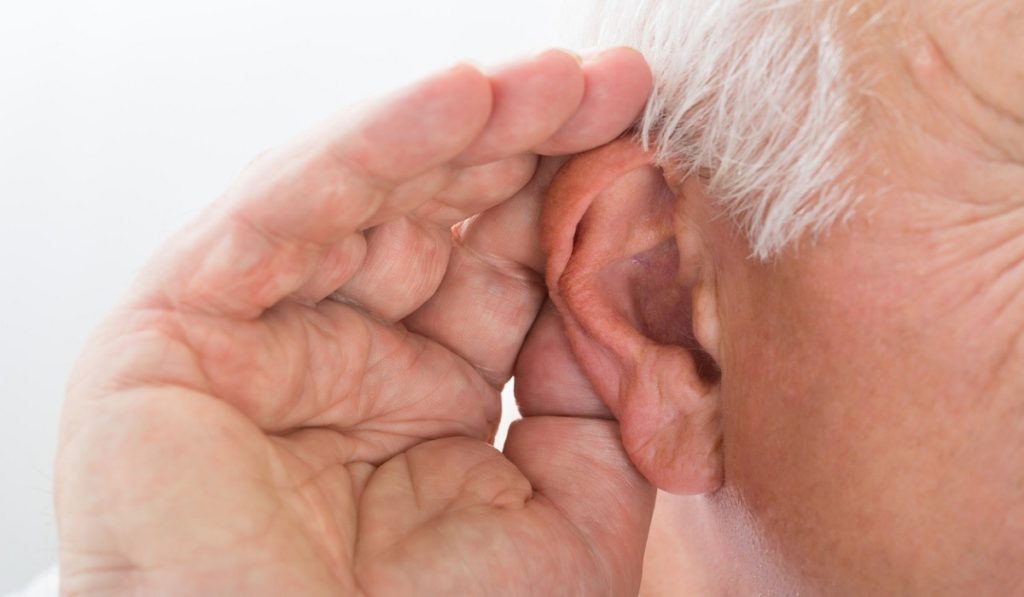
Multitalent Ohr – ein faszinierendes Organ
Ohren wachsen ein Leben lang. Das ist aber längst nicht das einzige Phänomen dieses außergewöhnlichen Organs. Sie sind wahre Multitalente und können deutlich mehr als nur Schallwellen aufzunehmen.
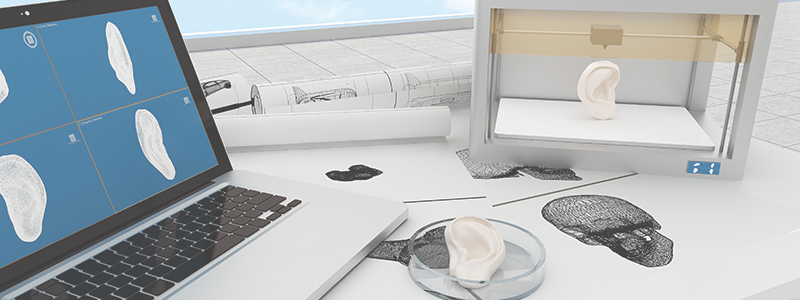
3D-Druck im Ohr
Ob Autoteile, Sohlen für Laufschuhe, Hüftgelenke oder Zahnbrücken: Immer mehr Produkte kommen aus dem 3D-Drucker. Auch für Hörgeräte bietet die Technologie viele Vorteile – vor allem eine noch genauere Anpassung an die individuelle Ohrform sowie schnellere und günstigere Herstellung.
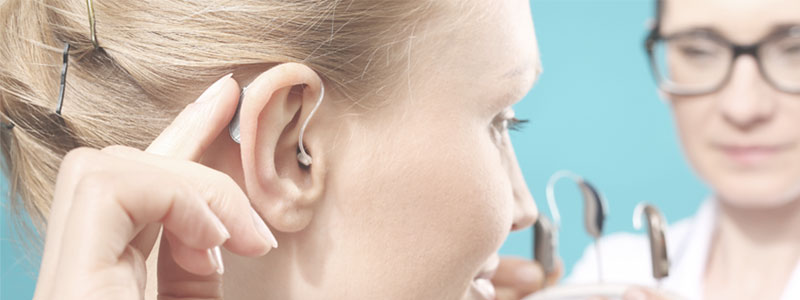
Gemeinsam gutes Hören perfektionieren
Der schwierigste Schritt auf dem Weg zum Wiedergewinn der vollen Hörfähigkeit ist der erste – gut, dass der Hörakustiker ihn mit seinen Kunden geht. Der Experte ist dabei nicht nur für die Anpassung der Hörgeräte an die individuelle Hörschädigung und die persönlichen Bedürfnisse des Trägers zuständig. Er macht vor allem eines: Er nimmt seinen Kunden […]
Ear impressions—the basis for custom-fit earmolds and hearing protection
Ear impressions also serve as the basis for manufacturing custom ear molds for hearing aids. These ear molds can be used to maximize the hearing aid’s performance. As the direct link between the hearing aid and the ear, the ear molds are either connected to the sound tube of behind-the-ear (BTE) hearing aids or permanently attached to the housing of in-the-ear (ITE) hearing aids and inserted directly into the ear.
To create them, the hearing care professional takes an impression of the inner ear—much like a dentist does. The entire process is completely painless. Since the cost of the ear molds is included in the total cost of the hearing aid, health insurance also covers this expense. Whether the coverage is full or partial depends on the hearing system you choose.
However, the ear impression can also be used to create a perfectly fitting pair of earplugs. These, too, are custom-made to fit only one person. And if you’re interested in in-ear music headphones, an ear impression is the first requirement for their production.
Ears come in all shapes and sizes. Some people have large ears, while others have smaller ones, or ears that stick out a bit—these are often called “protruding ears.” Read on to find out why you absolutely don’t need to be ashamed of them.