How to Protect Your Hearing on a Cold New Year's Eve
New Year’s Eve is just around the corner: What will saying goodbye to 2023 be like? Lonelier than usual? Anxious? Optimistic, cheerful, or loud! Warning: Fireworks and firecrackers can cause irreversible hearing damage—what should you do?
At a Glance
- Exploding fireworks can reach sound levels of up to 150 decibels
- Sudden hearing loss or tinnitus can be recognized by ringing in the ears or a sudden loss of hearing
- Wearing the right hearing protection can reduce the risk of hearing damage from firecrackers
- Don’t forget your masks, and protect your ears from the cold
Precisely because this year has been so challenging and we’ll have to continue doing without celebrations and the traditions we’ve come to love, many people want to send it off with an even louder bang. Goodbye, 2020!
But the fact that fireworks and firecrackers can cause irreversible hearing damage—not to mention the costs and air pollution—quickly fades into the background. Cities and counties have been discussing fireworks bans for quite some time. Larger New Year’s Eve parties are literally falling through—or into the water or ice—this year due to COVID-19.
So, should we set off fireworks only in small groups? Please keep in mind: Every year, more than 8,000 Germans suffer inner ear injuries or even acoustic trauma on New Year’s Eve. For about one-third of those affected, the resulting hearing damage is irreversible for the rest of their lives—a high price to pay for a few minutes of setting off fireworks with friends or children.
Hearing Damage Caused by Fireworks and How to Recognize It
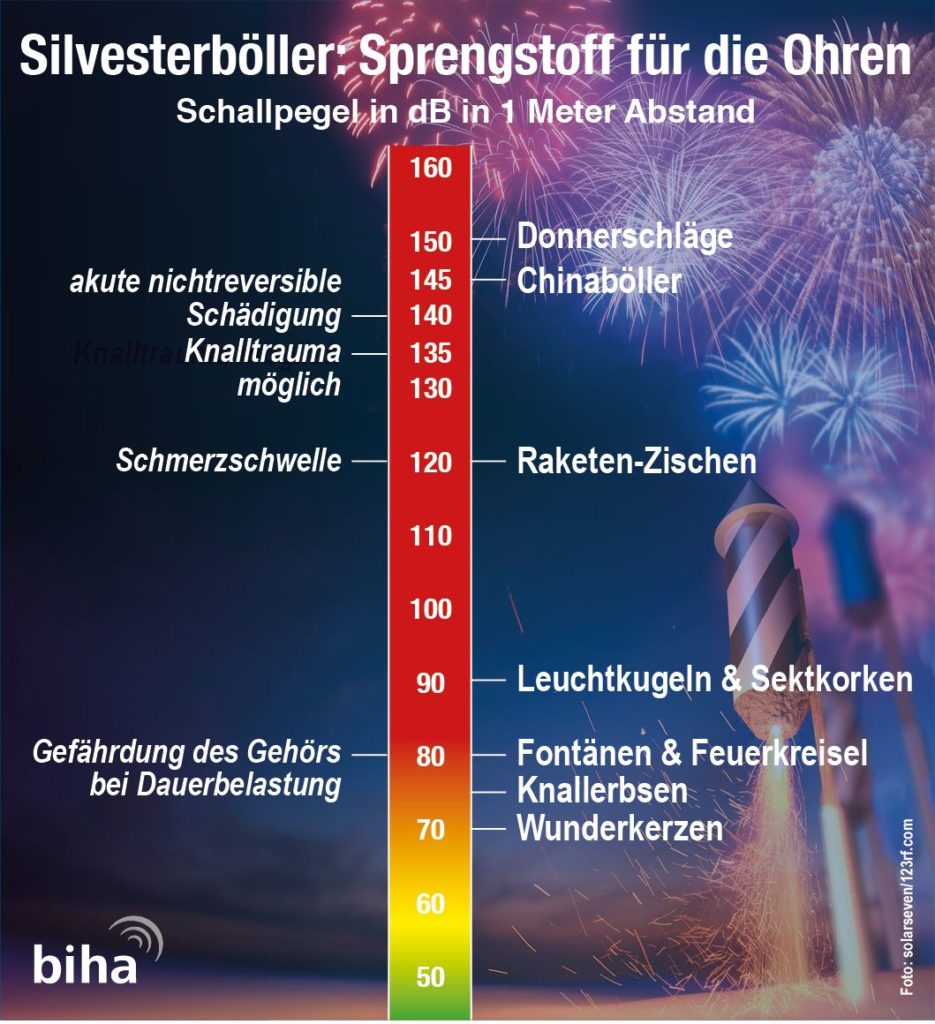
According to a report by the Federal Guild of Hearing Aid Specialists, thunderclaps top the noise list at 150 decibels. This makes them as loud as a jackhammer or a small firearm. Firecrackers follow closely behind at 145 decibels.
The danger is that when firecrackers are set off between buildings or in rows of houses, the noise is amplified by reflection, which further increases the risk of causing irreparable hearing damage. The risk of suffering acoustic trauma begins at just 135 decibels. Also keep in mind that fine particulate matter pollution is particularly harmful to people suffering from respiratory diseases. This includes some people with hearing impairments and older residents.
Acoustic trauma is usually triggered by brief, extremely loud noises, such as lightning strikes, an airbag deploying, or even exploding fireworks.
When this happens, a sound level penetrates the sensitive, fluid-filled inner ear, which can lead to the immediate destruction of the delicate hair cells—and these are irreplaceable. It is not just the volume that is harmful, but also the high pressure generated by the explosion, which can cause irreparable hearing damage. In addition to acoustic trauma, sudden hearing loss or tinnitus can also result from an excessively loud firecracker.
Signs of this type of hearing loss include noises in the ear such as hissing, ringing, and roaring, or sudden hearing loss. These are usually accompanied by heightened sensitivity to noise, dizziness, and balance problems.
In cases of sudden hearing loss, those affected often experience cardiovascular symptoms in addition to a cotton-like or muffled sensation in the ear. In such cases, you should see an ENT specialist immediately.
If the other symptoms persist or if you were exposed to noise for an extended period, the eardrum may have been damaged. There is a risk of blast trauma. A doctor can determine this.
Especially at Risk: Our Children’s Ears
Children and teenagers, in particular, have very sensitive hearing because they’re still growing. In addition, they often can’t properly assess the dangers of loud fireworks. To protect your children’s hearing—and your own—you should therefore make sure to keep your distance from rockets and firecrackers.
However, if you can’t avoid the New Year’s Eve noise—or can only do so to a limited extent—there are various everyday options for hearing protection.
In winter weather, thick hats, scarves, or buffs and ear warmers can be helpful, as they protect against the cold, COVID-19 infections, and, to some extent, noise.
Even using simple earplugs can reduce the risk of hearing damage from fireworks. But other everyday solutions can also be helpful for protecting your hearing on New Year’s Eve.
Since it’s not just fireworks and firecrackers that can cause irreparable hearing damage—loud party music also plays a role—you could use hearing protection solutions that dampen the music without compromising the listening experience.
In addition, there are many other custom-fitted hearing protection options that seal off the ear and can filter out specific frequencies. This makes the noise quieter, but conversations can still take place normally.
Instead of thunderclaps and firecrackers, you can also welcome the New Year with fountains, spinning fire wheels, poppers, and sparklers. These New Year’s Eve fireworks look just as beautiful, are fun, and, at 70–80 decibels, are unlikely to cause hearing damage.
Plus, they’re easy on your wallet and the environment. If you’d like, you can also play a virtual fireworks display on your computer, project it onto walls or in the garden using lasers, and delight yourself and your neighbors as you welcome 2021 and bid farewell to the old year.
You can read more about hearing protection in our article “Protect Your Ears—the Right Way!” And if you’d like to check whether your hearing is okay before New Year’s Eve, click here to access our hearing tests—quick and easy, right online on the platform.
Cheers!
We wish you a great start, a wonderful New Year’s Eve, and
a healthy, peaceful, and happy New Year!
You Might Also Be Interested in
Tag gegen Lärm – Was Stille uns jetzt Hören lässt
Am 29. April 2020 ist der „Tag gegen Lärm“. Was aber ist eigentlich Lärm? Wann ist er schädlich – und welche Auswirkungen hat er auf unsere Ohren? Wir erklären, was die Stille dieser Tage uns jetzt hören lässt.
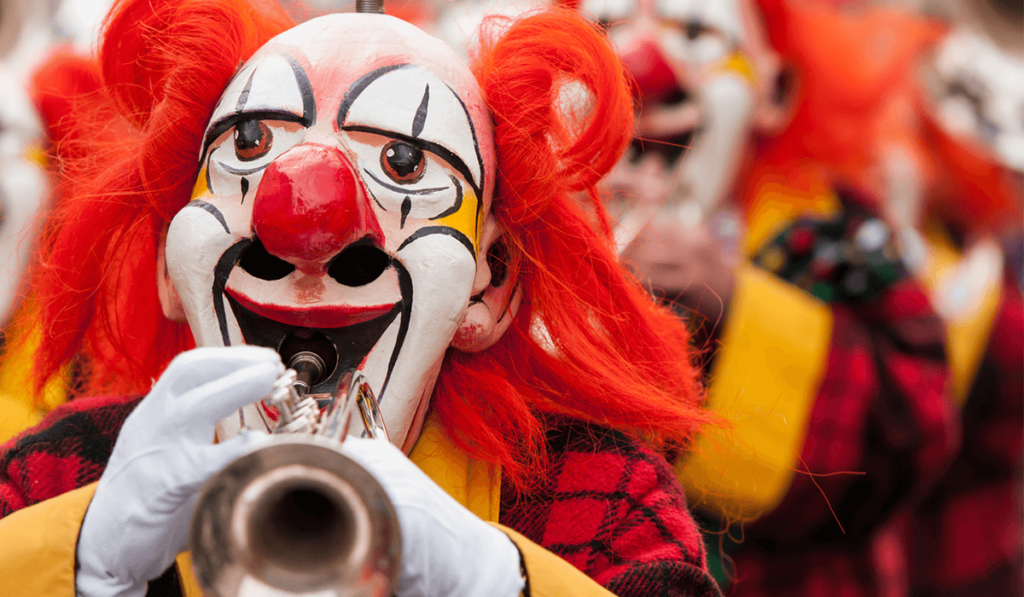
Carnival season is pretty loud
During Carnival season—and at a whole host of other events as well—children’s sensitive ears should be given special protection.

Here's How Tinnitus Might Develop
How Tinnitus May Develop: A Better Understanding Opens Up New Treatment Options. Could Stochastic Resonance Be the Cause of Tinnitus?