
Get out of bed on time with an alarm clock or smartphone
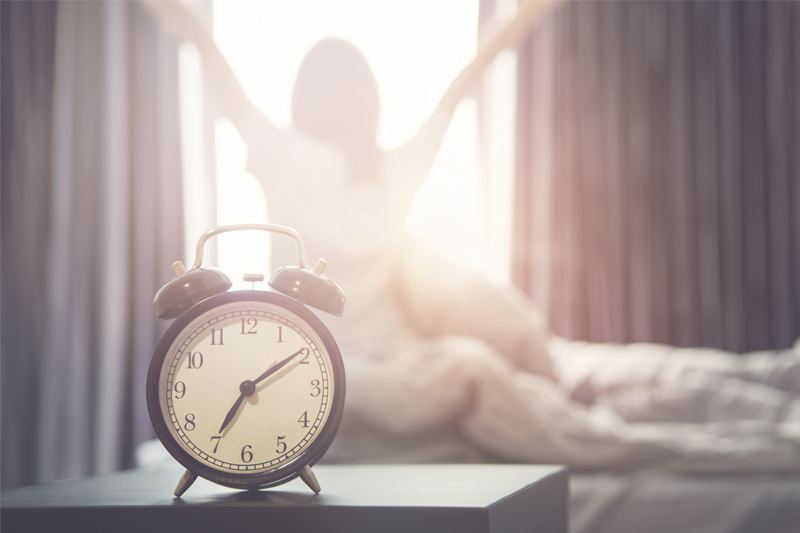
Whether it’s a traditional alarm clock, a radio alarm clock, or a smartphone—most people rely on an audible signal to wake them up in the morning. This works primarily because our ears are always ready to receive sound—an evolutionary legacy from earlier times.
When the alarm clock rings in the morning, it’s time to “get out of bed.” Without that daily morning alarm, very few people would wake up—at least if they have to get up early to go to school, college, or work. These days, however, traditional alarm clocks are becoming increasingly rare next to our beds; only slightly more than a quarter of all Germans still use them, as a recent survey by the Fördergemeinschaft Gutes Hören shows. These days, we much prefer to be woken up by our cell phone or smartphone (34 percent)—after all, we always have them within reach anyway. People under 35, in particular, use their cell phones to get out of bed on time in the morning.
Our ears never sleep
Whether it’s a smartphone or a traditional alarm clock—we always pick up on the signal because our ears are always ready to receive it. Around the clock, seven days a week. Just think of your snoring partner or your noisy neighbors: It would be nice to just “turn off” our ears when falling asleep. When we wake up, however, this constant readiness to receive signals works to our advantage. Like so many things, this is a legacy from earlier times: What wakes us up today used to be essential for survival—and in some ways, it still is. Whereas in the Stone Age we had to be alert to dangerous animals, today it’s vehicles or alarm systems. And mothers are always woken up by even the slightest sound from their infants anyway. Incidentally, it’s no different in the animal kingdom.
Protect Your Hearing to Hear Well
However, our ears are only fully functional when our delicate and sensitive sense of hearing works properly. That’s why it’s always advisable to take responsible care of our hearing. This includes, for example, avoiding loud noise sources—such as not standing right next to the speakers at a concert—or wearing hearing protection when using an electric hedge trimmer as a hobby. To safeguard your hearing in the long term, ENT doctors and hearing care professionals recommend regular hearing tests. When was your last hearing test? You can get an idea of just how well you actually hear right here on Ihr-Hörgerät.de. Click here to check it out now!
And who doesn't like to treat themselves to a little relaxation every now and then? Our ears love it, too. Read on to find out which noises and sounds can be a real treat for your ears.



