How Skiing Works for People with Hearing Impairments
Skiing despite hearing loss? No problem—as long as you have the right equipment: Here you’ll find tips for hearing aid users and get a glimpse into the world of professional sports.
At a Glance
- The Deaf National Ski Team Must Overcome Unique Challenges
- Here’s how the pros on the national deaf ski team—who excel at international competitions—train
- Don’t be afraid of the cold and wet: Here’s how to enjoy safe and unspoiled fun on the slopes even with a hearing aid
Alpine skiing—and even competing in championships—is no problem for people who are deaf or hard of hearing. Peter Haupt from Isny, for example, coaches Germany’s most successful deaf skiers.
But even without a professional coach, the same rule applies: With properly adjusted hearing aids and the right equipment, anyone can enjoy safe fun on the slopes.
The Deaf National Ski Team
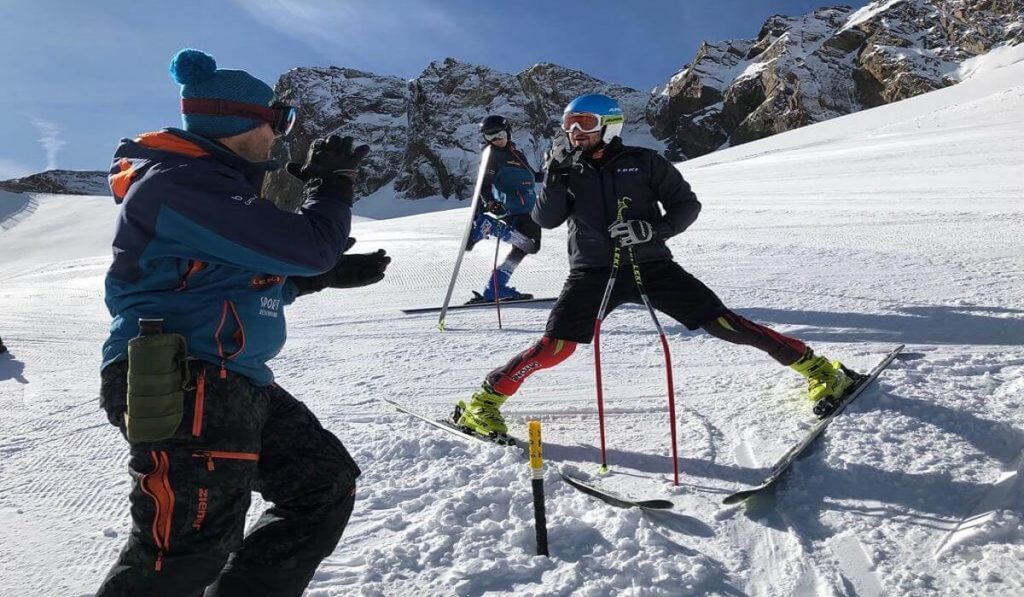
Peter Haupt has been the coach of the national deaf ski team for three years. He appreciates the varied nature of the work and the high level of professionalism of his team, as he describes in a podcast by all-in.de. During training, he has to manage without a radio or verbal instructions and rely on sign language. But is there even a sign for “more pressure on the inside ski”?
Nevertheless, his athletes compete in the Deaflympics—the Olympic Games for the Deaf—and numerous European Cup events. In doing so, they are subject to all the official rules of the federations, such as doping tests. In the World Cup, they are equipped just like their hearing teammates and compete in the same downhill disciplines.
How do you enjoy winter sports with hearing aids?
But it’s not just elite athletes—recreational athletes who wear hearing aids can also enjoy winter sports to the fullest. However, it’s essential that you wear your hearing aids while skiing or snowboarding. That’s because when you’re skiing down a crowded slope, it’s especially important to hear well so you can recognize potential dangers in time. Hearing aids help you correctly interpret voices and ambient sounds and react to them immediately. Plus, part of the fun of being on the slopes is being able to clearly hear the sound of your skis or snowboard as you descend, turn, and glide.
How does a ski coach communicate with deaf skiers?
Unlike people with hearing loss, who can navigate the slopes with hearing aids, the communication situation is different for Peter Haupt and his team of deaf skiers: For Haupt, who previously had no experience with the deaf community, learning sign language was a challenge. Even today, after three years, he still doesn’t feel completely confident with it. To ensure they can make themselves understood during on-slope training even without a radio, there are always two coaches with the athletes on the slope—one at the top and one at the bottom. If a coach happens to be alone, he skis right alongside the group to give them feedback. Peter Haupt’s fellow coach is deaf himself and can therefore communicate perfectly. However, the same applies to him: there are no corresponding signs for many skiing terms such as “more pressure on the inside ski” or “faster weight transfer.” That’s why the group works particularly intensively with video analysis after training. “When the athletes see the movement sequences, they immediately understand what they need to improve,” says Peter Haupt.
What role does the sense of balance play?
Haupt particularly admires the ambition of his protégés. “The deaf athletes train very hard. Although their sense of balance is severely limited—meaning they have to compensate for yet another important sense for skiing in addition to their hearing—some of them still manage to compete successfully in the upper middle of the pack in regular ski races in their discipline,” says Haupt. “I once tried skiing with earplugs myself so I wouldn’t hear the clatter of the skis. That alone is very distracting.”
You Might Also Be Interested In

Frostschutz für Ihr Gehör
Dick eingemummelt und rutschfest auf beiden Beinen: Wir erklären, wie Sie Ihr Gehör vor Kälte schützen und wie Ihr Gehör Sie bei Eis und Schnee schützt.
Wintersport: Hörakustik kann mehr als nur Hörgeräte
Wintersport und Hörakustik, das passt doch nicht zusammen! Tut es tatsächlich doch, wenn es um Sportakustik geht. Denn dabei geht es vor allem um Gehörschutz und die einfache Kommunikation zwischen Trainer und Athleten während eines Wettkampfs.
Hörakustik im Wintersport
Die Wintersportfans sind schon seit Tagen wieder Feuer und Flamme: Endlich sind die Biathleten, Rodler und Skispringer wieder unterwegs. Was genau hat jetzt die Hörakustik damit zu tun? Wir erzählen es Ihnen in unserer sportlichen Themenreihe!
Uninterrupted Fun on the Slopes with Hearing Aids: What Should You Look for When Choosing Hearing Aids?
It’s understandable that some skiers with hearing loss may not want to wear their hearing aids while skiing due to wind noise or a poorly fitting helmet. That’s why hearing aid users, much like eyeglass wearers, need to pay special attention to a secure fit and excellent comfort when selecting a ski helmet. The helmet must not press against the hearing aid—in other words, it shouldn’t sit too close to the hearing aid—to avoid uncomfortable pressure points or damage to the hearing system. Those who find wind noise distracting while skiing can opt for hearing aids equipped with wind noise reduction.
How do hearing aids stay waterproof?
Whether you fall into the snow or sweat under a helmet and hat, hearing aids can get wet quickly in the winter. While modern hearing aids are generally protected against splashes, excessive moisture can damage the electronics inside these tiny mini-computers. If a hearing aid comes into contact with snow or water, hearing care professionals recommend briefly removing it and drying it off. After winter sports, it’s essential to thoroughly dry and clean the devices. Special drying boxes or containers are available from hearing care professionals. Anyone who spends a lot of time in wet or damp environments while exercising—or who sweats heavily—is well advised to use a water-resistant hearing aid. These models are completely sealed. Semi-permeable membranes protect the electronics from water while still allowing sound to enter the hearing aid. Special surfaces with a non-slip finish also ensure a secure fit and prevent the device from slipping, even during vigorous movement.
How do you operate a hearing aid in cold weather?
For skiers with hearing loss, the question arises of how to operate their hearing aid in cold weather. To adjust to the new listening environment—for example, on the ski lift or during a break at a ski lodge—hearing aid users can select different listening programs. Suitable gloves, a remote control, or a connection to a smartphone can help with this, allowing them to switch between programs quickly and easily. Hearing care professionals are happy to advise on which hearing aids support this feature and set up the connection.
How can I make hearing aid batteries last longer?
Cold weather shortens the life of any battery. A hat or ski helmet not only protects your head but also keeps the batteries from getting cold. In general, it’s a good idea to warm up new batteries briefly in your closed hand or pants pocket before inserting them into your hearing aid. This extends their runtime. However, excessive heat—such as when warming them with a hair dryer—can drain the batteries just as quickly as freezing cold. Especially in winter and on the slopes, you should therefore always carry spare batteries with you. If the hearing aids get too cold, experts recommend warming them up in your hand for about five minutes. However, placing the devices on a heater or warming them with a lighter is absolutely not recommended.
What should you keep in mind when choosing equipment?
For outdoor enthusiasts who want to play it safe, there are high-quality hearing aids with rechargeable lithium-ion batteries. They’re easy to use and offer greater comfort and flexibility. There’s no need for the hassle of changing batteries—instead, the hearing aids simply charge overnight. Provisions are also made for longer stays at mountain huts: practical mini-chargers take up virtually no space in your backpack. Additional power packs can recharge the hearing aids up to seven times, even without access to a power source.
People who participate in winter sports while wearing hearing aids face virtually no limitations. However, it would be risky to go skiing without hearing aids if you have poor hearing. Overall, the number of people who wear hearing aids has increased. Because more and more people today start using hearing aids early on, even with mild to moderate hearing loss, there are also more and more younger people using hearing aids—and, consequently, more active athletes among them. For ambitious winter sports enthusiasts who ski frequently, a high-quality hearing aid is well worth the investment to ensure nothing stands in the way of unrestricted fun on the slopes. Your local hearing care professional can help you find the right model. And, as the example of the German national ski team for the deaf shows: Deafness is no barrier to professional sports either.
Checklist for Skiing with a Hearing Aid
- Make sure your helmet fits properly with your hearing aids
- Briefly remove wet hearing aids and dry them
- Let your hearing aids dry for a longer period after winter sports
- Warm up the batteries in your hand
- Bring spare batteries or power packs as backup power sources
- Pack smartphone-compatible gloves
- Check that they can be operated via smartphone or remotely
- Use hearing aids with wind noise reduction
- For your own safety: Never hit the slopes without your hearing aids!
Read here to find out how you can stay active with your hearing aid in any weather and at any time of year—while giving your ears extra protection.



