
How to Build Closer Relationships When You Have Hearing Loss
The Federal Association of the Hearing Aid Industry found in a survey that about 28% of female participants and 23% of male participants view hearing loss in old age as a challenge for their relationship. But challenges can also be opportunities. After all, those who learn to listen attentively, clear up misunderstandings early on, and deal openly with changes lay the foundation for trust and closeness. Since this topic concerns many couples and directly affects their daily livestogether, we’ll take a closer look in this article: How important are “being heard” and “listening” for trust and intimacy?
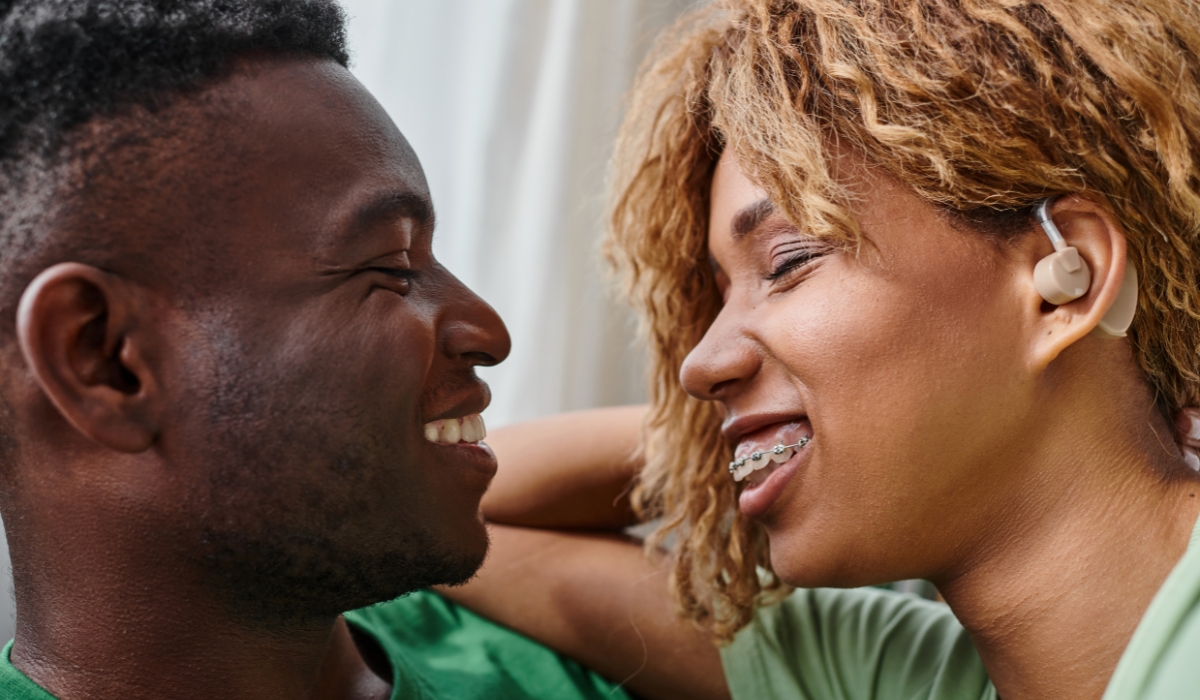
The good news: If you’re already experiencing hearing loss, there’s no need to give up just yet. With the right hearing aid, you can reconnect with your loved ones. But to prevent it from getting to that point in the first place, here are some prevention tips.
How important is listening in a relationship?
“I can barely understand you,” “Can you please speak a little louder?” “You’re always mumbling like that,” “You never listen to me.” Do these phrases sound familiar? They’re often hastily interpreted as carelessness or even intentional behavior. But what many people don’t realize is that there may be an underlying hearing loss—sometimes without the person even knowing it. The result in many households: a vicious cycle of misunderstandings, frustration, and withdrawal.
Those who truly listen show empathy and appreciation. It’s not just about the information, but about the message: “I’m here for you. You matter to me.” But people with hearing loss often can no longer convey this message. Instead, they appear disengaged, don’t respond to calls, and seem distracted. Their partner feels ignored or not taken seriously.
The partner with hearing loss, on the other hand, perceives the accusations as unjustified and rejects them. Misunderstandings mount, conversations become more strained, and intimacy is lost. Particularly alarming: One-quarter of those affected mistakenly believe that they themselves speak unclearly and blame themselves.
On top of that, many people with hearing loss feel insecure in larger groups and avoid social situations for fear of not being understood. As a result, shared activities become less frequent, and emotional distance grows. What begins as a medical issue can quickly become a strain on a relationship.
Study Shows the Impact of Hearing Loss on a Relationship
Numerous scientific studies have examined how a partner’s hearing loss directly affects a relationship. However, the results vary widely.
The Alameda County Study from the U.S. showed in 2004 a direct link between hearing problems and a partner’s mental health. The long-term study made it clear: When one partner complains of hearing difficulties, the other’s mental well-being changes—sometimes significantly—and this effect persists even five years later. Even after controlling for factors such as age, gender, financial worries, or chronic illnesses, the link remained.
In contrast, the results of the Norwegian Nord-Trøndelag Health Study in 2010 were surprising. The study, which examined more than 13,000 couples, found no association between audiometrically measured hearing loss and the mental health of the spouses.
These seemingly contradictory findings raise intriguing questions: Is it due to cultural differences between Americans and Norwegians? Or does it matter whether hearing loss is measured only objectively or is subjectively perceived as a burden?
The researchers believe that it is not hearing loss alone that strains a relationship, but rather how it is handled. The key factor is whether those affected actively work to overcome communication problems and are dissatisfied with their situation. Someone who takes their hearing loss seriously and is well-fitted with hearing aids is likely to put significantly less strain on the relationship than someone who denies it or leaves it untreated.
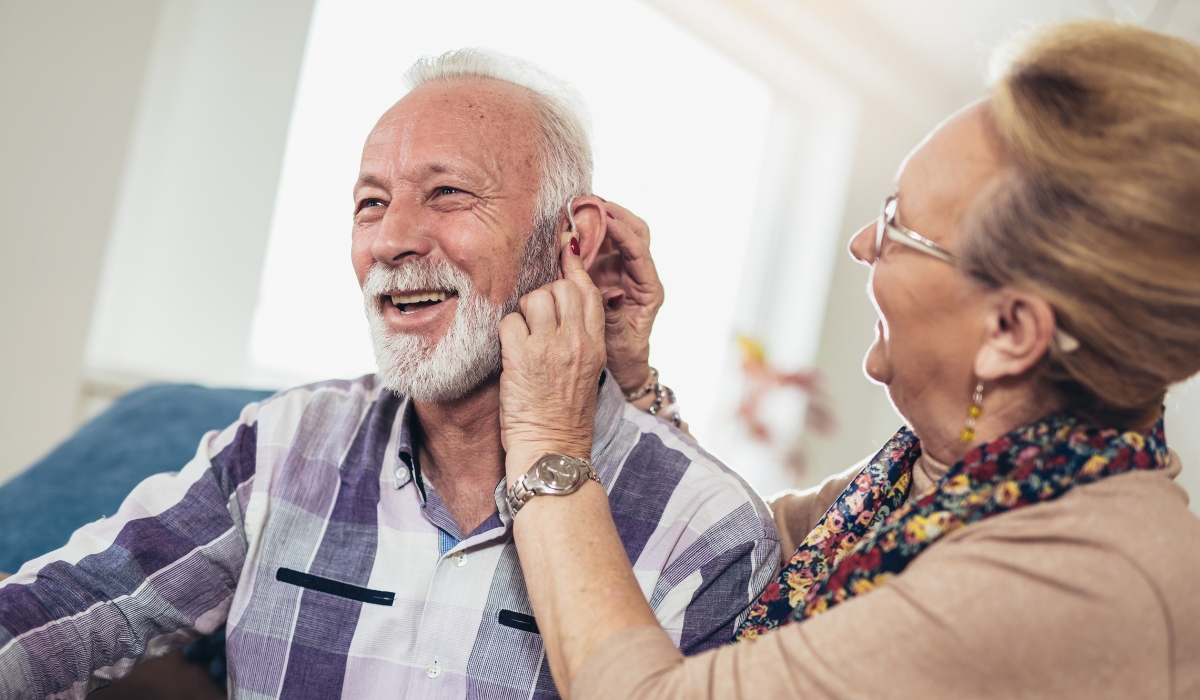
The Challenges of a Relationship When One Partner Has Hearing Loss
You now know—perhaps even from your own daily experience—how exhausting it can be to constantly repeat yourself, to have to speak louder and louder, and to feel like you’re talking to a wall. It becomes particularly problematic when conflicts in this context remain unresolved. Without effective communication, you lack the most important tool for overcoming problems. Relationship satisfaction drops noticeably. The more difficult communication becomes, the more both partners withdraw.
But what can be done about it?
Many couples today are leading by example: With the right strategies and modern technology, communication can be restored, and you’ll emerge from the situation even stronger together. The path back to a fulfilling relationship begins, above all, with early and deliberate action.
Training the Brain
Hearing loss is like an untrained muscle: the longer you wait, the more difficult rehabilitation becomes. The brain “forgets” how to process acoustic signals. Modern hearing aids specifically amplify the affected frequencies and reactivate these abilities. Therefore, if you suspect you have hearing loss, don’t hesitate—schedule a hearing test with an ENT specialist and determine the cause of the hearing loss first.
Communicate openly
Clearly express your needs. Ask for quieter places to talk or for eye contact when speaking. Your family and friends want to help, but often don’t know how. Clear communication fosters understanding and closeness.
Practicing Patience
Give yourself and others time. Not everything has to be understood right away. Asking for clarification isn't a sign of weakness; it shows that you're interested in the conversation. Repeat important information and create a relaxed atmosphere for the conversation.
Stronger Together
Talk to others who are going through the same thing. Online forums and support groups offer valuable advice and emotional support. You are not alone. More than 95 percent of all hearing problems can be successfully treated.
Modern Hearing Aids as the Key to Relationships
Technology has made enormous strides. Today’s hearing aids are small, discreet, and powerful. Nearly all users report a significantly improved quality of life: more social activity, more harmonious relationships, and better sleep. Thanks to personalized fitting and an unobtrusive design, hearing aids can be easily integrated into everyday life. Tip: Hearing care professionals offer free trial periods. You can take your time to find out which hearing aids best suit your daily life.
Seek Professional Help
If you suspect you have hearing loss, you can use our convenient search service to find a suitable hearing care professional or ENT doctor near you. A professional hearing test will provide clarity about your hearing ability. If a hearing aid is recommended, your ENT doctor will provide you with a prescription for hearing aids. You can then consult with a hearing care professional in your area.
Conclusion: Love is what matters
Hearing loss can put a relationship to the test. But that’s exactly where the opportunity lies: Couples who overcome this challenge together often discover a new depth in their relationship. They learn to be more mindful of each other, to be more patient, and to appreciate the value of effective communication even more.
Thanks to modern hearing technology, challenges become new opportunities: A professional hearing test takes only a few minutes, but it can enrich—or even save—decades-long relationships. Ultimately, the decision to get hearing aids is also a decision to prioritize love. After all, what could be more precious than hearing the voice of the person closest to you?



