What Children Should Be Able to Understand and Say at Each Age
Children learn to speak and perceive their surroundings at their own pace. However, there are some indicators that parents can use to monitor their child’s language development and thus identify a possible hearing loss.
Language Development and Hearing Loss
Language development in children varies greatly from child to child. Some say their first words as early as nine months, others not until they’re over a year old. This is completely natural and, at first, no cause for concern for parents. From birth, children have everything they need to learn to speak. This is because they want to build relationships with the people around them who lovingly care for them. In doing so, they do not follow strict rules or, like adults, know the individual stages of language development. Nature already provides everything children need for language acquisition.
What they hear has a significant influence on this development. If a child has hearing loss or a hearing impairment, it is more difficult for them to learn to speak, since they cannot hear their parents speak (properly) and, as a result, cannot imitate the language. For this reason, parents should be familiar with the natural course of children’s language development. This enables them to respond if their child deviates from this course.
Children's Language Development
- Up to 3 months: The child reacts to loud noises by startling.
- From 3 months onward: The child begins to perceive the directions from which sounds come. This is evident when the child turns their gaze toward the source of the sound or opens their eyes wide in response to louder noises. In addition, the child now begins to experiment more and more with their own voice and to make sounds.
- From 6 months onward: The child not only looks in the direction of sounds but also turns their head toward them. They may also begin making their first attempts at speech, such as “Mama” and “Papa.” The words a child uses to start speaking always depend on their primary caregivers.
- From 9 months: The child now understands their first words. This is evident, for example, when they look at their mother upon hearing the word “Mama.”
- 12 to 18 months: By this time, the child should be able to say their first words at the latest. How quickly this happens varies from child to child and is entirely individual. Generally speaking, girls tend to learn to speak faster than boys. But this isn’t necessarily always the case. In addition, between their first birthday and 18 months, the child begins to name things they do, see, or hear.
- From 18 months onward: The child now understands simple sentences and can follow their parents or other caregivers. They also respond to simple instructions.
- 24 months: People who aren’t with the child every day should now be able to understand and follow the child.
- 3 to 5 years: By now, the child can express themselves well verbally. They can ask questions and take in information, verbalize their own wishes, and understand almost everything.
Causes of Hearing Loss
If a child has hearing loss, it is usually detected during routine well-child checkups. Early detection allows for effective treatment of hearing loss or hearing impairment in children. There are two types of hearing loss: congenital hearing loss and acquired hearing loss, which can affect one or both ears.
Hearing loss can be caused, for example, by an infection the mother contracted during pregnancy. In addition, illnesses such as a middle ear infection in the child after birth can also trigger hearing difficulties. A hearing screening can determine whether a child has hearing loss.
Newborn Hearing Screening
Nowadays, congenital hearing loss can be detected early through newborn hearing screening. This is very important because children with congenital deafness can develop normally with the help of a cochlear implant.
The earlier the diagnosis is made, the more successful this treatment option is. Early detection ensures that congenital deafness can be treated in a timely manner, allowing these individuals to regain their hearing. If parents have concerns about their child’s hearing despite a normal result on the hearing screening, they should consult an ENT specialist.
Signs of Hearing Loss in Children
Hearing is crucial for the development of language skills, so the first signs of hearing loss can often be detected through a child’s language development. Therefore, it is important for parents to recognize these signs and take action. In addition to the child’s language skills and development—which parents should monitor—the following signs may also indicate a possible hearing loss:
- Loud noises do not distract the child.
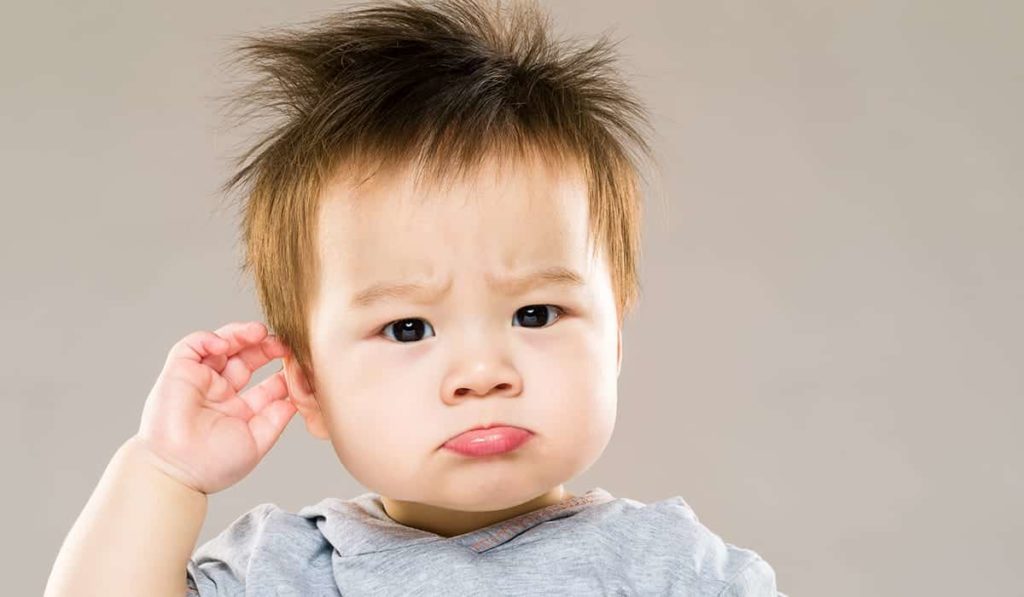
- The child frequently touches one or both ears or covers their ears.
- At twelve months, the child still does not recognize their own name.
- The TV volume is fine for the rest of the family, but the child sits very close to the screen.
- The child does not startle at loud noises.
Parents should always pay attention to their child’s development and consult a pediatrician if they notice anything unusual. If hearing loss is detected early, it can be treated very effectively today.