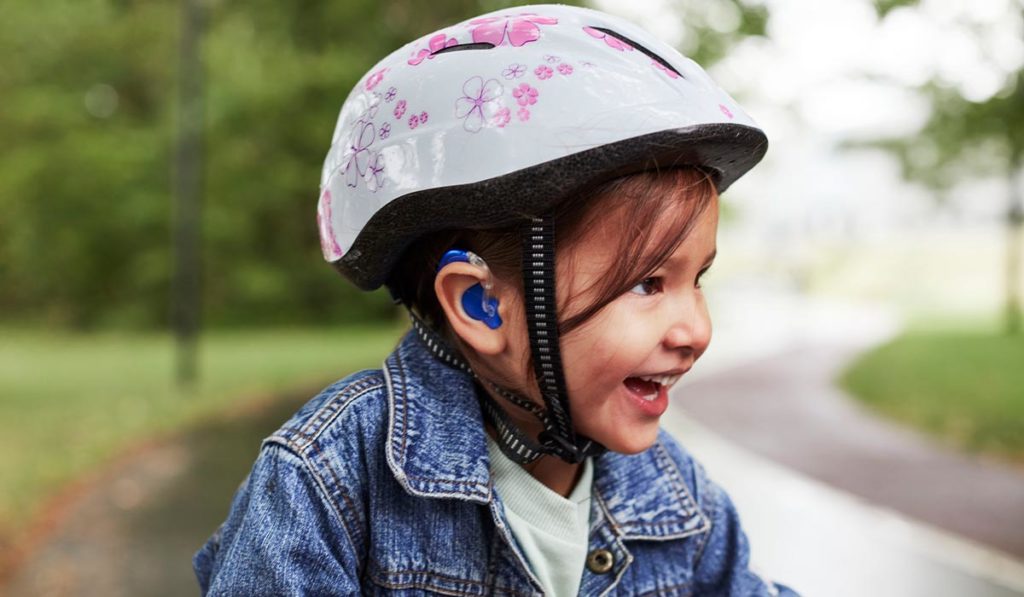
Excuse me? When children have hearing problems, it doesn’t necessarily mean they’re being defiant. Hearing loss can occur even at a young age. For parents, it’s usually a shock at first when their child is diagnosed with hearing loss. Nowadays, there are very good hearing aids for children, which allow them to enjoy the same quality of life as children with normal hearing. If the hearing loss is so severe that hearing aids are no longer sufficient, cochlear implants offer an excellent solution for your child.
What should I do if my child has trouble hearing?
If parents notice that their child is having difficulty hearing in any way, they should consult an ENT specialist immediately and have their child’s hearing tested. Children with a middle ear infection should also be treated by a pediatrician or ENT specialist as soon as possible. This is because untreated middle ear infections can lead to hearing loss even at a young age.
The earlier hearing loss is detected and treated, the greater the chances that a child’s speech development will proceed normally. To detect hearing loss early in newborns, parents can have their baby undergo a newborn hearing screening at the hospital shortly after birth. This takes only a few minutes. Since 2009, this newborn hearing screening has been covered by public health insurance and is typically performed within the first few days of life.
What types of hearing aids are available for children?
Hearing aid technology for children has advanced to the point where children with mild to moderate hearing loss can lead a life without limitations with the help of hearing aids.
The options are diverse: There are both BTE (behind-the-ear) and ITE (in-the-ear) hearing aids, as well as bone-conduction hearing systems for children. ITE devices are worn entirely in the ear canal or in the outer ear. BTE devices transmit amplified sounds to the ear through a sound tube.
Hearing aid models for children come in many bright colors, featuring flowers, stars, or cars, and in various shapes. In addition, the hearing systems can be easily personalized with hearing aid accessories and decorated with a unicorn, a turtle, or a dolphin.
In addition to early diagnosis, parents should know that special hearing aid adjustments are important, especially for toddlers and babies, who grow very quickly. Hearing care professionals or pediatric audiologists therefore adjust the little ones’ hearing aids regularly.
Key Steps to Finding the Right Hearing Aid
- Diagnosis:Visit to an ear, nose, and throat (ENT) specialist; prescription for hearing aids.
- Selection of hearing aids:At a hearing aid specialist or pediatric audiologist (see box).
- Financing:Submit a claim for coverage to the health insurance provider along with the prescription from the ENT specialist.
- Fitting: Hearing aid specialists fit the hearing aids. It is important not only that the hearing aids fit perfectly on or in the child’s ear, but also that the acoustics are correct.
- Follow-up:Regular visits for fine-tuning.

What is a pediatric audiologist?
Pediatric audiologists are hearing care professionals who specialize in treating children. To this end, they have typically completed advanced training in pediatric audiology. This is the science of hearing impairment and auditory perception in childhood. As a result, pediatric audiologists have specialized knowledge and skills for fitting hearing aids to the specific needs of children. They bring a great deal of patience and empathy to their young patients in order to build a trusting relationship.
What does aluminum foil sound like when you crumple it? Leaves rustling as you run through them? A fork scraping against a plate? A dog barking with joy? For young children, there are endless sounds and noises to discover. Even in the womb, babies perceive sounds, and as soon as they’re born, they can tell whether Mom and Dad are happy or stressed. As they get older, they mimic sounds, imitate animal calls and everyday noises, and repeat their first words. In preschool and school, good hearing ensures that they can listen, communicate with other children, and follow along in class. Healthy hearing is essential for children to develop appropriately for their age and learn to speak. You can learn more about this in our article “Open Ears for Our Children.”