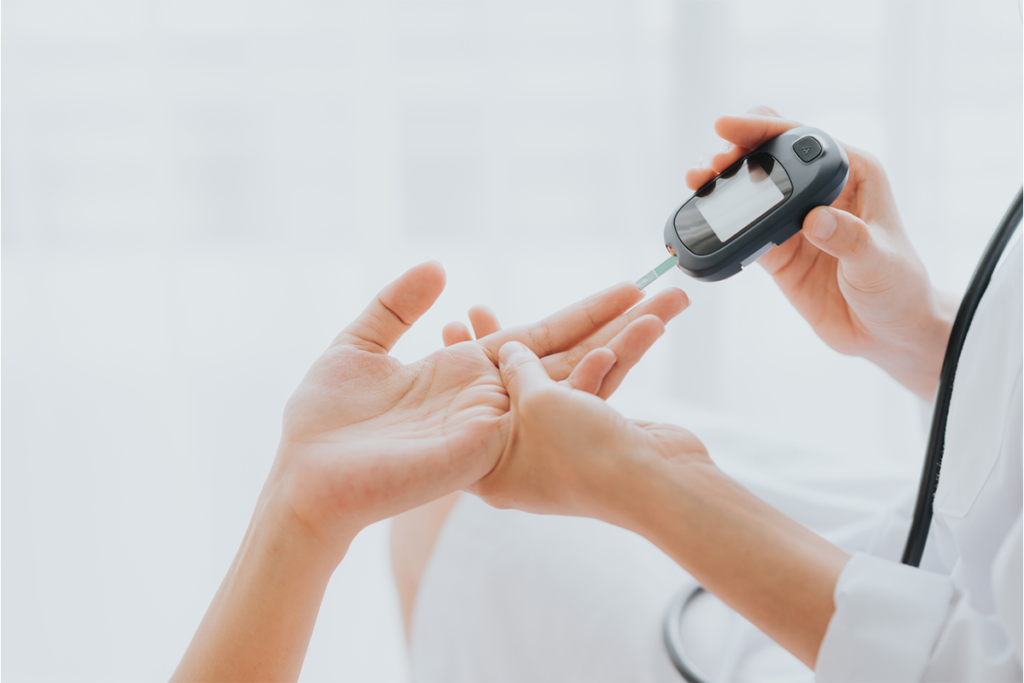
Increased Risk of Hearing Loss
More than six million people in Germany have diabetes. They have a significantly higher risk of developing hearing loss than people without diabetes.
Diabetes, as the condition is commonly called, is very widespread. A2021 study shows that the prevalence of hearing loss is twice as high among people with diabetes as among those without diabetes. And even among people with prediabetes—a precursor to the disease—the rate of hearing loss is already 30 percent higher than among healthy individuals. Although both type 1 and type 2 diabetes are associated with hearing loss, it has so far been difficult to establish a causal link between diabetes and hearing loss. In any case, anyone with diabetes should have their hearing tested regularly. This online hearing test provides an initial assessment of your hearing ability.
What is the difference between Type 1 and Type 2 diabetes?
Type 1 diabetes usually begins in childhood or adolescence. It is caused by a deficiency of the hormone insulin, because the pancreas produces less and less insulin until, eventually, it stops producing it altogether. As a result, blood sugar levels rise. Patients must administer insulin—either with a pen or an insulin pump.
Type 2 diabetes is attributed to an unhealthy lifestyle, such as being overweight, not getting enough exercise, and having a poor diet. In people with type 2 diabetes, the pancreas still functions very well. However, the body’s cells—which need insulin to absorb sugar from the blood—become resistant to it. As a result, blood sugar levels rise. Patients must take special medications to regulate their blood sugar.
What is the connection between diabetes and hearing loss?
Scientists believe that diabetes can impair the cochlea—the spiral-shaped part of the inner ear that converts sound waves into nerve impulses—and lead to a thickening of the blood vessel walls. In addition, researchers believe that high blood sugar levels over an extended period of time can lead to hearing loss. This is because the blood and oxygen supply to the smallest nerves and blood vessels in the inner ear may be compromised due to insufficient blood flow, potentially damaging them and impairing hearing.
Hearing Aid Fitting
When fitting hearing aids for people with diabetes, it is important to inform the hearing care professional about the diabetes. This is because people with diabetes are not only more susceptible to skin infections, but may also have increased sensitivity to certain materials used in ear molds. Therefore, hypoallergenic ear molds are recommended, as are open-fit hearing aid systems, such as behind-the-ear hearing aids, since these minimize contact with the skin.
Due to the high risks associated with untreated hearing loss, it is recommended to have your hearing checked regularly. This can be done at any time by an ENT doctor or hearing care professional and is covered by health insurance.
By the way, especially after age 50—when age-related hearing loss often sets in gradually—even people with normal blood sugar levels should get their hearing tested regularly, ideally once a year. Read more here about other potential complications associated with hearing loss on our page dedicated to the annual World Hearing Day on March 3.
Wie Zähne unser Gehör beeinflussen und stressen
Zahnprobleme können Herzentzündungen, Beschwerden in der Wirbelsäule und Migräne verursachen. Was viele nicht wissen: Zähne beeinflussen auch unser Gehör.

How you feel is how you hear
Did you know that our mental state and personality affect not only our mood but also our hearing?

Risikofalle Zucker: Diabetiker besonders gefährdet für Hörverlust
Der Zuckerkonsum in Deutschland ist hoch – zu hoch. Daher startet die AOK eine Kampagne gegen Zuckerreduktion. Denn zu viel Zucker schadet unserer Gesundheit. Auch unsere Ohren können dabei in Mitleidenschaft gezogen werden.