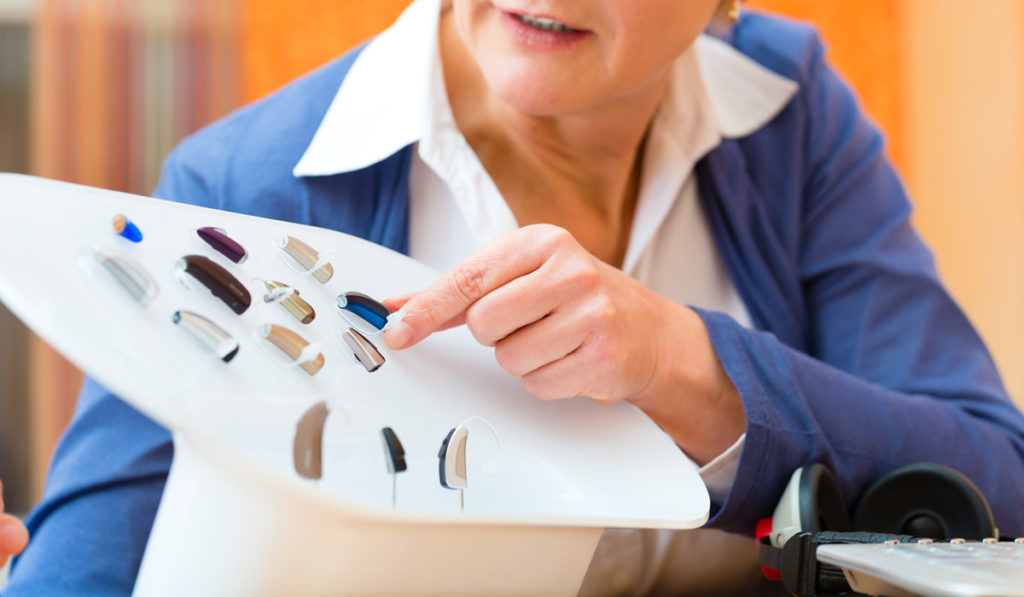
A dated image is a thing of the past
Modern hearing aids are increasingly becoming trendy everyday accessories. Fortunately, the days when it was embarrassing to wear a hearing aid are a thing of the past. However, some misconceptions persist. We’re here to set the record straight.
The new generation of hearing aids has long since shed its old image. While 30 years ago, Grandma would usually keep her hearing aid neatly tucked away in a box rather than wear it in her ear—because it made a beeping sound—or because she perceived everything, in her own words, “tinny,” modern hearing aids have evolved into small, digital all-rounders that significantly improve quality of life. Nevertheless—even today, many misconceptions about hearing aids are still circulating. We want to change that.
1. Hearing aids are big and bulky
That’s no longer the case; modern hearing aids are now quite small. Some models aren’t even as big as a one-euro coin and are barely visible behind the ear. Others disappear almost invisibly into the ear canal. Yet they’re packed with technology—comparable to a high-performance computer. And when it comes to design, these delicate devices are truly impressive. This is what hearing aids look like today.
2. Hearing aids make you look old and sick
Absolutely not! The days when hearing aids were supposedly worn only by seniors are a thing of the past. The opposite has long been the case. As a study by Kantar TNS shows, hearing aids are now seen as a symbol of exemplary health awareness: Hearing aid users of all ages serve as role models because they take preventive measures against potential complications resulting from untreated hearing loss. They also help reduce stress for those around them. So hearing aids don’t just improve the quality of life for people with hearing loss!
3. Hearing aids are expensive
That’s not true either. Fortunately, hearing well isn’t a matter of money. If your ENT doctor has prescribed a hearing aid, you’ll receive modern devices as well as comprehensive consultation, fitting, and follow-up care from a hearing care professional—without having to pay out of pocket. Statutory health insurance covers the cost of hearing aids that are provided at no additional charge—read more here.
4. I just put a hearing aid in my ear and it works right away
Unfortunately, it’s not that simple. While glasses immediately help you see better, a hearing aid requires thorough and often long-term adjustment before it provides the optimal hearing experience for you. You should definitely take the time for this. This is because the hearing aid user must first gradually get used to their regained hearing. Your hearing care professional will support you throughout the adjustment process. By working closely with them, they can adjust your hearing aid to your individual needs until the optimal hearing experience is achieved. Jana Verheyen, an audio coach who is herself severely hard of hearing, also shares her tips on how toget comfortable with your hearing aids in a short interview.
5. I can just buy a hearing aid online
Fortunately, that’s not true. To be fully effective and avoid further worsening hearing loss, a hearing aid must be precisely tailored to your individual needs. Only well-trained hearing care professionals can—and are permitted to—do this. Only your hearing care professional can provide you with comprehensive counseling and fitting, individually tailored to the type of your hearing loss, your anatomical conditions, and your needs and preferences.
Modern hearing aids don't just compensate for hearing loss—they're true all-arounders that offer benefits that might even make some people with normal hearing envious. Read more about it here.